
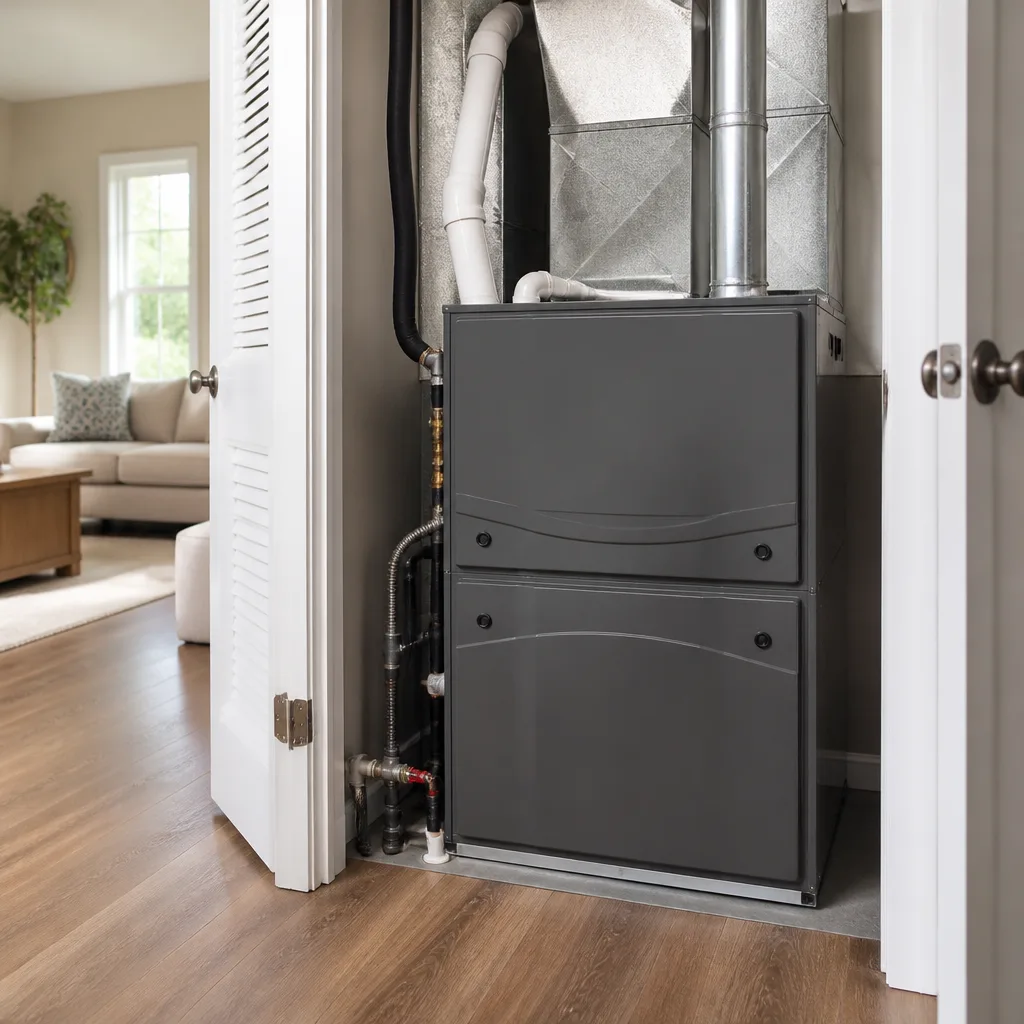
 Furnace & heating
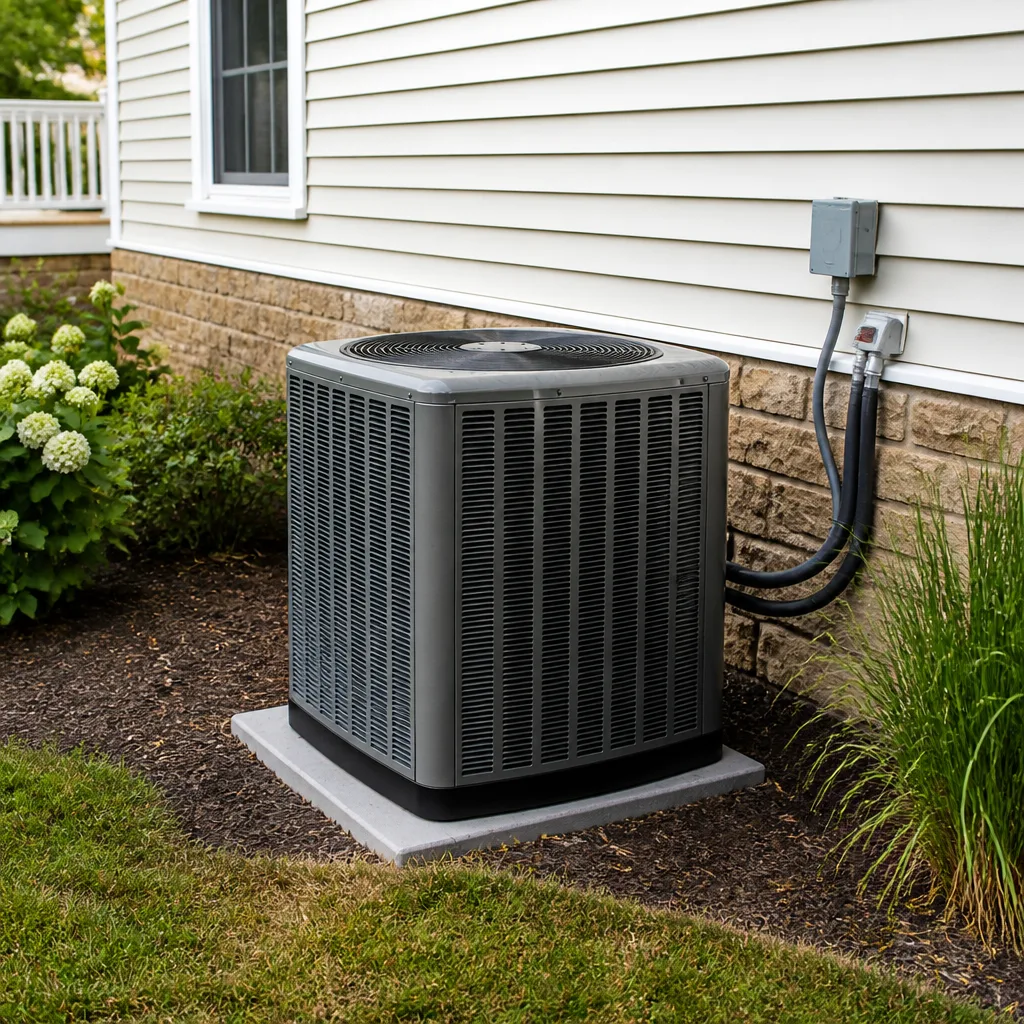 AC repair
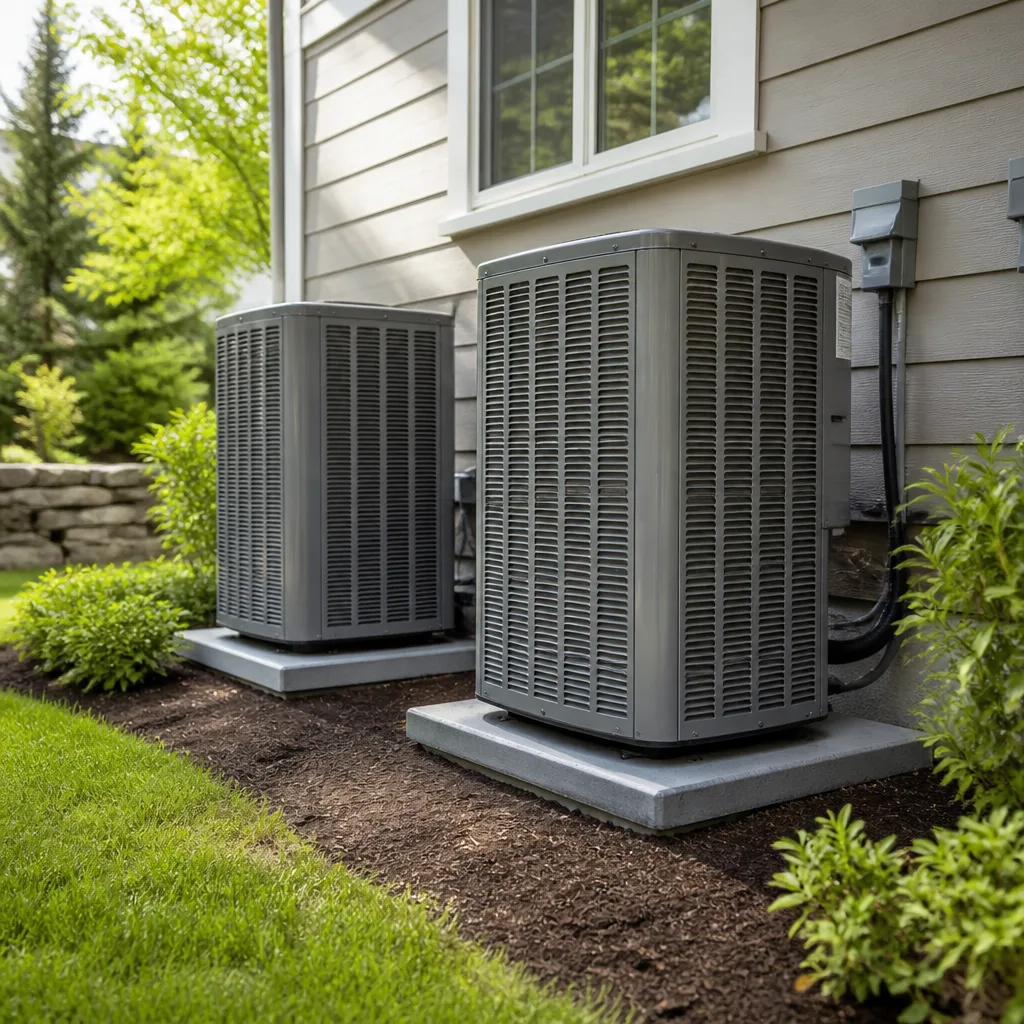 Heat pumps
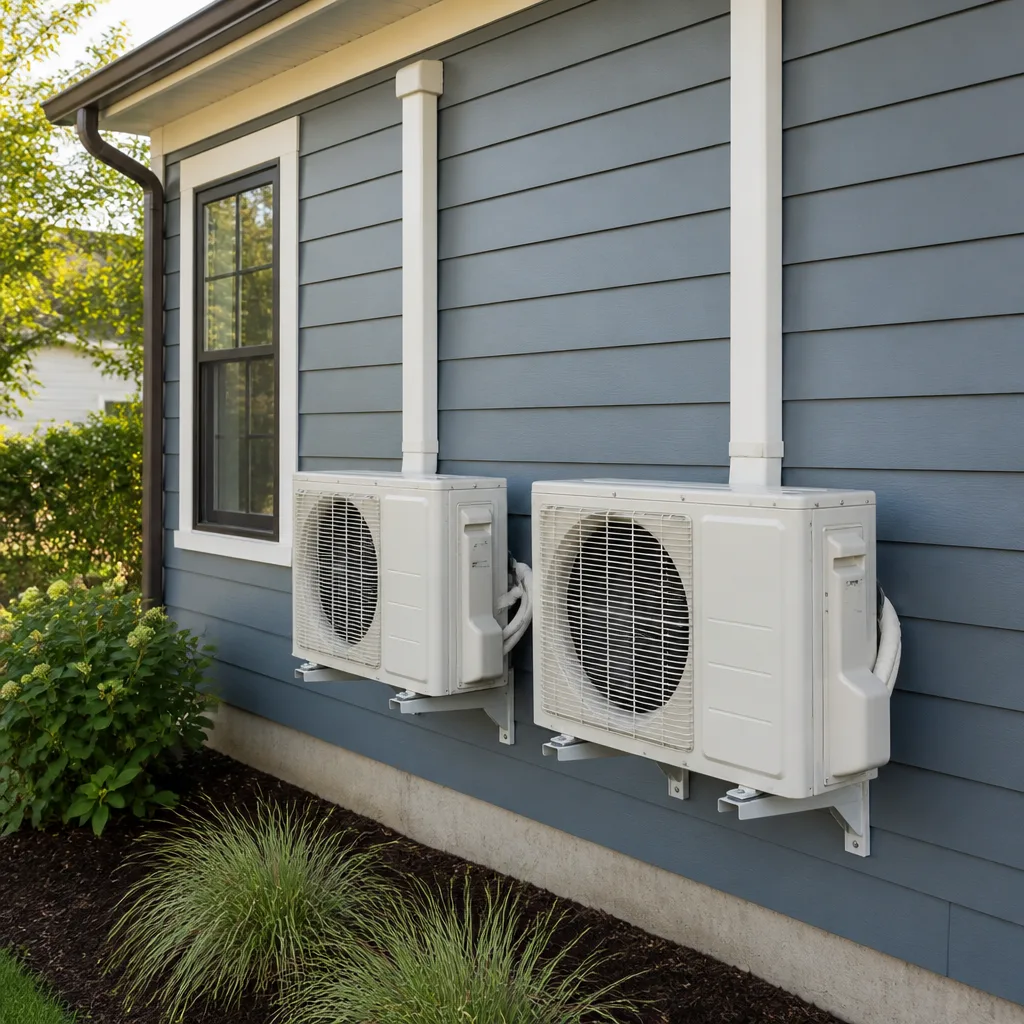 Ductless mini splits
 Carrier
 Trane
 Goodman
Seasonal tune-up and full diagnostic on your Carrier, Trane, or Goodman system - readings shown to you before any repair is proposed
Diagnosis first, numbers second - you approve the repair price before a single part goes in.
Get your free estimateStyles & brands we work with
- AC repair
- Furnace & heating
- Heat pumps
- Ductless mini splits
- Carrier
- Trane
- Goodman
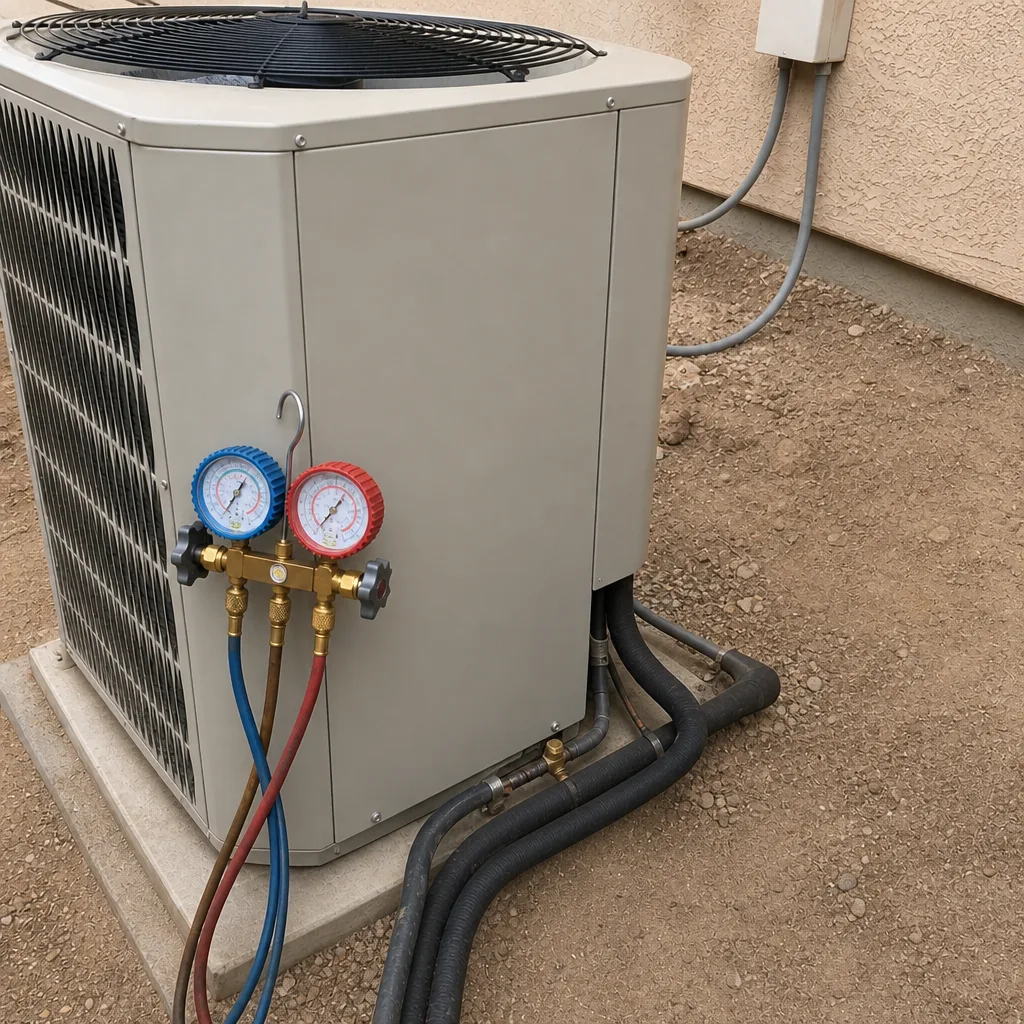
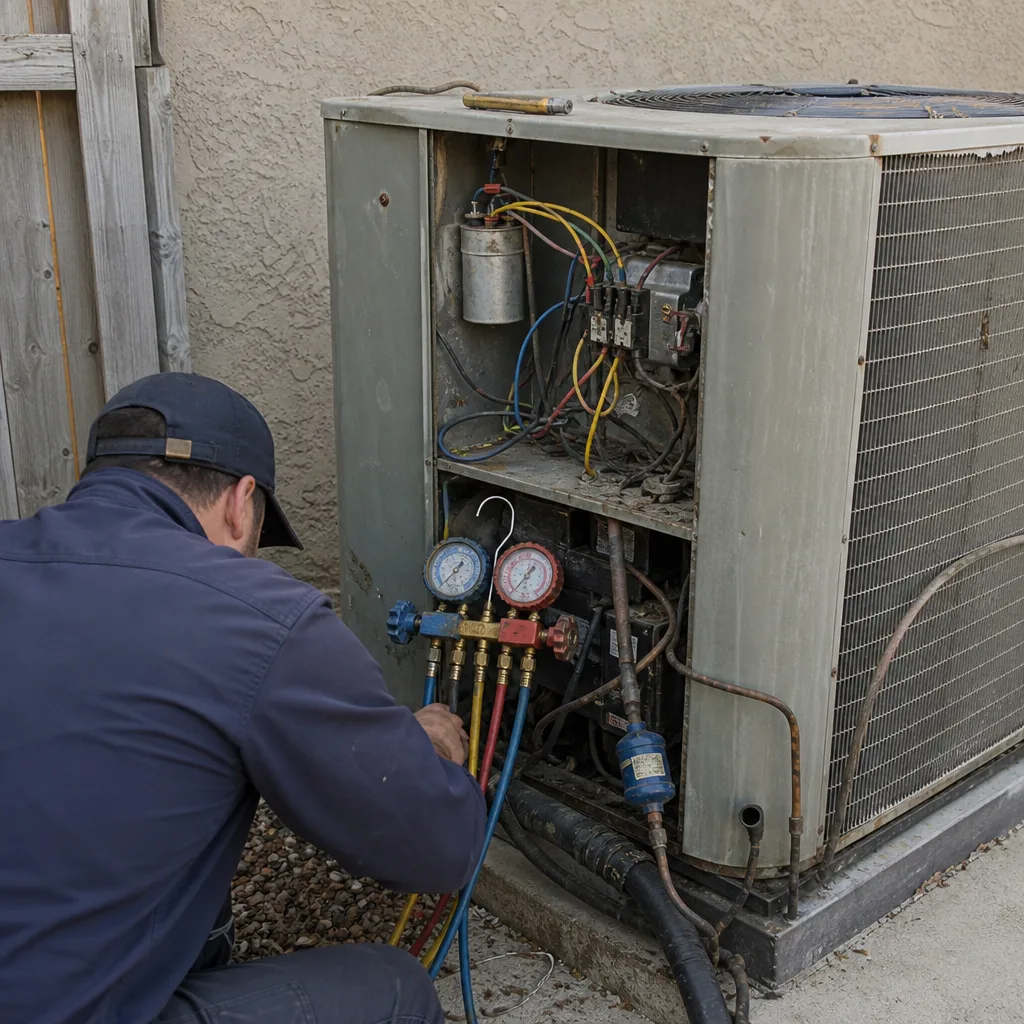
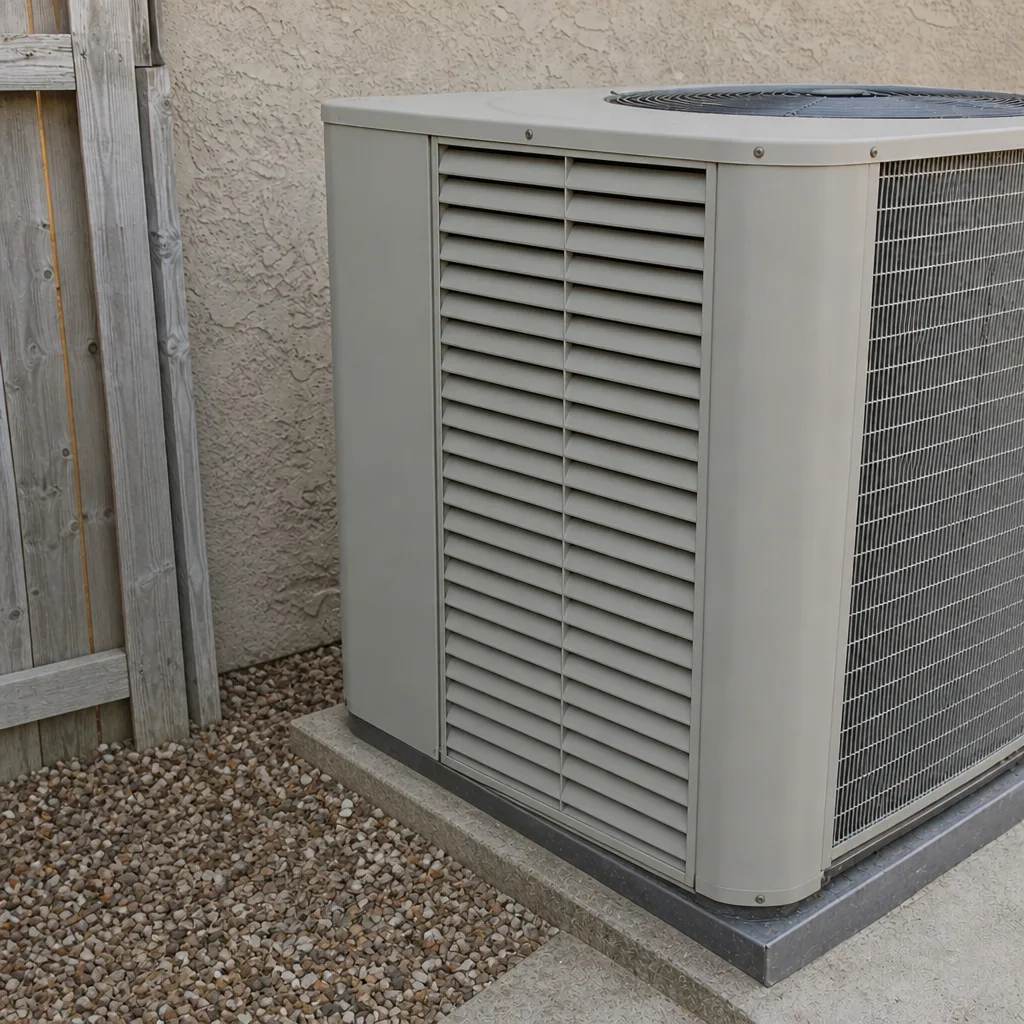
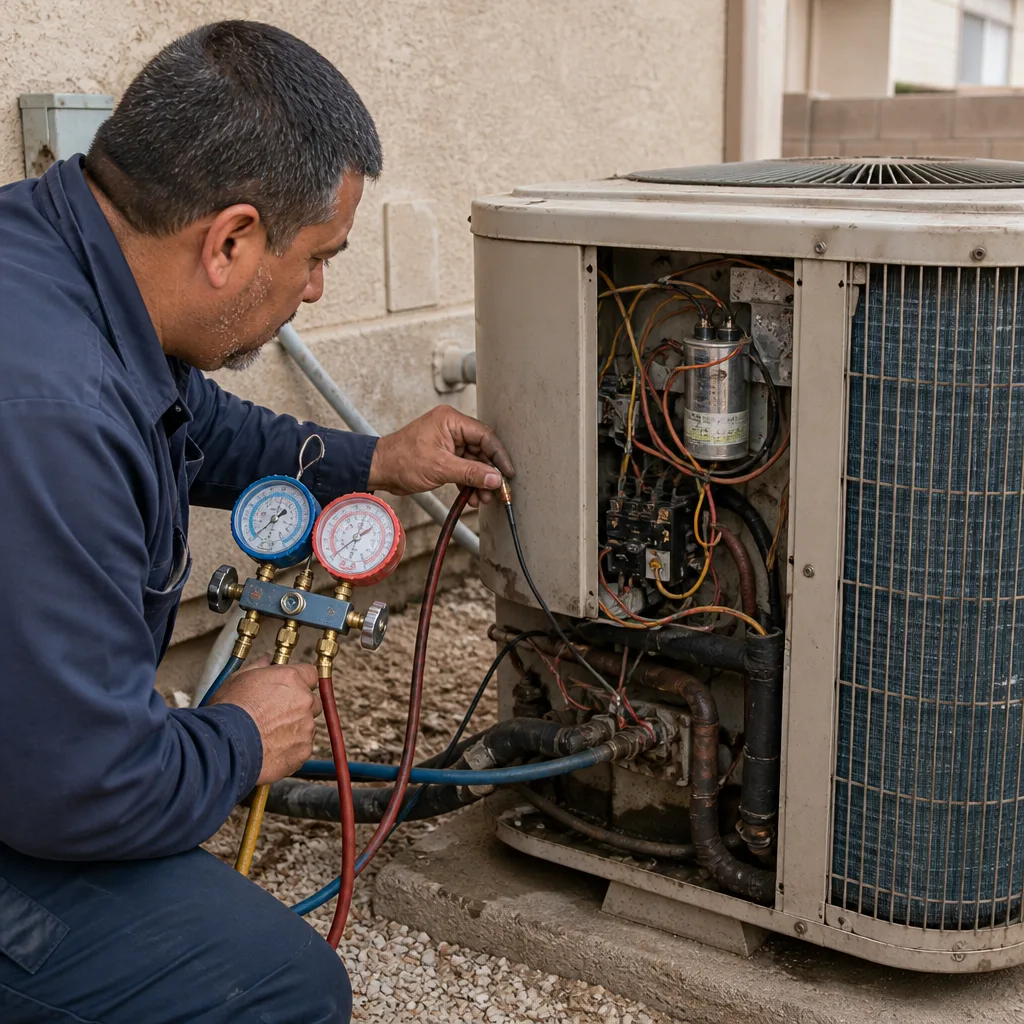
See the difference
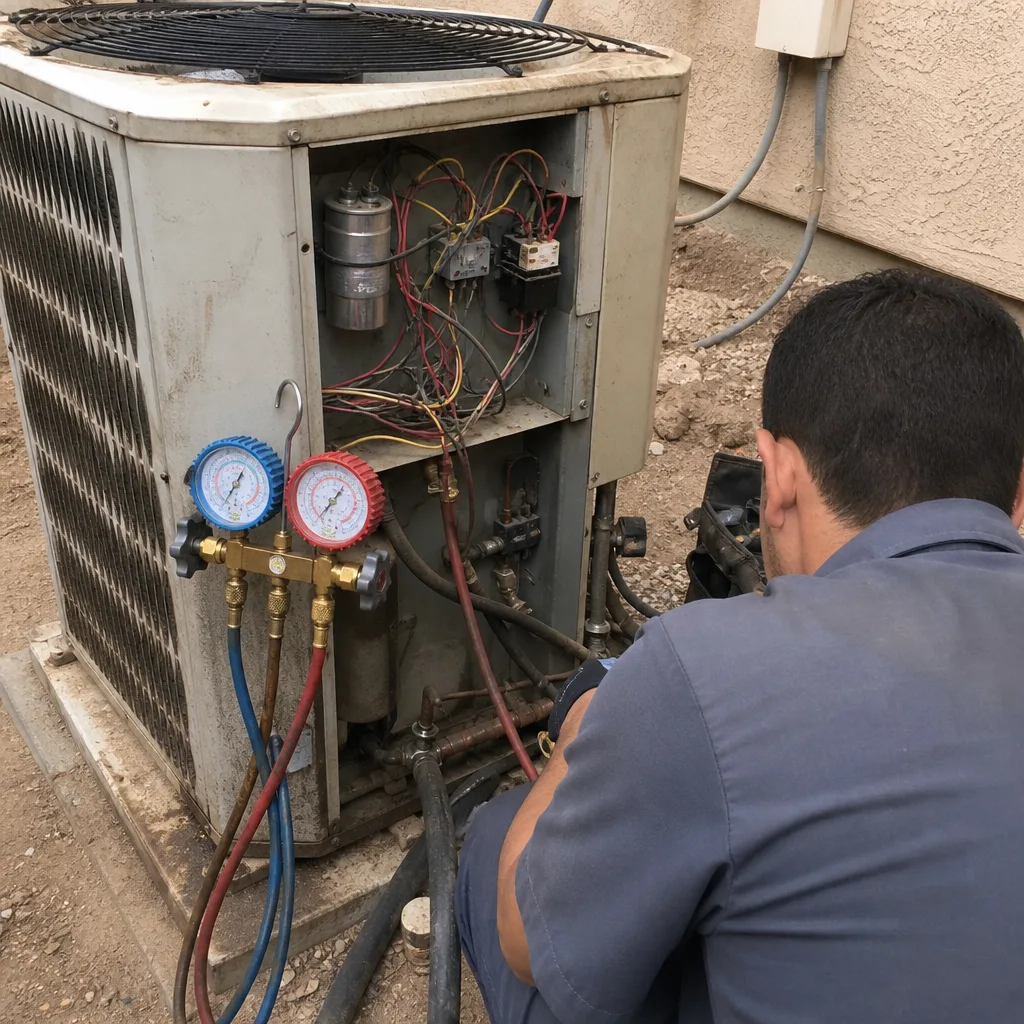 Before
 After
 Before
 After
 Before
 After
How to Improve Indoor Air Quality in Henderson, NV: Start With Your Ducts, Not a Purifier
The fastest way to improve indoor air quality in a Henderson home is to stop the dust at its source: seal the duct system and upgrade filtration in the right order, because a room purifier can’t clean air that’s being recontaminated by a leaking attic duct every cycle. In this city, the dominant threat isn’t mold or pollen. It’s ultra-fine Mojave dust and construction particulate pulled straight through gaps in attic ductwork and recirculated through superheated air handlers. Get the ducts tight, check static pressure, then step up the filter. That sequence matters more than any single product you can buy.
If you want a trained eye on the whole system before you spend a dollar on gadgets, call Coldharbour Heating & Air Henderson at (844) 797-5122. We’ll tell you what’s actually degrading your air and what isn’t.
Why Henderson’s Sealed Tract Homes Trap Dust
Henderson averages around 26 high-wind or dust-event days a year. If your 1990s tract home still runs a 1-inch MERV-4 filter, those particles are completing full laps through your living space every time the system kicks on, which in July is roughly every 10 minutes. You dust the furniture, the system refills it, and the cycle repeats all afternoon.
Most of Henderson’s housing went up during the 1990s and 2000s boom: stucco-clad single-family homes with tile roofs, slab foundations, attic-mounted air handlers, and ductwork strung through an attic that hits well past 140°F in July. That construction detail is the whole story. When attic ducts leak, they don’t pull clean conditioned air. They pull attic air, loaded with fiberglass particles, insulation dust, and drywall grit, directly into the airstream. In moderate climates that seepage is a nuisance. Here it’s a steady feed of particulate into every room, and no air purifier sitting in your living room can fix a problem that starts upstream in the attic.
This is also why equipment here works at the edge of its rated capacity. Summer highs routinely top 110°F, systems run almost continuously from May through September, and the combination of heat, dust, and duct leakage compounds fast. Our technicians have up to 23 years of experience in this climate, and they’ve seen every version of this failure.
The Right Sequence: Duct Seal, Static Pressure, Then Filter Upgrade
Here’s where homeowners get it backwards. The instinct is to jump straight to a high-MERV filter, feel like they’ve solved it, and move on. On an aging 1990s or 2000s system, that can backfire. Dropping in a MERV-13 filter before checking the blower’s static pressure (the resistance the fan has to push against) can starve the blower and knock 15-20% off efficiency. The motor works harder, the coil gets less airflow, and your cooling gets worse.
Our approach runs in a deliberate order:
- Duct leakage test first. We measure how much air the system is losing through gaps, especially at the attic handler and the trunk connections. This tells us whether duct sealing, not filtration, is your real fix.
- Seal the duct system. Mastic and proper sealing at the leaks closes the path that attic dust and fiberglass were riding into the house.
- Static pressure check. With ducts tight, we measure airflow resistance so we know what filter the blower can actually handle without choking.
- Filter upgrade, matched to the equipment. Only now do we step up to a higher-MERV filter, or in many cases a larger filter rack that holds a thicker media filter so you get better filtration without the airflow penalty.
- Add targeted upgrades only where the system supports them. UV elements, bypass humidifiers, or whole-home media cabinets are spec’d to the equipment you own, not bolted on generically.
This matters because Coldharbour technicians are trained on nine major residential brands, including Lennox, Goodman, Rheem, and York. That matters in a Henderson attic because a filter rack or humidifier has to match the air handler you already own. The right upgrade path for one brand’s cabinet doesn’t fit another.
What Indoor Air Quality Upgrades Typically Run in Henderson
| Upgrade | Typical Henderson price range |
|---|---|
| Air quality assessment + duct leakage test | Folded into a tune-up at $80-$200, or quoted separately after inspection |
| Duct sealing (attic handler and trunk) | Quoted by scope after the leak test; written price before work begins |
| High-capacity filter rack + media filter | Quoted to match your equipment |
| AC tune-up (includes coil and filter inspection) | $80-$200 |
| AC repair if coil or blower damage is found | $150-$650 |
You get the exact price in writing before a single tool comes out, and it doesn’t change at the door. That’s a core plank of The Kingswell Way: say the price before the work, show up in the window given, leave the place cleaner than we found it, put the guarantee in writing, and come back if it fails.
Your Common Local Scenarios
After enough visits across Henderson, certain problems repeat. Here’s what we actually run into, and what usually solves it.
- The two-story in Green Valley with a perpetual dust film. Zoned systems in newer master-planned homes often have undersized returns. Dust settles because the return can’t pull enough air. The fix starts with a return and duct assessment, not another box fan.
- The 1996 stucco tract home with an attic handler. Tile roof, attic-mounted air handler, 1-inch MERV-4 filter. This is the classic profile for duct leakage pulling attic dust in. Duct seal first, then a filter rack upgrade.
- The house near Anthem with wind-driven grit every spring. Dense dust events load the filter and coil faster than anything else this time of year. A post-event filter check and coil inspection catches it before airflow drops.
- The system that “just feels stuffy” all summer. Often an airflow problem, not a filtration one. Static pressure testing usually explains it.
The Monsoon-Season Spike Most Henderson Homeowners Miss
Spring tune-ups are the habit, but in the Mojave the real air quality stress comes with monsoon wind events. Those storms load coils and filters faster than any other season here, and dust that settles into the coil fins does double damage: it insulates the coil (cutting cooling capacity) and it feeds particulate straight into the airstream. A spring tune-up won’t catch it. What Henderson homeowners actually need is a post-monsoon coil and filter inspection, so the system doesn’t spend the rest of the cooling season breathing through a clogged coil.
A standard tune-up runs $80-$200. If a loaded or damaged coil turns into a repair, most AC repairs land between $150-$650, and the work is covered by our 365-Day Done Right Promise: a written guarantee valid for a full year. If the repair fails in that window, we come back and correct it at no charge. Not verbal. On paper, before the technician leaves.
A Plain-English Decision Tree
If you have tile-roof construction with an attic-mounted air handler, start with a duct leakage test before you spend a dollar on in-room purifiers. Here’s the short version:
- Attic handler + tile roof + a 1-inch filter? Duct leakage test first. Sealing usually delivers more air quality improvement than any purifier.
- Ducts tight, but still dusty? Check static pressure, then size a proper filter rack to your equipment.
- Newer zoned home, stuffy rooms? Look at return sizing and airflow before filtration.
- Just survived a dust event? Pull the filter and inspect the coil. Fast.
If you’d rather have the whole thing diagnosed properly, our Air Quality & Ventilation in Henderson service walks through duct integrity, filtration, and ventilation together. To see everything we cover, start at our home page.
Why It Matters to Have a Trained Eye Up in That Attic
Attic work in a Henderson summer is genuinely dangerous. Attic temperatures past 140°F, tight truss spaces, and sharp duct connections mean real heat exposure and fall risk. Duct sealing and handler work belong with a trained professional who knows how to do it safely, even though we’re always glad to explain what we’re seeing. Our technicians are experienced, background-checked, show up uniformed, and you’ll know exactly who’s coming through your door. The phones are answered by a live person 24 hours a day, every day, whenever you’re ready to schedule.
FAQs
No, a room purifier won’t solve the main problem in most Henderson homes, because it only cleans air after it’s already been recirculated from a leaking attic duct system. If your ducts are pulling attic dust and fiberglass into the airstream, sealing the ducts and upgrading filtration at the source does far more than any purifier. Call (844) 797-5122 for a duct leakage test – estimates are free.
Not safely without checking static pressure first, because a high-MERV filter on an aging 1990s or 2000s blower can starve airflow and drop efficiency 15-20%. The right move is duct seal, static pressure check, then the filter upgrade sized to your equipment. Call (844) 797-5122 and we’ll measure it before recommending anything.
Most Henderson homeowners start with a tune-up at $80-$200, which includes a coil and filter inspection, and then get a written quote for duct sealing or a filter rack upgrade based on what the inspection finds. Most AC repairs, if one is needed, run $150-$650. Call (844) 797-5122 for an exact quote – the price is in writing before work starts.
Right after a monsoon wind event is the best time, because those storms load coils and filters faster than any other season in the Mojave. A post-monsoon coil inspection catches dust before it cuts cooling capacity. Call (844) 797-5122 and we’ll get you on the schedule.
If you’d rather have it looked at, Coldharbour Heating & Air Henderson offers a no-pressure assessment in Henderson – call (844) 797-5122. We’ll test the ducts, check static pressure, and tell you plainly what’s worth doing and what isn’t. The written price comes before any work begins, and every repair is backed for a full year.
Written by the team at Coldharbour Heating & Air Henderson, serving Henderson, NV.