
Last updated November 17, 2026
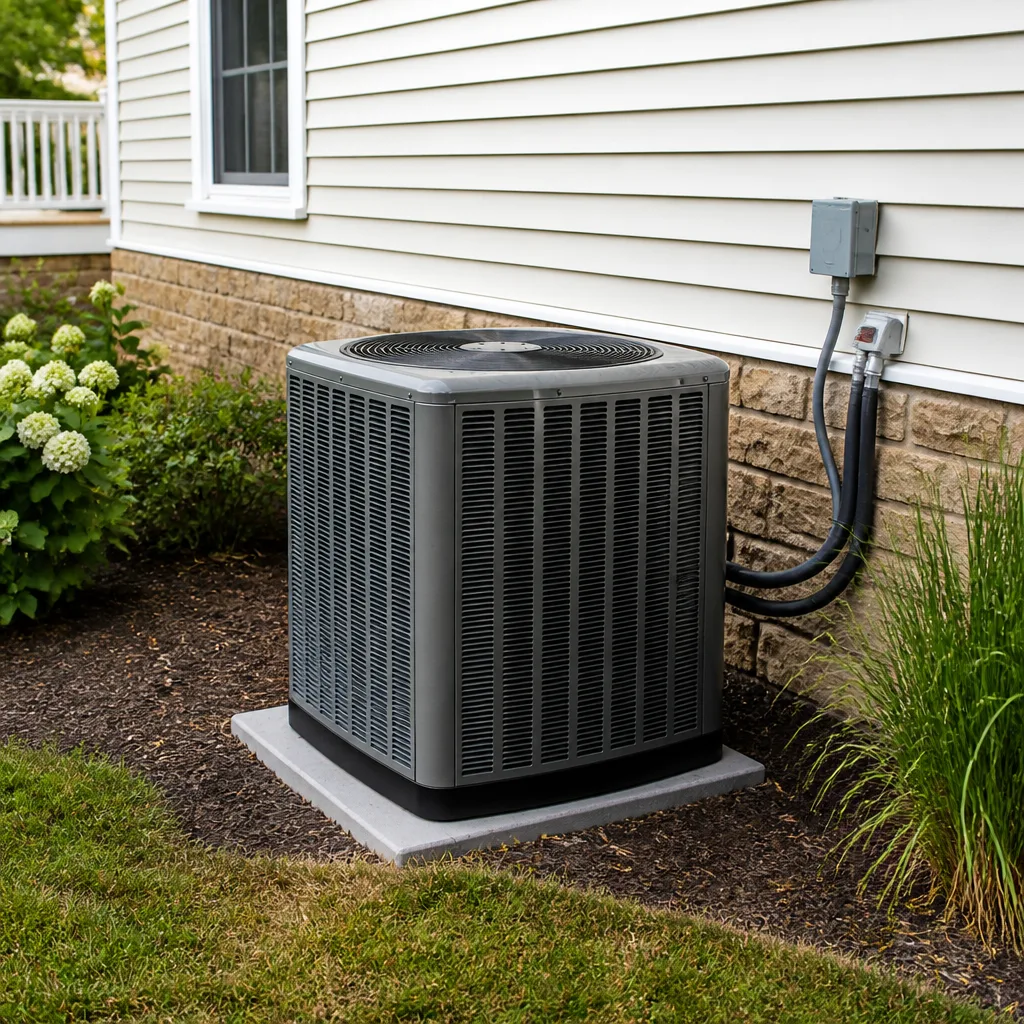 AC repair
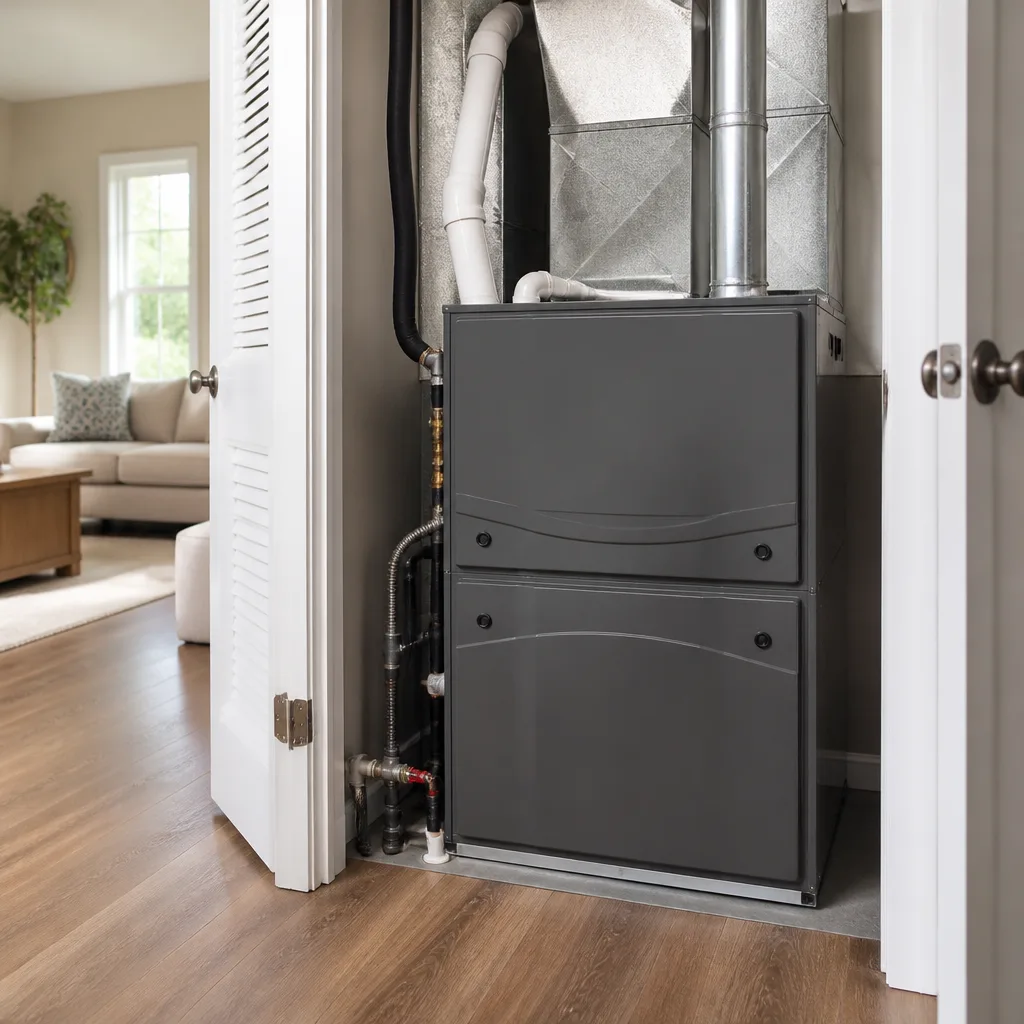 Furnace & heating
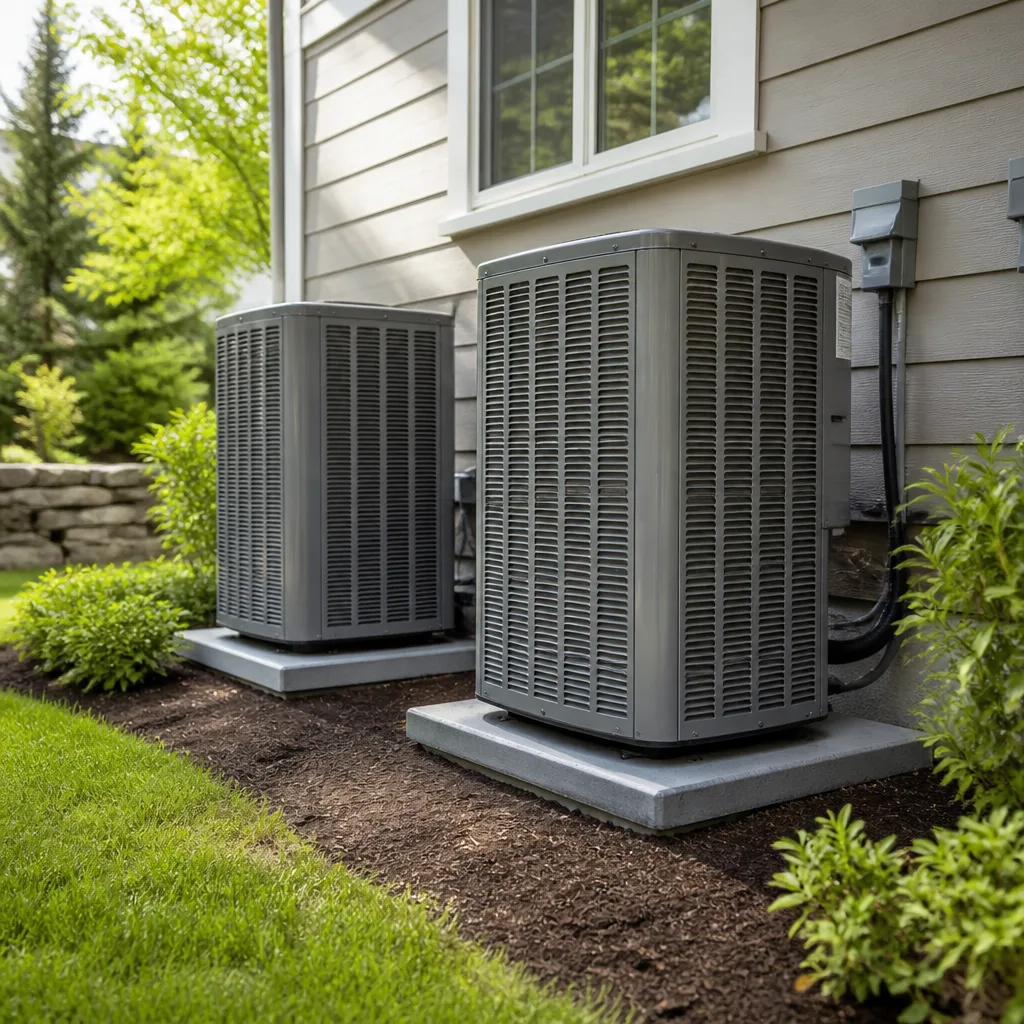 Heat pumps
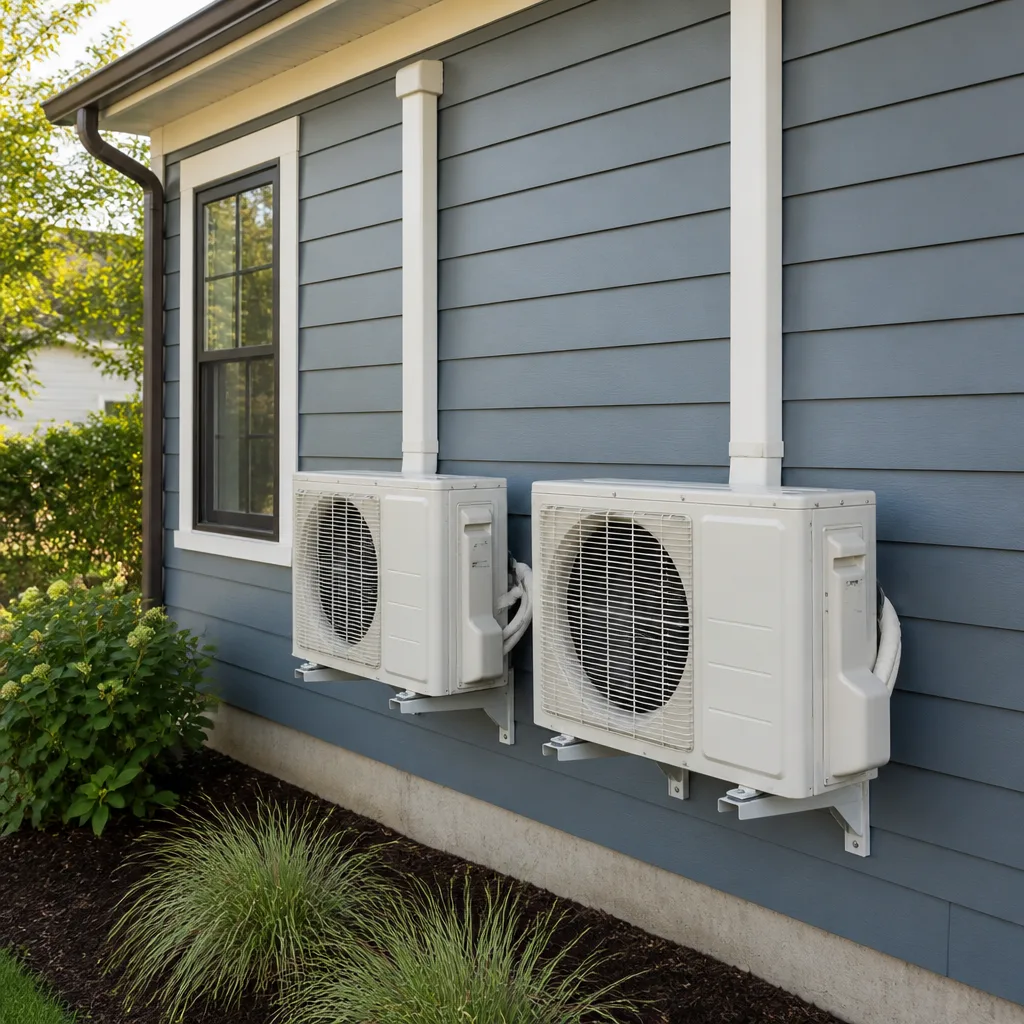 Ductless mini splits
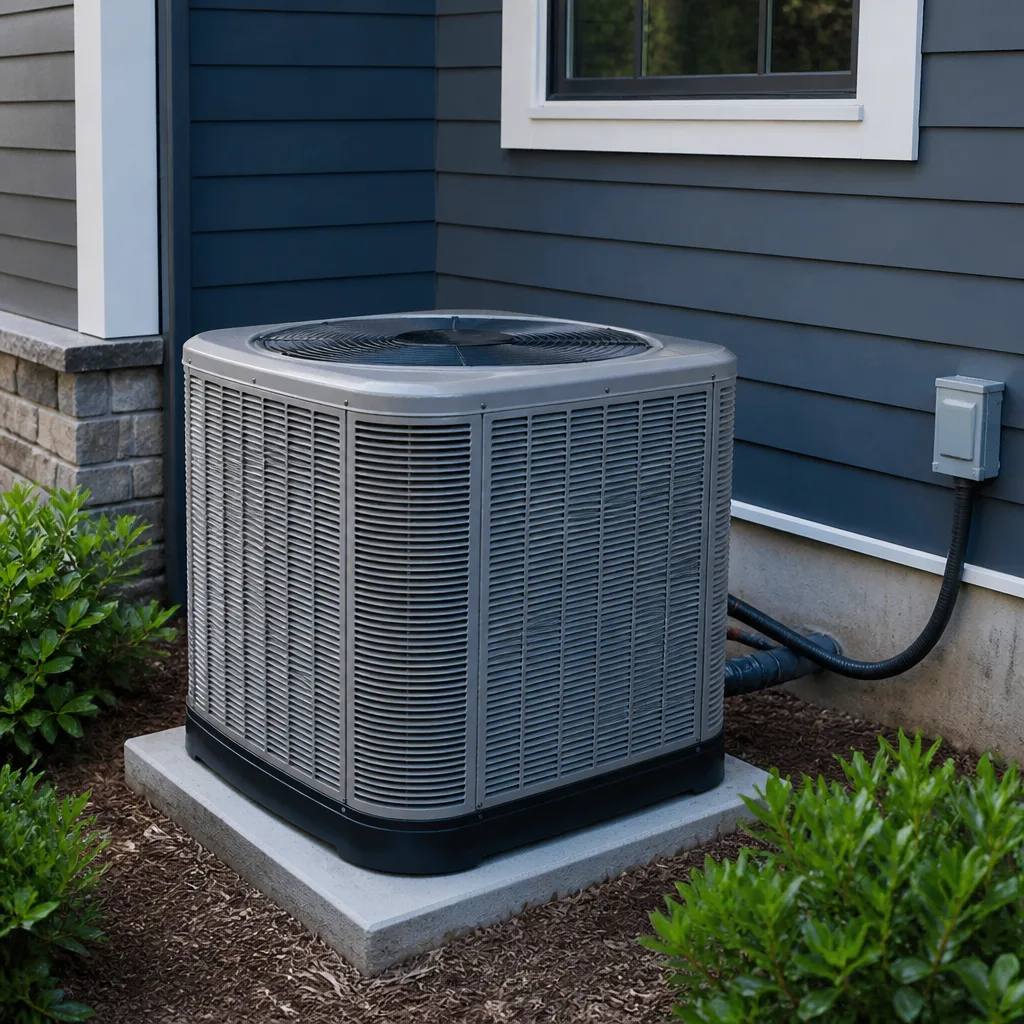 Carrier
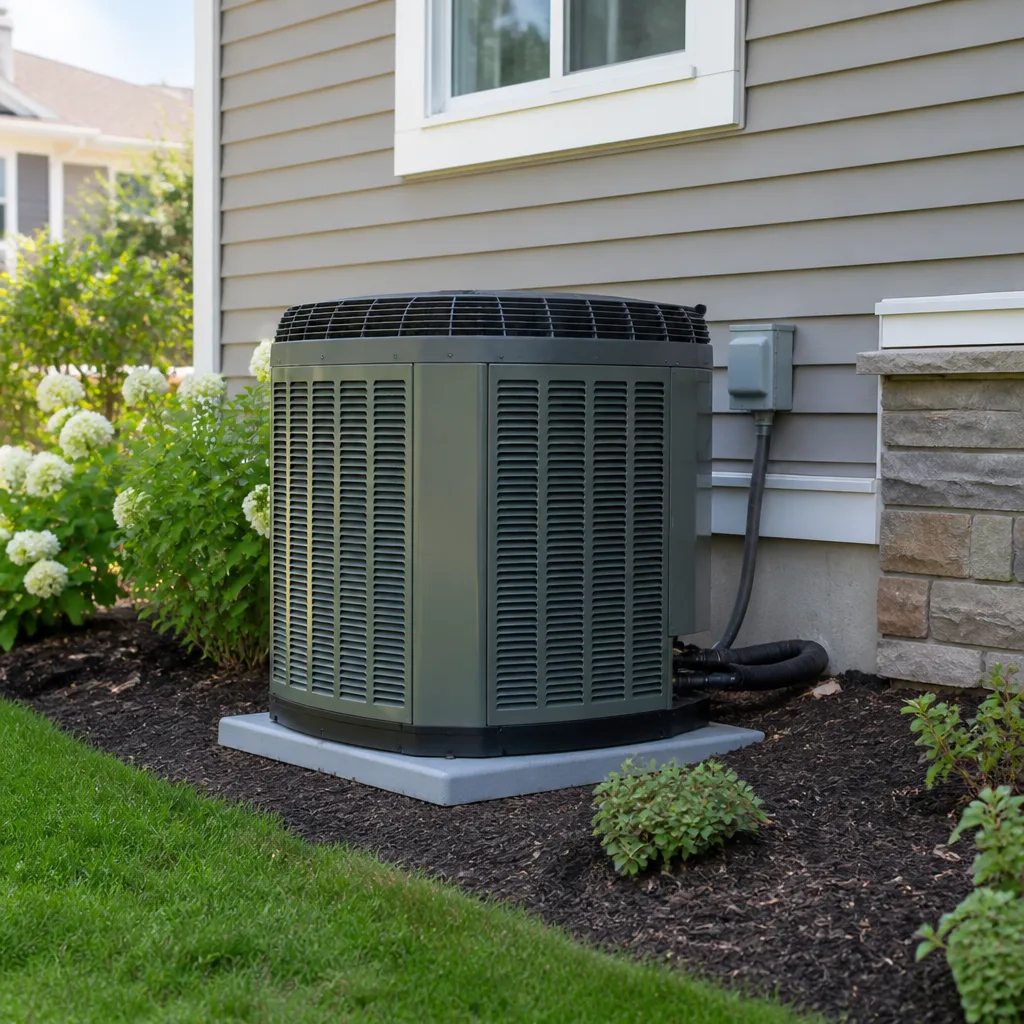 Trane
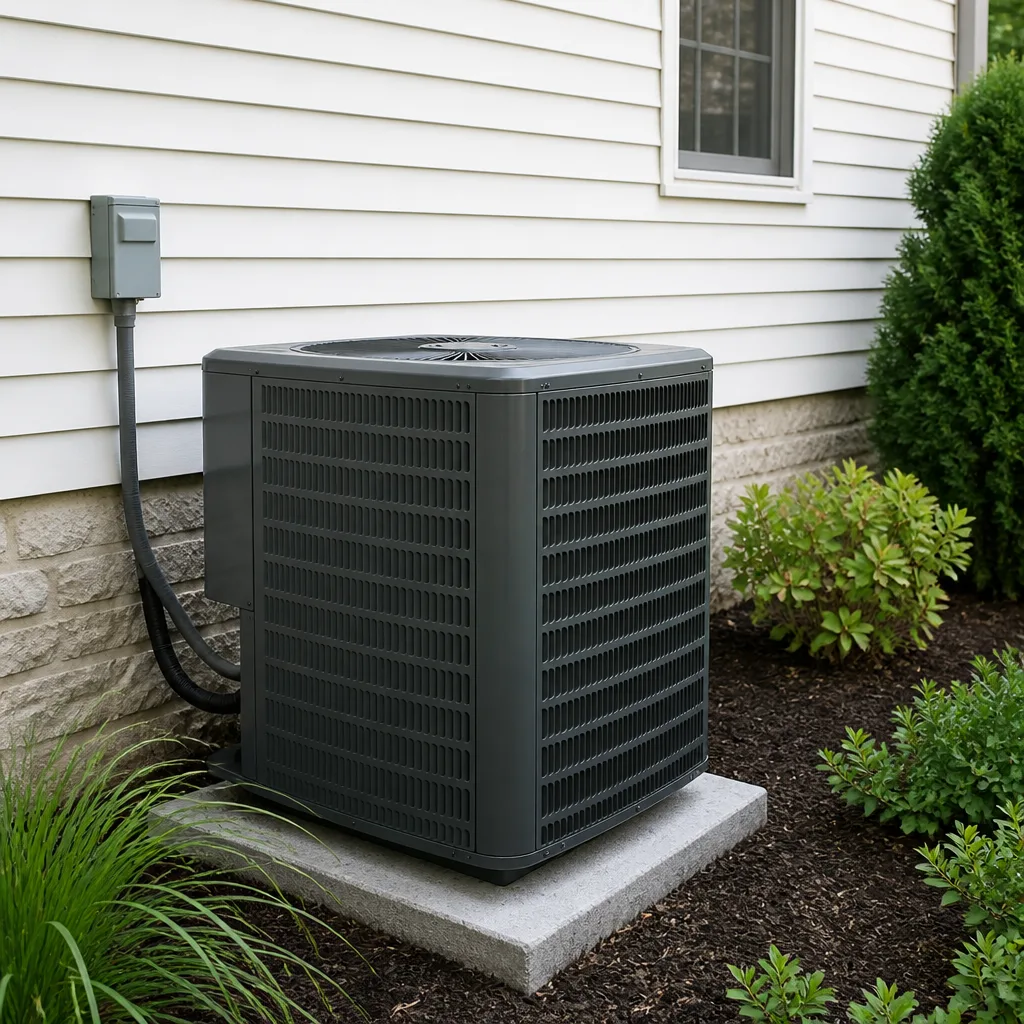 Goodman
Seasonal tune-up and full diagnostic on your Carrier, Trane, or Goodman system - readings shown to you before any repair is proposed
Diagnosis first, numbers second - you approve the repair price before a single part goes in.
Get your free estimateFurnace Repair Warning Signs Every Homeowner Should Know
By the time a furnace starts making a banging noise, it has usually been signaling trouble for three to six weeks through signs most people chalk up to “just how the house is in winter.” The furnace guides that list a yellow pilot flame and strange rumbling are describing late-stage symptoms – the ones that show up after the damage is already done. The quieter signals, a bedroom that stays cool all season, a gas bill that creeps up in October, a thermostat that runs longer than it did last year, are the real early warnings. This guide covers both phases so you can tell the difference, and it’s written from Henderson, where furnaces that sat idle all summer tend to show stress in the first few cycles of the season.
Quick Answer
The earliest furnace repair warning signs are uneven heating (one room cold while others are warm), a gas bill slightly higher than the same month last year, and a thermostat that runs noticeably longer to reach temperature. Late-stage alarms that mean shut the system off and call today are a yellow or orange burner flame, a burning or metallic smell, loud banging on startup, and any carbon monoxide reading on a detector. Most Henderson homeowners who catch the early signs spend $150 to $350 on a repair instead of $6,000 or more on a replacement.
Styles & brands we work with
- AC repair
- Furnace & heating
- Heat pumps
- Ductless mini splits
- Carrier
- Trane
- Goodman
Table of Contents
- The Early Warning Signs Most Guides Skip
- Why Henderson Furnaces Fail in October
- Late-Stage Alarms: Yellow Flame, Burning Smell, Loud Startup
- The Carbon Monoxide Question, Answered Without Panic
- A Ten-Minute Self-Inspection You Can Run Today
- Watch-and-Wait vs. Call-Today vs. Shut-It-Off-Now
- Should You Repair or Replace?
- What Furnace Repair Actually Costs
The Early Warning Signs Most Guides Skip
The signs that matter most are the ones that don’t announce themselves. A furnace on its way out rarely fails without notice. It gives you weeks of soft signals that get filed away under “winter is just like that.” Here’s what to actually watch for.
- A room that used to heat evenly now has a cold corner. If the far bedroom was fine last January and this January it needs an extra blanket, that’s a duct or airflow problem, and airflow problems wear out the blower motor. It’s rarely the furnace dying. It’s the furnace working harder than it should.
- Your October or November gas bill is slightly higher than last year’s. Not double. Just up 8 to 15 percent when the weather is comparable. That usually means the furnace is running longer to hit the same temperature, which points to a dirty burner, a failing igniter, or restricted airflow. Compare the same month year over year, not month to month.
- The thermostat is calling longer than it used to. Time how long the furnace runs to bring the house up one degree on a cold morning. If that number has grown since last winter, something has changed in the system’s ability to deliver heat.
- Short cycling – the furnace turns on and off every few minutes. A furnace that runs in short bursts isn’t saving you money. It’s overheating or hitting a limit switch, and that switch is doing its job by cutting power before damage. Repetitive short cycling is one of the clearest early calls to a technician.
- A faint smell of dust or “burnt house” on first startup, then gone. This one is normal the first time a furnace fires up in the fall. If it persists past the first few cycles, it’s not normal anymore.
In our experience, homeowners who act on the cold-corner or the slightly-higher bill end up with a clean, inexpensive repair. Homeowners who wait until the banging starts often face a much bigger bill. Our Furnace Repair in Henderson team sees both outcomes every fall.
Why Henderson Furnaces Fail in October
Henderson has a specific seasonal rhythm that shapes how furnaces fail here. Summer is long and hot, and most furnaces sit completely idle from April until the first genuinely cold night, which typically lands in late October. That’s six months of dormancy followed by sudden, heavy use.
What that means practically:
- The first two or three heating cycles are the stress test. Dust that settled on the burners over the summer burns off. Belts that stiffened in the heat move again. Igniters that were fine in March have to fire on the first try or the furnace won’t light.
- The problem shows up fast, not gradually. Unlike a colder climate where the furnace runs all winter and you get a slow failure curve, a Henderson furnace tends to go from “fine last season” to “won’t light” on the first cold snap. The early warnings are compressed into a few days.
- The dry desert air makes filters work harder. Dust in the air here loads filters faster than in humid climates, and a clogged filter is the single most common cause of the airflow problems that shorten furnace life. A filter that ran all summer is already loaded before the heat ever comes on.
- Aluminum wiring and older panels in a few of Henderson’s mid-century neighborhoods make electrical faults more common. If your home was built before the 1980s, have the electrical connections at the furnace inspected during any tune-up. Failing connections are a fire risk, not just a comfort problem.
That first-cold-night pattern is why we recommend having the furnace checked in late September or early October, before the first real cold snap, when you can still schedule without a wait. The same idle-then-shock pattern is why AC Repair in Henderson calls spike in the opposite season – the equipment in this climate gets hard-tested by long dormancy followed by immediate demand.
Late-Stage Alarms: Yellow Flame, Burning Smell, Loud Startup
These are the signs the generic guides list, and they deserve to be taken seriously – but understand them as the final stage, not the beginning of trouble. When you see or smell any of the following, the time for watch-and-wait is over.
- Yellow, orange, or flickering flame instead of a steady blue one. A healthy natural gas flame is crisp blue. Yellow means incomplete combustion, which points to a dirty burner, a blocked flue, or a failing heat exchanger. This is a carbon monoxide signal and worth a quick look inside the burner compartment with a flashlight.
- A persistent burning, oil, or metallic smell. The “first cold morning” dust burn-off is normal. A smell that comes back every cycle, or that smells oily or metallic rather than dusty, is a call-today signal. If you ever smell gas (rotten-egg or sulfur), leave the home and call your utility first, then call us.
- Loud banging, booming, or clanking on startup. That’s usually delayed ignition – gas building up before the burner lights, then igniting in a rush. It’s hard on the heat exchanger and it’s the kind of noise that turns into a failed part within weeks.
- Rumbling or a screeching noise. A deep rumble often means a failing blower or a clogged burner. A screech is typically a dry bearing or a slipping belt and worsens quickly.
- The furnace shuts off before the house reaches temperature. A high-limit switch tripping is a safety feature, and it’s telling you something is overheating the furnace.
If you’re seeing late-stage signals during heating season in Henderson, don’t wait for the house to go cold. One call in the morning is almost always cheaper than an emergency call in the middle of the night.
The Carbon Monoxide Question, Answered Without Panic
Carbon monoxide (CO) is the colorless, odorless gas a furnace can produce if combustion goes wrong or if the heat exchanger cracks and lets exhaust into your airstream. Every furnace produces a small amount of CO in the flue; the danger is that instead of going up the chimney, it gets into the air you breathe.
Here’s how the readings actually work, without any scaremongering:
- A properly working furnace and a working CO detector should read zero. A digital CO detector that reads 0 ppm is normal.
- Any sustained reading at all is worth investigating. A meter that flickers to 9 or 10 ppm for a moment during a cycle isn’t necessarily a crisis, but it’s a signal to have a technician measure it properly.
- The dangerous scenario is a cracked heat exchanger. When a heat exchanger cracks, exhaust gases pass directly into the air blowing into your living space. Signs include a yellow flame, soot or rust streaks on or near the heat exchanger, and a faint formaldehyde smell. A cracked heat exchanger cannot be repaired safely and the furnace needs to be replaced, not patched.
- A failed heat exchanger looks very different from a small CO reading. A full failure means CO levels in the home climb and the detector alarms at high, sustained numbers. That’s the “get everyone out and call the fire department” scenario. A small reading with a working system and no other symptoms is a “call us today” scenario, not a panic.
Put a CO detector on every level of the home and near the sleeping areas. If you don’t have one, that’s the most useful twenty dollars you’ll spend this fall. Any CO reading above zero combined with a yellow flame, soot, or a burning smell means shut it off, call from outside, and have it inspected before the furnace runs again.
A Ten-Minute Self-Inspection You Can Run Today
Before you call anyone, run this four-point check. It won’t diagnose the furnace, but it will tell you whether the problem is something simple – a filter, a thermostat setting, a blocked flue – or something that needs a technician. Do this only with the furnace off and the power switch at the furnace (usually a light switch on the side of the unit) in the off position, and stop if you’re not comfortable inside the unit.
- Check the filter. Pull it out and hold it to a light. If you can’t see through it, it’s clogged. Replace it with the correct size the same day, and write the date on the frame with a marker so you know when it was last changed. On a Henderson furnace running through a dry winter, plan on changing it every 60 to 90 days.
- Look at the flame through the sight glass, with the furnace running. Blue and steady is healthy. Yellow, orange, flickering, or lifting away from the burner is not. Turn the thermostat off if you see yellow and note what you saw for the technician.
- Check the flue and the outside vent. Make sure nothing is blocking the PVC exhaust pipe on a high-efficiency unit (nests, leaves, snow). A blocked flue is a CO hazard, not just an efficiency loss.
- Check the thermostat’s differential. Set the thermostat two degrees above current room temperature and time how long the furnace takes to reach it. Compare it to the same measurement last winter. If it’s noticeably longer, note it and call.
On high-efficiency units – condensing furnaces with a PVC flue – look for water pooling near the base of the unit or a condensate line that’s kinked or clogged. Those traps and lines fill with sediment over the summer and are a common cause of a furnace that won’t run in October. If yours is a Goodman, Rheem, or York high-efficiency model, the condensate line is worth a quick look before the first cold night.
Watch-and-Wait vs. Call-Today vs. Shut-It-Off-Now
Not every sign is an emergency, and not every sign should be waited out. Here’s the calm, informed decision framework we’d give a neighbor.
Watch and wait (for a few days, then call if it’s not better):
- A cold corner in one room where the heat used to be even. Try closing other vents slightly to balance airflow, and change the filter. If it’s still cold in a week, call for an airflow check.
- A slightly higher gas bill compared with the same month last year. Note it and monitor. If it keeps climbing while weather stays similar, that’s a call.
- Dust burn-off smell on the first cold morning, gone after the first cycle. That’s normal.
Call today (same day, before the weekend):
- Short cycling – on and off every few minutes.
- Loud banging or booming on startup.
- The furnace won’t light or keeps trying and shutting off.
- Any persistent smell on every cycle.
- Any CO reading on a detector that isn’t zero, without a high alarm.
Shut it off and call now:
- A yellow or orange flame combined with soot, a burning smell, or a CO reading.
- You smell gas.
- A CO detector is alarming at high, sustained numbers – get everyone out of the house first, then call the fire department. Do not go back in for a shutoff switch.
- Water pooling around a condensing furnace from a failed heat exchanger or a cracked condensate component.
When the decision is “shut it off,” turn the furnace off at the thermostat or at the power switch and leave the home if gas is involved. When it’s “call today,” call us and we’ll give you a clear answer over the phone before you decide anything.
Should You Repair or Replace?
The short answer: repair almost always wins if the furnace is under 10 years old and the repair is a single, priced component – an igniter, a blower motor, a flame sensor, a control board. Replace if the heat exchanger is cracked, if the furnace is over 15 years old and has had three or more repairs in two years, or if the repair quote is more than half the cost of a new unit.
Here in Henderson, we see a lot of units from the mid-2000s still running in the older, established neighborhoods. A 2008 Carrier or Trane isn’t necessarily at the end of its life, but the parts fail in predictable order: igniter first, then flame sensor, then blower motor, then control board. If you’ve replaced three of those four, you’re funding a replacement slowly.
A few things to weigh:
- Age and repair count. One repair on a 12-year-old furnace is fine. Three repairs in two years on a 15-year-old furnace is a sign.
- Efficiency gap. Older units run around 65 to 80 percent annual fuel utilization efficiency (AFUE, essentially how much gas becomes heat). New high-efficiency units reach 96 to 98 percent. The savings on a Henderson home with a $120-a-month winter gas bill can pay back part of the upgrade, but it’s not a slam dunk – do the math with the current bill, not a salesperson’s estimate.
- What the repair covers. A properly done repair on a healthy furnace should last years. If a price quote is for a repair with no written guarantee, ask why. Every repair Coldharbour does comes with a written guarantee valid for a full year – if the repair fails inside 365 days, we come back and fix it at no charge.
If it’s time to replace, our AC Installation in Henderson team handles furnace and AC replacement with the same written-price, set-install-date approach, and financing and rebate paperwork is part of the job, not an afterthought.
What Furnace Repair Actually Costs
Prices vary with the failing part, and the range below reflects what we see in Henderson and the surrounding area. Every quote from us is written and handed to you before a single tool comes out, and it doesn’t change at the door.
- Diagnostic visit: $79 to $129, waived if you move forward with the repair.
- Igniter replacement: $150 to $280, parts and labor included.
- Flame sensor cleaning or replacement: $120 to $220.
- Blower motor replacement: $350 to $650, depending on the model (Goodman, Rheem, and Trane motors fall in different parts of that range).
- Inducer motor (the small fan that pulls exhaust out of the furnace): $400 to $700.
- Control board: $450 to $800.
- Heat exchanger inspection: included in a diagnostic visit; heat exchanger replacement usually means a new furnace and runs $4,500 to $8,000 installed.
A routine furnace tune-up, done in late September or early October, typically runs $99 to $179 and is the single cheapest way to avoid the big-repair column. Our technicians are not paid on what they sell, so the report after a tune-up is about what we actually found, not what we’d like to sell you. If you’re wondering what a new furnace would cost in Henderson, we’ll price it in writing and let you decide, with no pressure and no same-day decision required – Coldharbour Heating & Air Henderson home has the full list of the four written promises on every job.
Common Mistakes to Avoid
- Running the furnace in Henderson on a filter that sat all summer. The filter loads up during the hot months even without the furnace running. Change it before the first cold night, not after.
- Ignoring a slightly higher gas bill because “it’s just winter.” The October-to-October comparison is the most useful number on the page. A bill that’s up 8 to 15 percent year over year is a signal, not a coincidence.
- Treating a yellow flame as cosmetic. It’s the color of incomplete combustion, and it’s the clearest single indicator of a CO risk. It deserves a callback, not a shrug.
- Calling a furnace replacement when a $150 repair would have done it. We see this a lot in Henderson – homeowners told they need a new unit because the igniter failed. Get a written diagnosis with a priced repair before you sign for a replacement.
- Accepting a verbal guarantee. A handshake guarantee leaves you with nothing if the repair fails in three months. Ask for the guarantee on paper before the technician leaves, and ask what happens if the repair fails inside the year.
- Skipping the CO detector because the furnace “seems fine.” CO is odorless. The detector is the only way to know during an early-stage heat exchanger problem.
- Waiting for the banging to start. By the time you hear it, the system has been signaling for weeks.
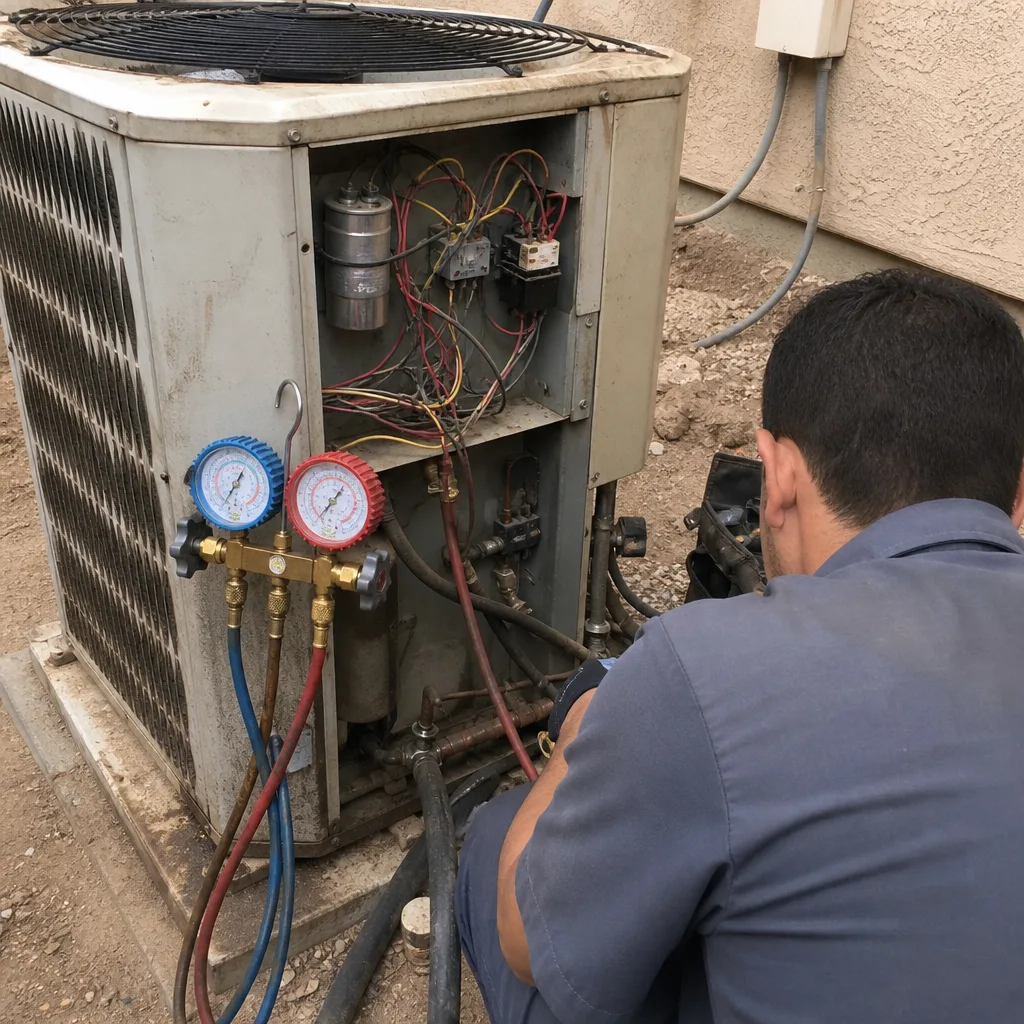
See the difference
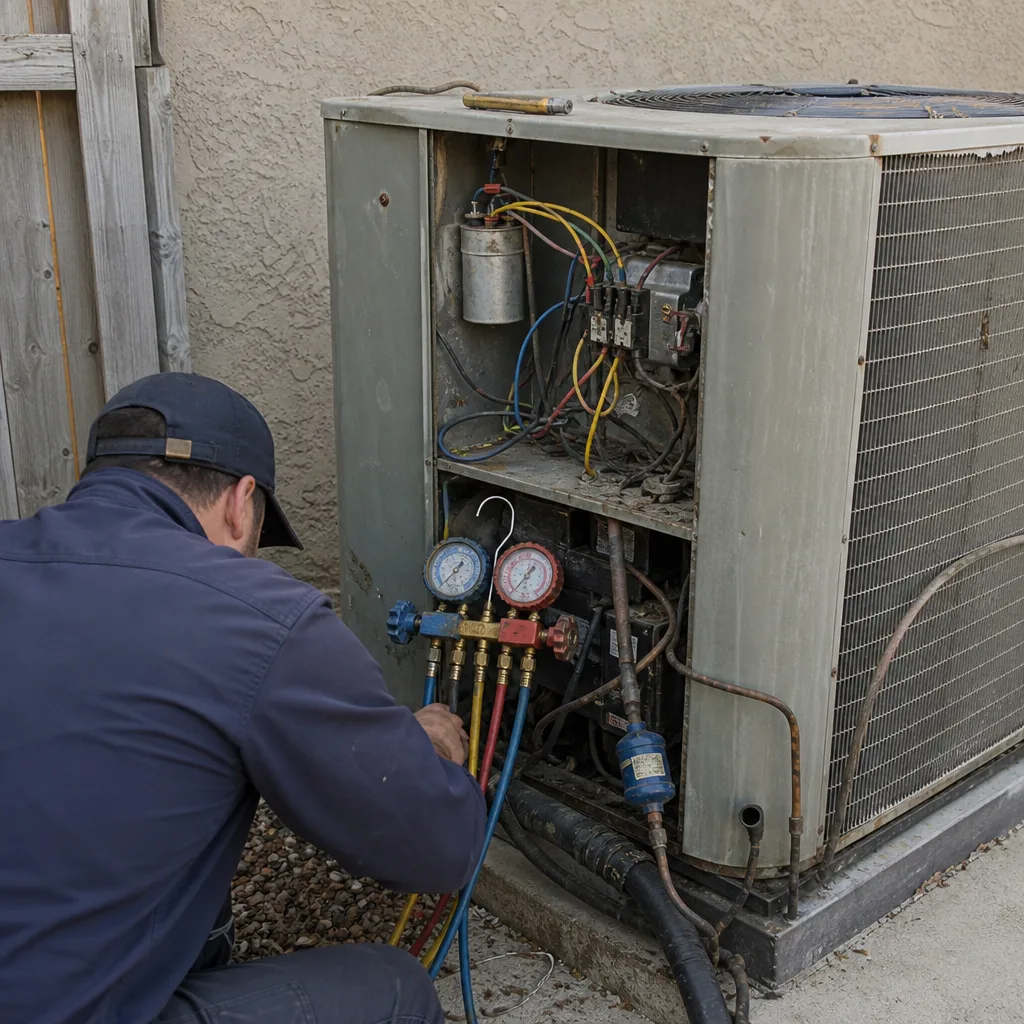
 Before
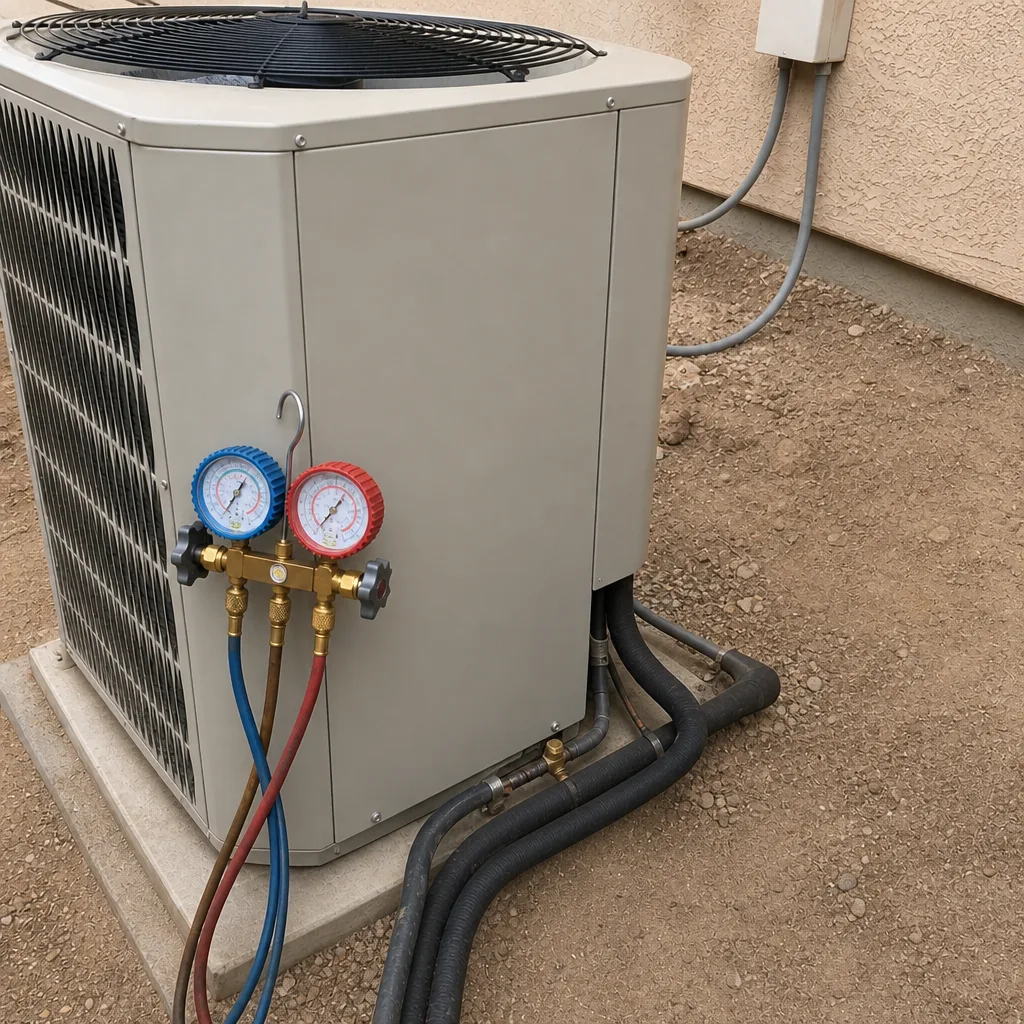 After
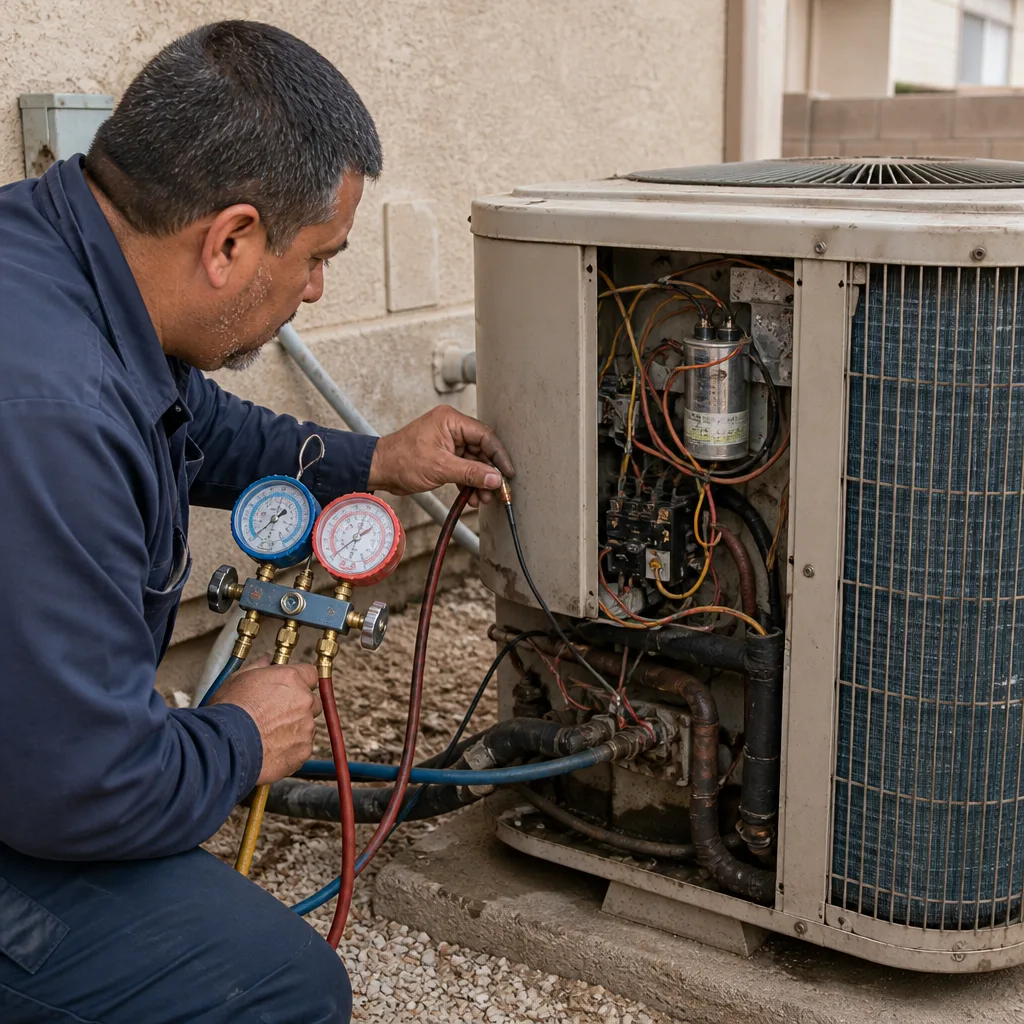
 Before
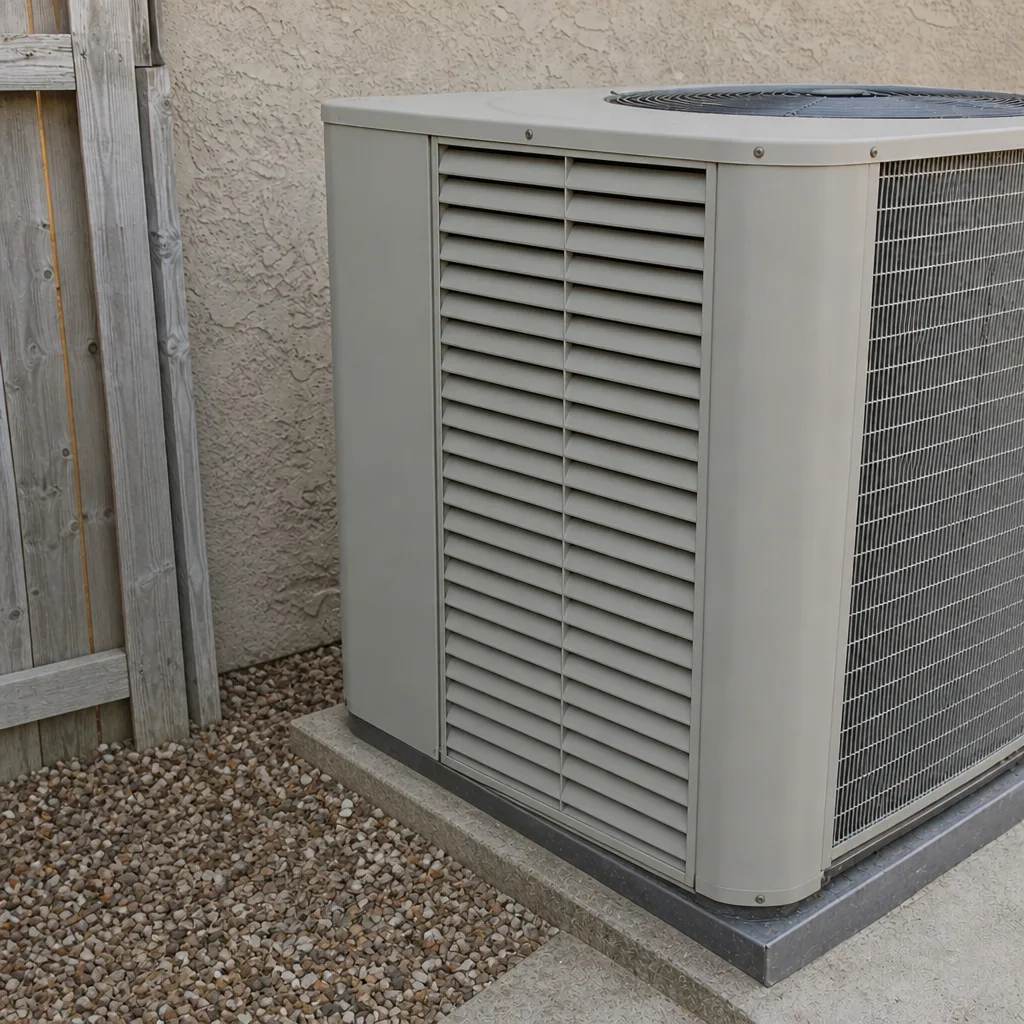 After
 Before
 After
When to Call a Professional
Call a technician when you see any late-stage sign – yellow flame, persistent burning smell, loud banging, short cycling, or a CO reading above zero. Call immediately and shut the furnace off when gas smell, high CO alarm, or water pooling at the unit combine with any of the above. Call before the first cold night if your furnace has sat idle since spring, and call any time a gas or electrical component worries you – those are jobs for a trained technician, not a weekend project. Replacing an igniter, cleaning a flame sensor, or diagnosing a cracked heat exchanger involves gas, high voltage, and carbon monoxide, and it’s the kind of work where “I’ll figure it out” turns into a hospital trip. Coldharbour Heating & Air Henderson offers free estimates in Henderson – call (844) 797-5122. We answer with a live person 24 hours a day, 7 days a week, so you’ll get a real answer, not a voicemail tree, whenever your furnace decides to act up.
Frequently Asked Questions
The earliest reliable sign is uneven heating – a bedroom that used to be warm and now has a cold corner, while the rest of the house is fine. The second earliest is a gas bill that’s up 8 to 15 percent over the same month last year with comparable weather. Both mean the furnace is working harder to deliver the same heat and usually point to a filter, burner, or airflow problem that’s cheap to fix now.
Not always an emergency, but always a call. A yellow or orange flame means incomplete combustion, which points to a dirty burner, a blocked flue, or a failing heat exchanger, and that’s the leading cause of carbon monoxide in a home. Shut the furnace off if you also see soot, smell a persistent burning odor, or get any CO reading. Call us for a diagnostic before the furnace runs again.
Every 60 to 90 days during heating season, and honestly, sooner if you have pets or a lot of dust in the home. The dry desert air here loads filters faster than a humid climate does, and a clogged filter is the single most common cause of the airflow problems that shorten a furnace’s life. Write the date on the new filter frame with a marker so you’re not guessing.
Because it sat idle from roughly April until the first cold night, then suddenly runs hard for hours. In Henderson that pattern compresses a season’s worth of stress into the first two or three heating cycles – dust on the burners, a stiff belt, an igniter that has to fire on the first try. Book a tune-up in late September and the October failure usually doesn’t happen.
No. A cracked heat exchanger lets carbon monoxide exhaust into the air you breathe, and it cannot be safely patched. The furnace needs to be replaced, not repaired. If your technician finds a crack, the right next step is a written quote for a new unit and a shutdown of the current one until it’s replaced.
Most repairs run $150 to $350 for a single component like an igniter or flame sensor, and $350 to $800 for a blower motor, inducer motor, or control board. Every quote from Coldharbour is written before any work begins and doesn’t change at the door, and every repair is covered for 365 days – if it fails, we come back and fix it at no charge. Call (844) 797-5122 for an exact quote; estimates are free.
The Bottom Line
The signs worth acting on aren’t the loud ones. A cold corner in a bedroom, a gas bill that’s up a touch over last year, a thermostat that runs longer than it used to – those are weeks ahead of the banging. In Henderson, the compressed October failure pattern means the early window is short, so book a tune-up in late September and it usually closes before the first cold snap. Yellow flame, persistent smell, and loud startup mean shut it off and call today. Get a written price and a written guarantee on any repair, and don’t accept a verbal handshake in place of either. Our team has up to 23 years of experience on the systems most Henderson homes actually run, and Furnace Repair in Henderson is one call away.
Written by the team at Coldharbour Heating & Air Henderson.