
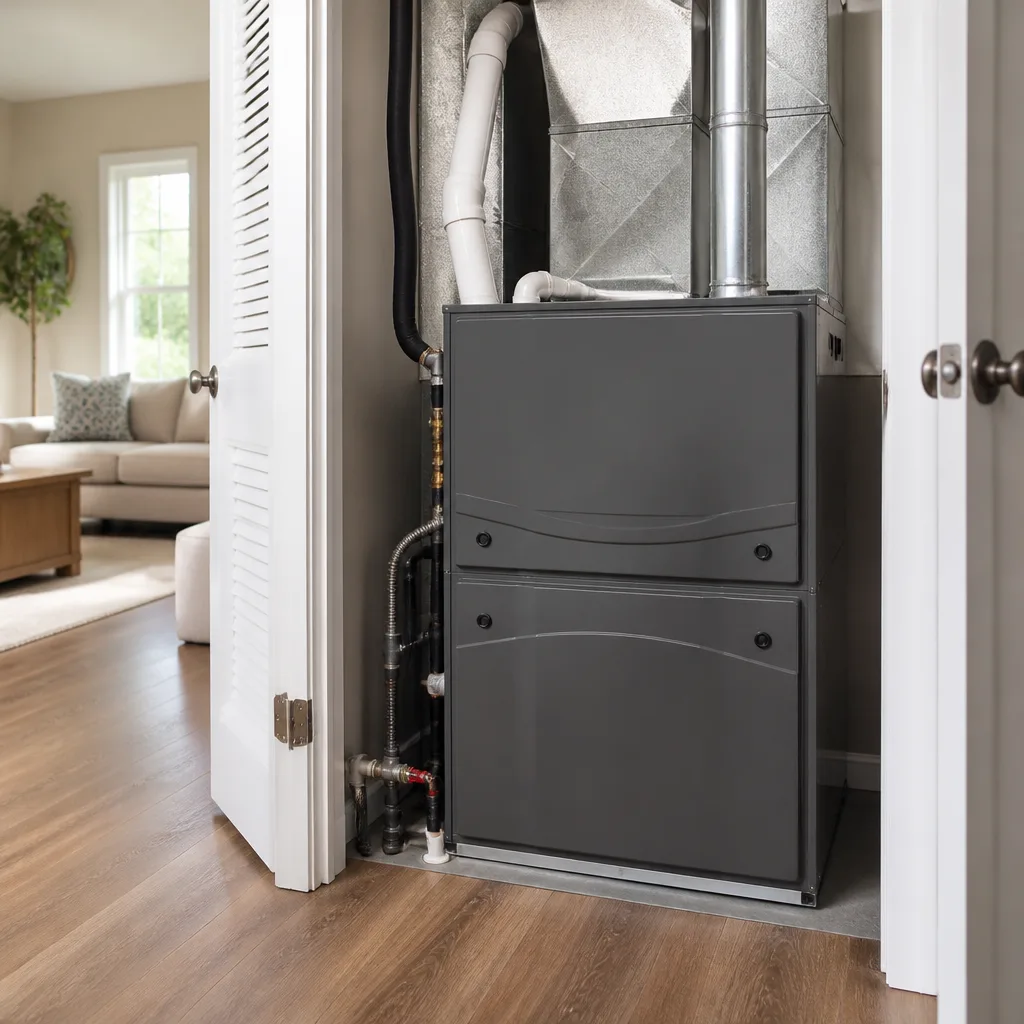
 Furnace & heating
 AC repair
 Heat pumps
 Ductless mini splits
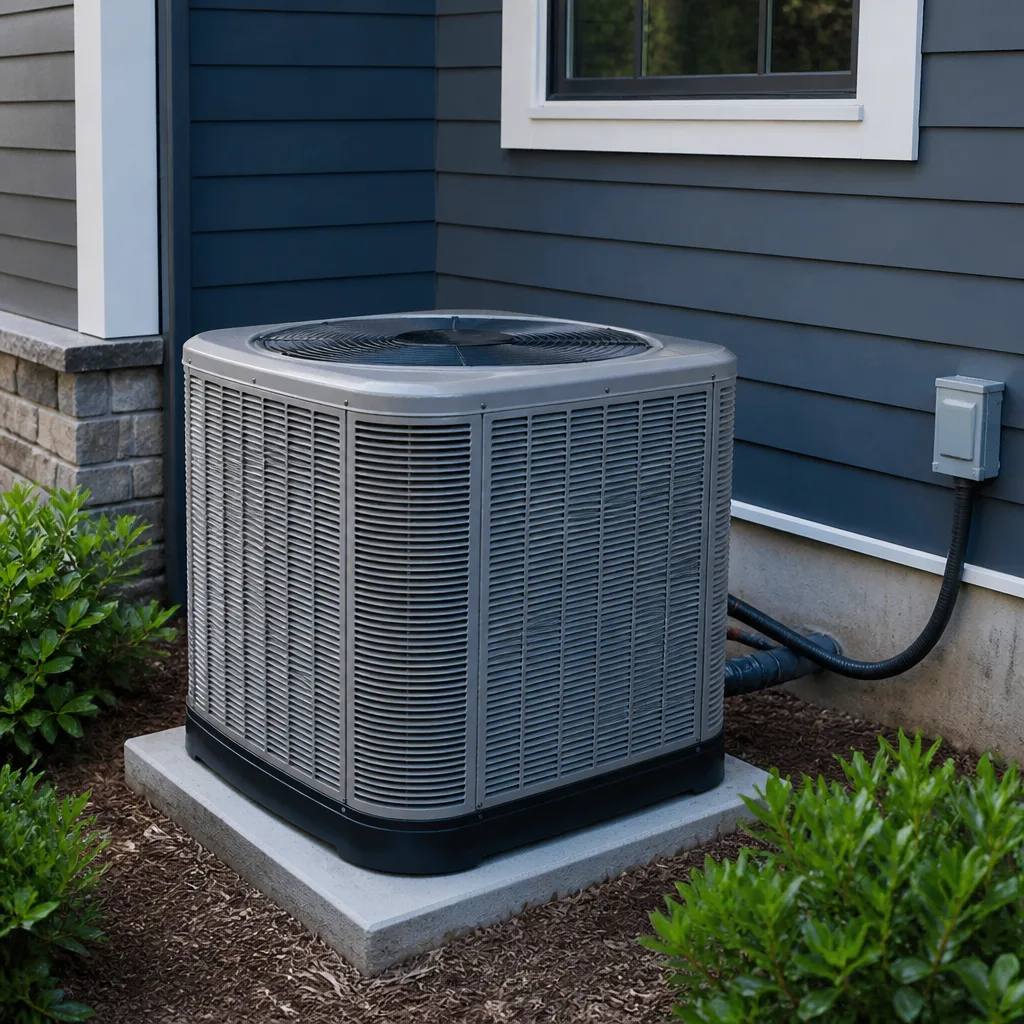 Carrier
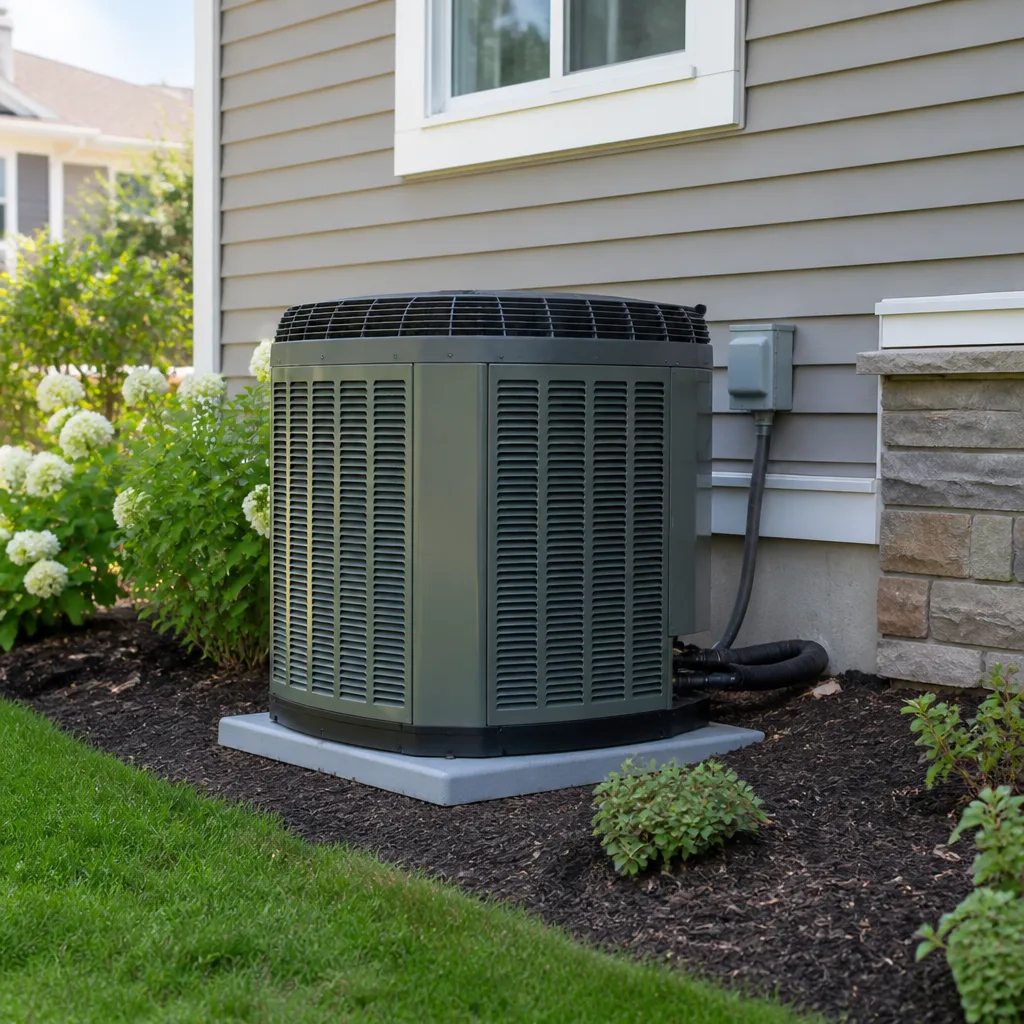 Trane
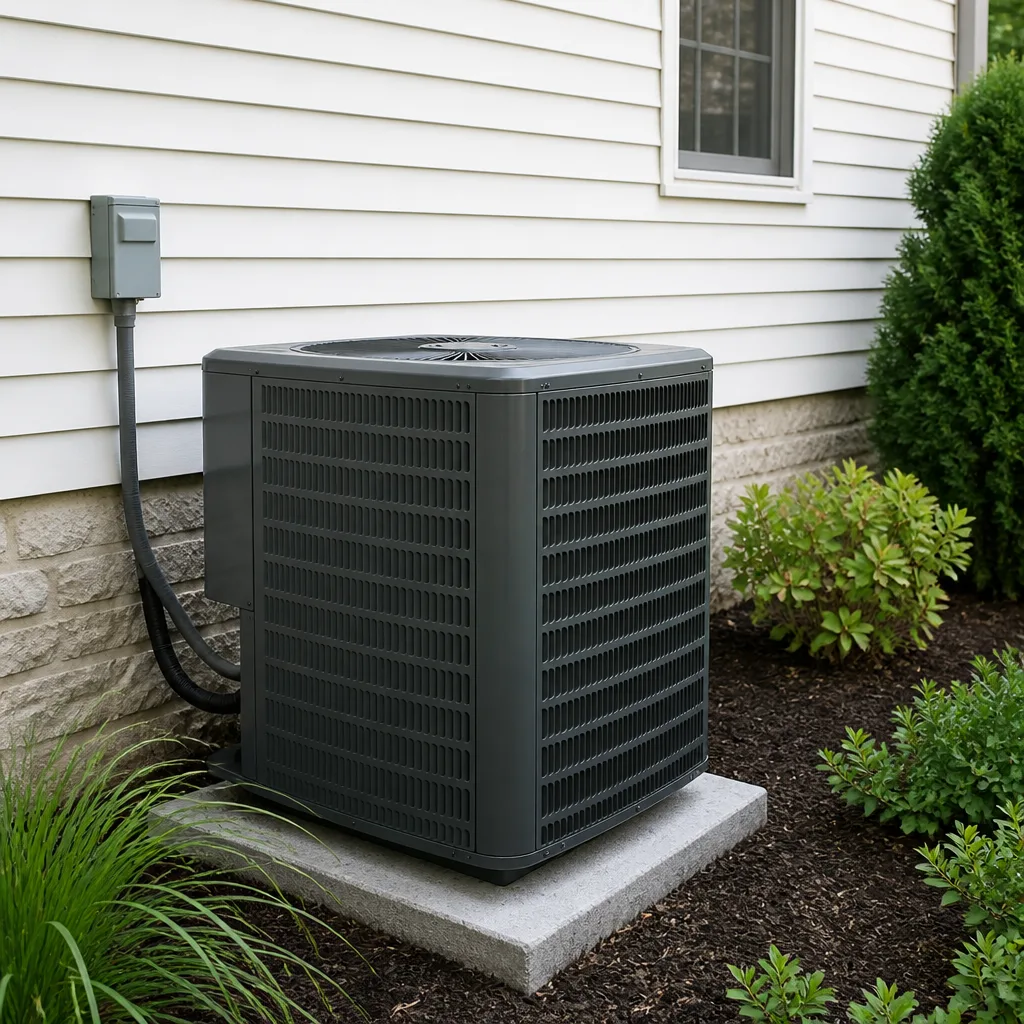 Goodman
Seasonal tune-up and full diagnostic on your Carrier, Trane, or Goodman system - readings shown to you before any repair is proposed
Diagnosis first, numbers second - you approve the repair price before a single part goes in.
Get your free estimateStyles & brands we work with
- AC repair
- Furnace & heating
- Heat pumps
- Ductless mini splits
- Carrier
- Trane
- Goodman
See the difference
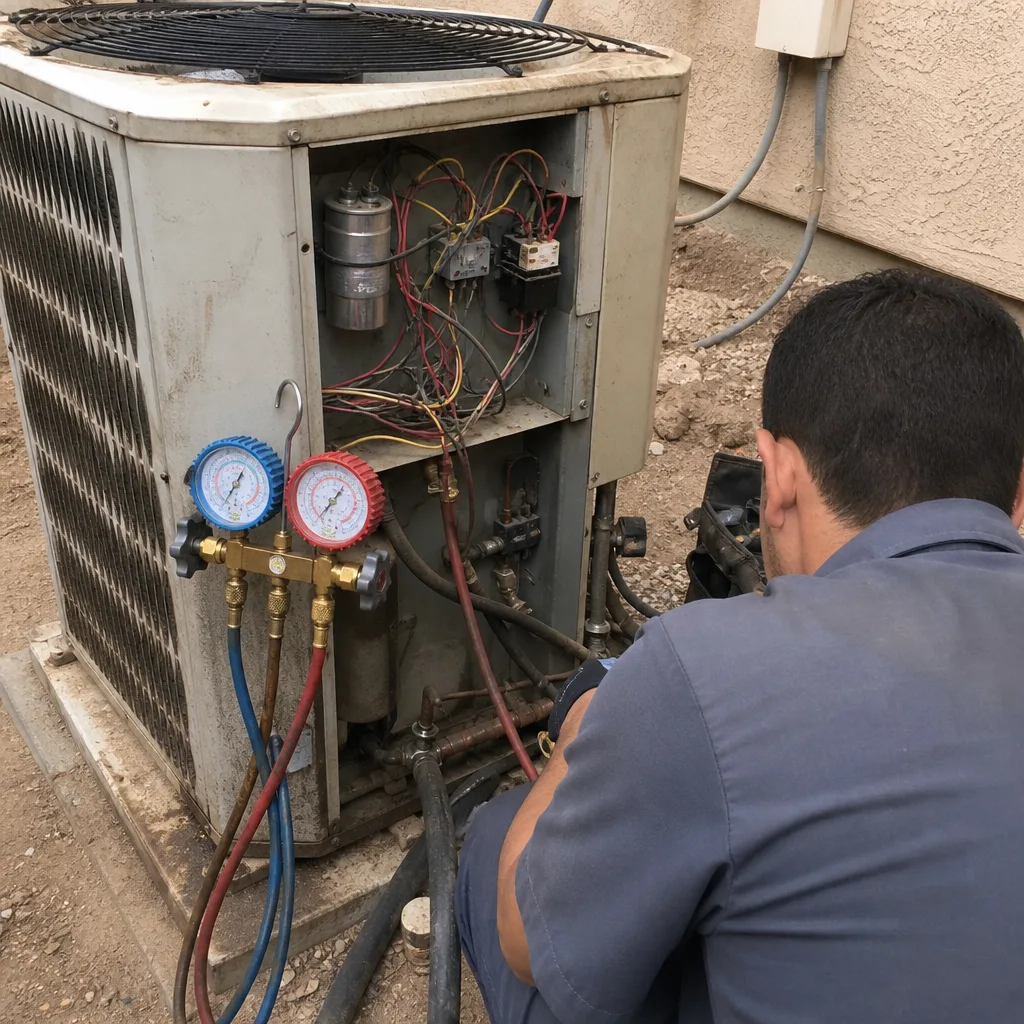 Before
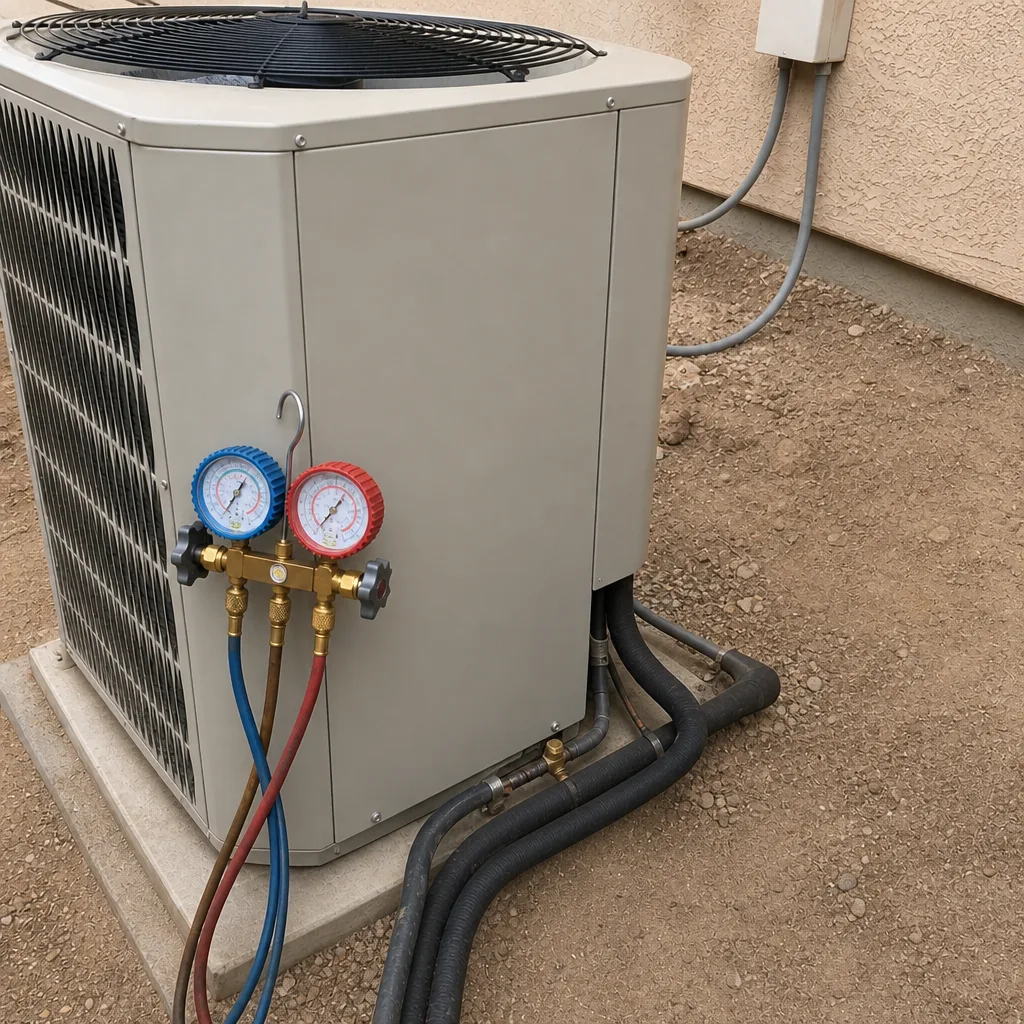 After
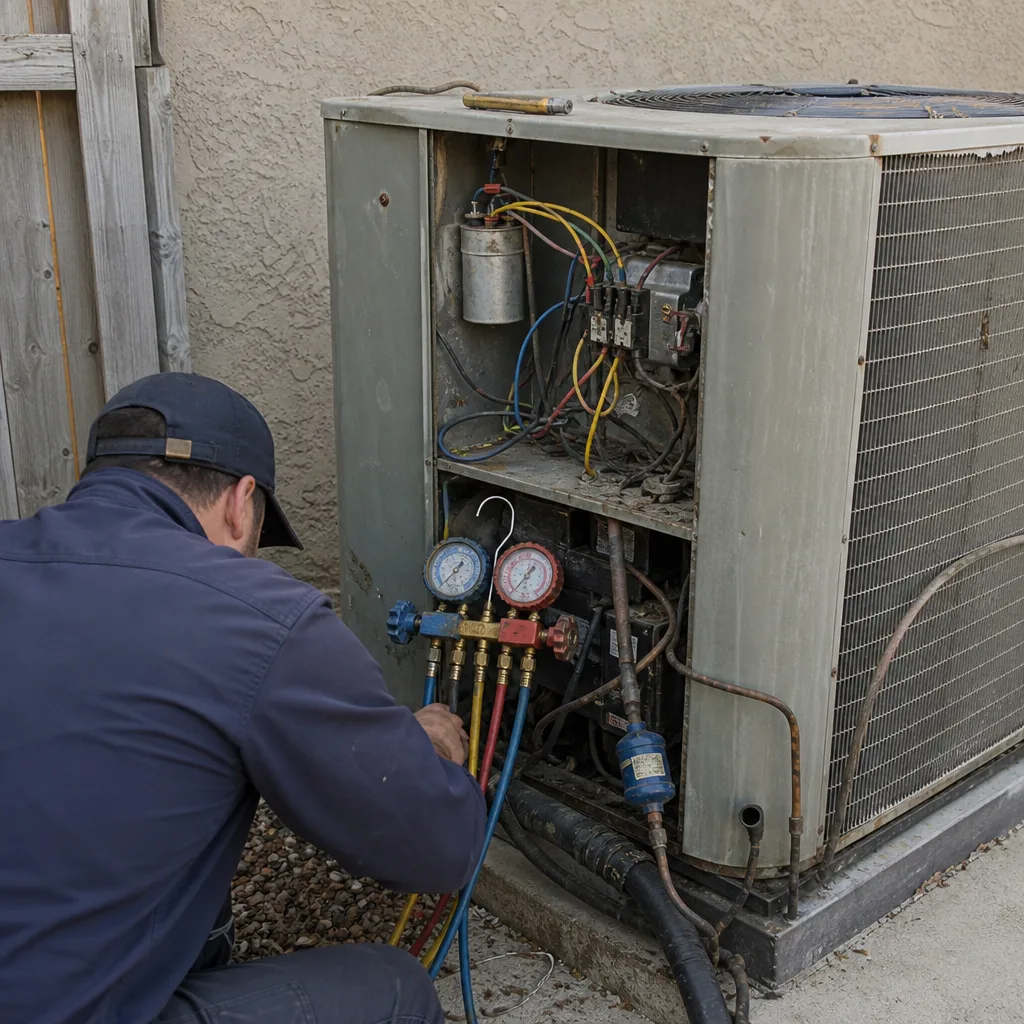 Before
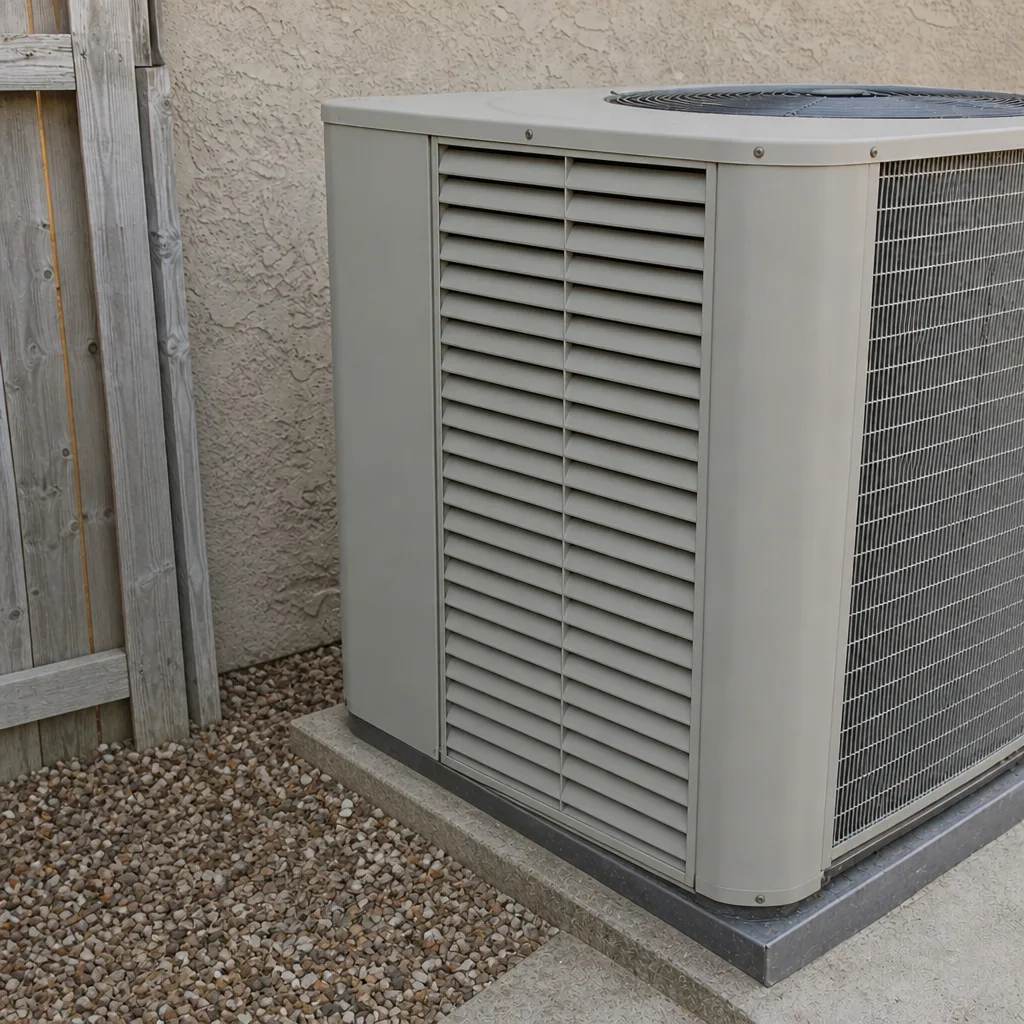 After
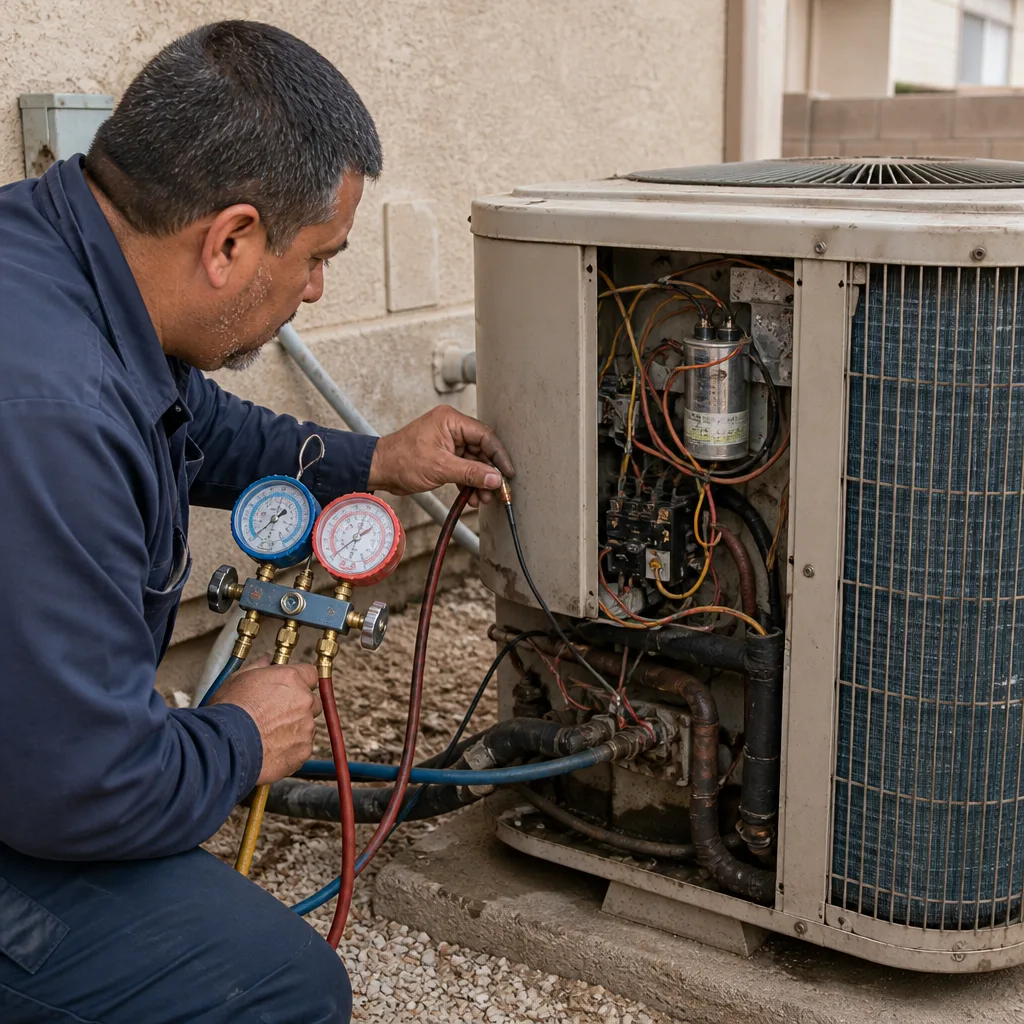 Before
 After
How long does a furnace last in Henderson, NV? 18-25 years for the heat exchanger, but most Henderson systems quit earlier than that
A gas furnace heat exchanger, the metal core that carries combustion heat into your airstream, can last 18-25 years in proper conditions. The problem is that in most Henderson homes the furnace doesn’t live inside the house at all. It sits in the attic bolted into the same air handler that carries your cooling load, so it takes everything the desert throws at a system: near-continuous runtime from May through September, attic temperatures well past 140°F in July, and dust that loads up a blower wheel faster than you’d believe. That’s why we see a lot of Henderson systems hit end-of-life at 15-18 years, not 20 or 25. If your furnace is in that window and the repair bill is climbing, call (844) 797-5122 and we’ll tell you plainly what we see.
Key takeaways
- Heat exchangers themselves: 18-25 years. The parts around them in a Henderson attic: 7-18 years.
- Blower motors burn out at 12-18 years under near-continuous use, and most of that use is cooling, not heating. The motor doesn’t care which season it’s spinning in.
- The 1996-2006 housing boom put a huge number of Henderson systems in place. Those are now 18-28 years old and past the point where a single repair is money well spent.
- End of life rarely means a sudden death. It means more repairs, higher NV Energy bills, and weaker heat on a 40°F morning.
Why the national “20-year furnace” benchmark doesn’t hold up in Henderson
Henderson sits in the hot, dusty Mojave downwind of the Las Vegas Valley. Most of the housing was built in the 1990s and 2000s as stucco-clad tract homes with tile roofs, slab foundations, and air handlers shoved into the attic. That attic placement is the whole story. When a heat exchanger in a Kansas basement lives in 70°F air, its control board, capacitors, wiring insulation, and blower motor live in 70°F air too. When they live in a Henderson attic, they spend every July afternoon in a room hot enough to cook in.
So the honest breakdown for a Henderson system looks different from a national average. Here’s what we actually see, based on the components we replace most often:
| Component | Typical lifespan in Henderson | What shortens it |
|---|---|---|
| Heat exchanger | 18-25 years | Cracks faster with short-cycling; dust buildup on the exterior fins |
| Blower motor | 12-18 years | Near-continuous runtime; clogged filters that force it to work harder |
| Control board | 12-18 years | Attic heat stress; power surges during monsoon storms |
| Igniter | 7-12 years | Heat cycling; dust on the hot surface |
| Inducer motor | 10-15 years | Dust pulling through the flue, bearing wear |
Read that table with the thesis in mind: the heat exchanger is usually the last thing to fail, not the first. In Green Valley and the older tract neighborhoods off Green Valley Parkway, we routinely see air handlers where the original heat exchanger is still sound while the blower motor has already been replaced once and is due again. The furnace didn’t die. Everything bolted to it did.
What does “end of life” actually look like in a Henderson home?
A furnace doesn’t announce its death day. It declines in ways that are easy to write off until you add them up. The signals we look for when a homeowner says “something feels different this year” are usually these:
- Repairs are stacking up. One $280 fix a year is normal. Two or three in a single heating season is a pattern, not bad luck.
- The power bill quietly climbs. A furnace with a failing inducer or a blower running against a loaded filter moves less heat per dollar. That shows up on your NV Energy statement before it shows up as a breakdown.
- Capacity drops on the worst days. The house that heated fine at 45°F now struggles to hit the set point at 35°F. An aging system has less margin, and you only notice the missing margin when you need it.
- Strange smells or unusual furnace sounds. A metallic smell or a rumbling note can point toward a failing component. Gas appliances deserve respect; if you smell gas, leave the house and call for service, don’t poke at it yourself.
If any of this feels familiar, it’s worth an actual assessment. Coldharbour Heating & Air Henderson handles both heating and furnace work in Henderson, and the technician who arrives is trained on nine major residential brands, including Trane, Lennox, Goodman, and Rheem, so there’s no “we don’t work on that” surprise when your system turns out to be a brand the last company didn’t want to touch. You can start on our home page or jump straight to a call.
Repair or replace? The honest answer for a 1996-2006 Henderson system
Here’s where we’d rather be direct with you than tell you what you want to hear. If your system was installed during Henderson’s big building push between 1996 and 2006, it’s now somewhere between 18 and 28 years old. In that bracket, a single repair can absolutely buy you another year or two, and if the system is otherwise healthy, it’s a reasonable call. But it isn’t a fix, it’s a stay of execution, and you deserve to hear that plainly before you spend money.
What we don’t do is pressure. When a technician assesses a furnace, the conversation about repair versus replacement is part of the visit, with a written price for both options handed to you before a single tool comes out. You make the decision with full information, on your schedule. If you repair, the work carries our 365-Day Done Right Promise: written guarantee on every repair, and if it fails within the year, we come back and make it right at no charge.
For ballpark numbers, the market in Henderson runs like this:
| Job | Typical range |
|---|---|
| Furnace repair | $150-$700 |
| AC repair (relevant if the shared air handler is the problem) | $150-$650 |
| Seasonal tune-up | $80-$200 |
| Full system replacement | Quoted in writing after assessment |
Notice the overlap between furnace repair and AC repair ranges. That’s not an accident. In a dual-use Henderson system, the air handler is shared, and a repair that looks like a “heating” job can turn out to be a cooling-side component. A company that only chases one type of call will misdiagnose the other. We handle both sides of the system, which matters more in this climate than most homeowners realize.
How do you get the most years out of a furnace here?
You can’t stop the attic from getting hot. You can, however, remove the two accelerants that do the most damage. The first is dust. In a valley with monsoon wind events and constant airborne particulate, filters clog faster than the manufacturer’s recommended interval suggests. Change yours every one to three months during cooling season, and don’t “upgrade” to a filter so dense the blower has to fight it. The second is neglect. A tune-up once a year catches a failing igniter or a loaded blower wheel before it becomes an emergency on a cold night. A $80-$200 tune-up is cheap insurance against a $700 repair.
Beyond that, watch your ductwork. In Henderson’s tile-roof tract homes, duct leakage and undersized returns that would be a minor annoyance elsewhere become real capacity problems, because the system has no margin left when it’s working at the edge of its rated capacity. If a room never quite warms up, the furnace may not be the villain.
FAQs
In a Henderson home, expect 15-18 years of practical life from the system as a whole, even though the heat exchanger itself is rated for 18-25 years. Attic heat exposure and near-continuous runtime wear out the blower motor, control board, and other shared components before the heat exchanger fails, so the furnace assembly ages faster than a furnace in a mild climate. If yours is in that window, call (844) 797-5122 for a straight assessment of where it stands.
For a system under about 15 years old with one clear fault, repair is almost always cheaper. Furnace repair in Henderson typically runs $150-$700. Past 15-18 years, especially if you’re facing a second repair in the same season, replacement is usually the smarter long-term spend because the next failure is rarely far off. We quote both options in writing so you can weigh them without pressure. Call (844) 797-5122 and we’ll walk you through it.
No. This is the counterintuitive part of living in Henderson. Your furnace shares its air handler with your AC, and that air handler runs hard from May through September even while the heat sits idle. The blower motor and control board don’t get a break just because you haven’t turned on the heat in eight months. A furnace in a lightly used cabin lasts longer than one in a Henderson attic because the equipment around it isn’t running, not because the furnace gets used less. For a real read on your specific system, call (844) 797-5122.
Phone coverage is live around the clock, every day of the year, so you’ll reach a person, not voicemail. Whether we can be at your door the same day depends on the schedule, but we give you a firm arrival window and a written price before the technician starts. Call (844) 797-5122 and we’ll tell you what’s available.
If your furnace is in that 15-18 year window, it’s worth a look
You don’t need to guess whether your furnace has another five years or five months. Coldharbour Heating & Air Henderson offers a no-pressure assessment in Henderson, with a written price for repair and replacement before any work begins. Call (844) 797-5122 for a free estimate and a plain-spoken answer about where your system really stands.
Written by the team at Coldharbour Heating & Air Henderson, serving Henderson, NV.