
Last updated November 17, 2026
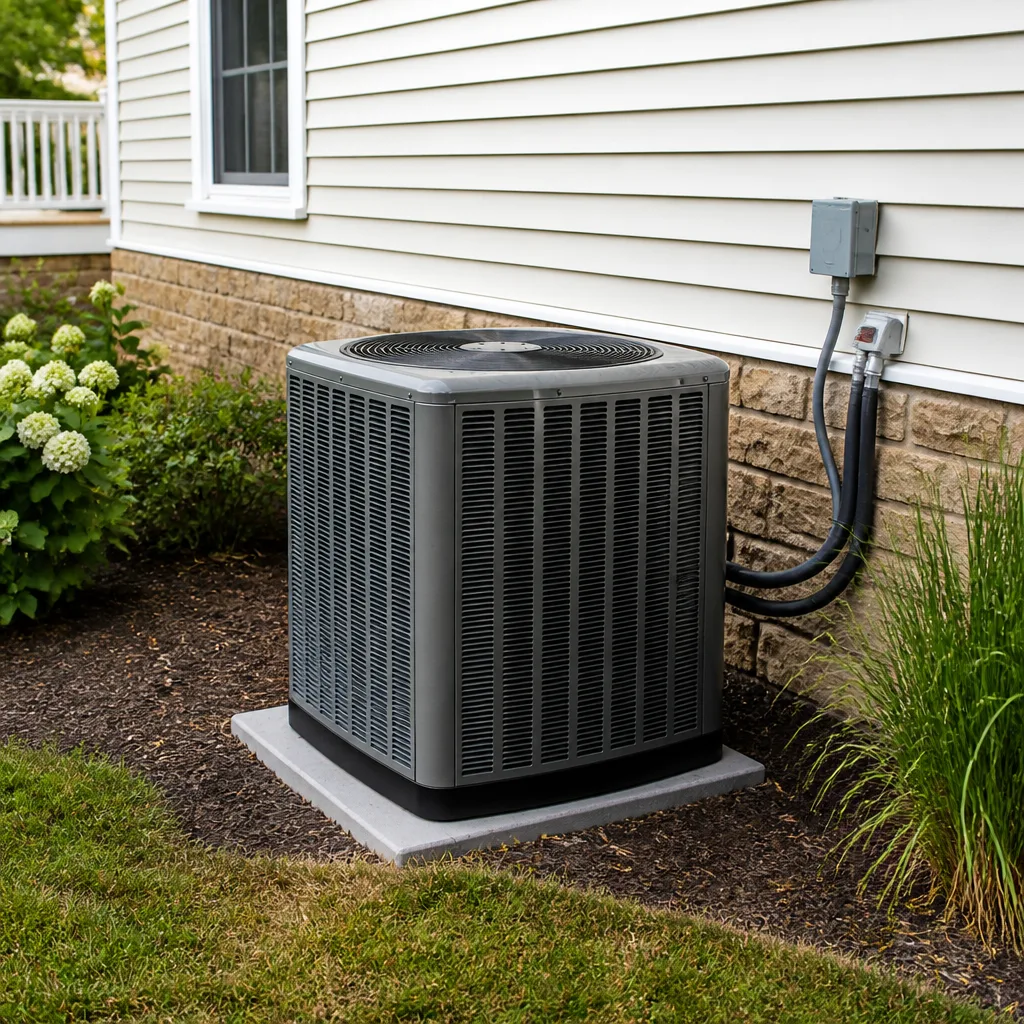 AC repair
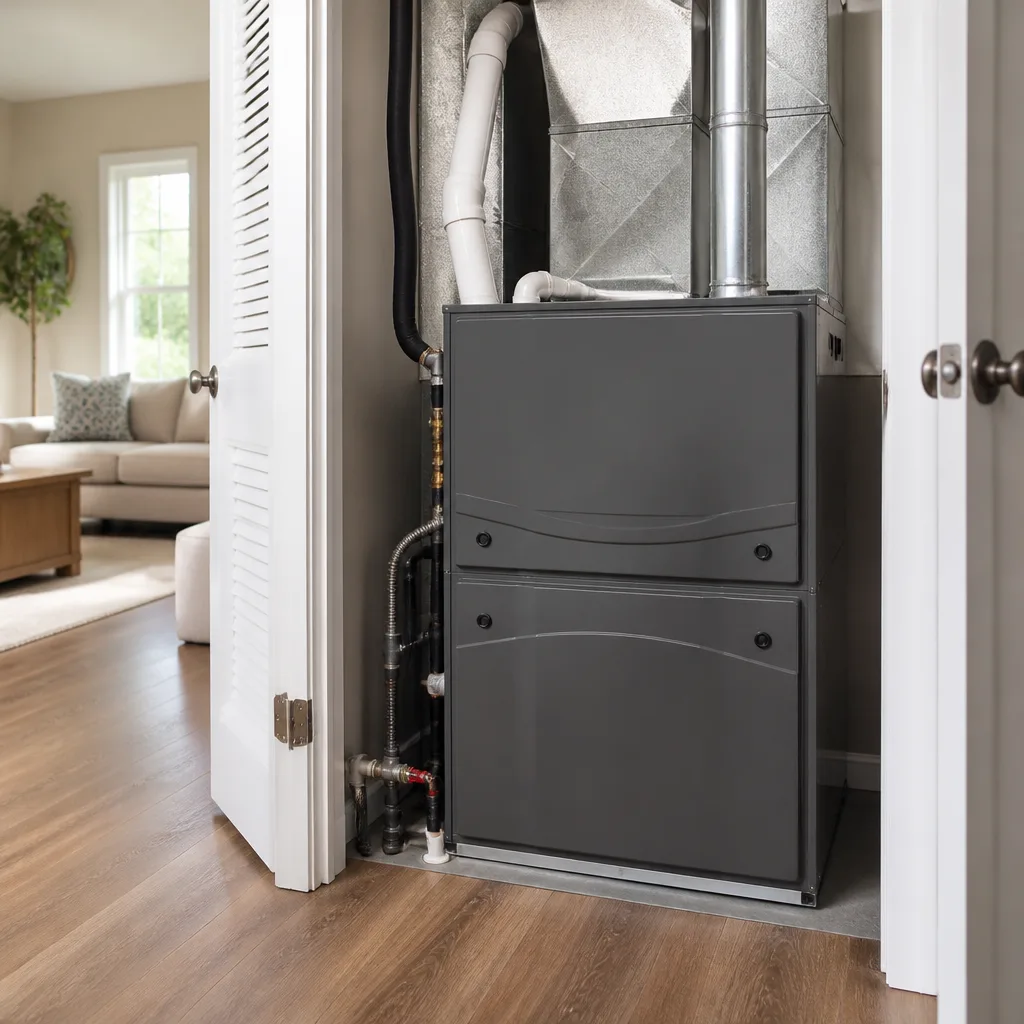 Furnace & heating
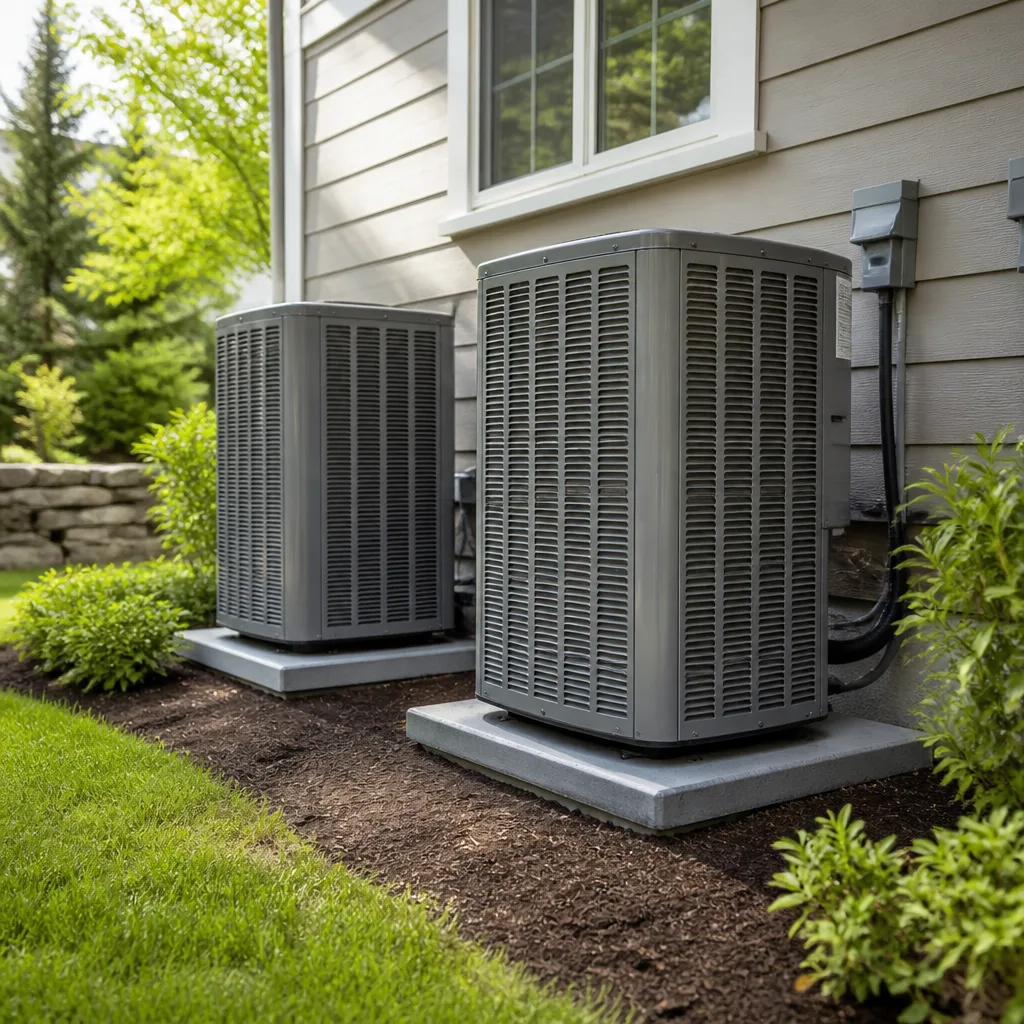 Heat pumps
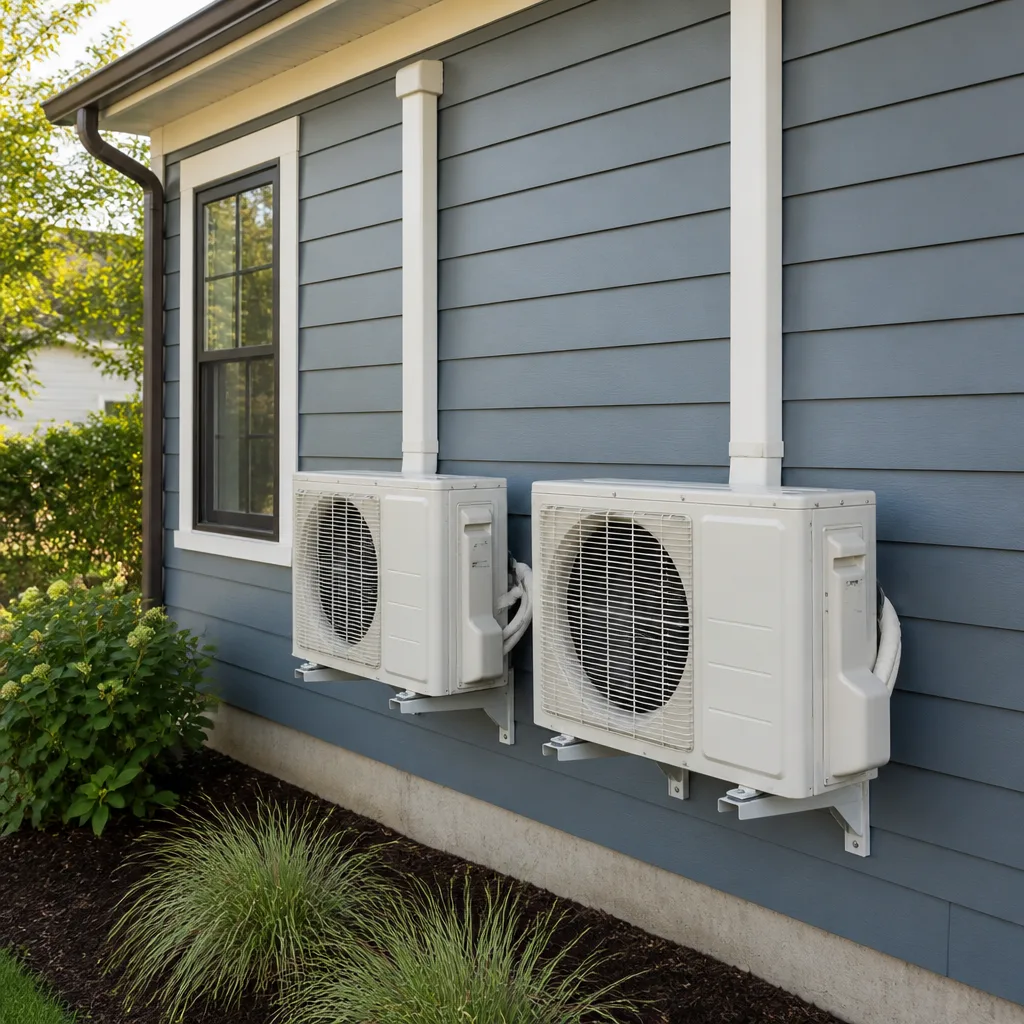 Ductless mini splits
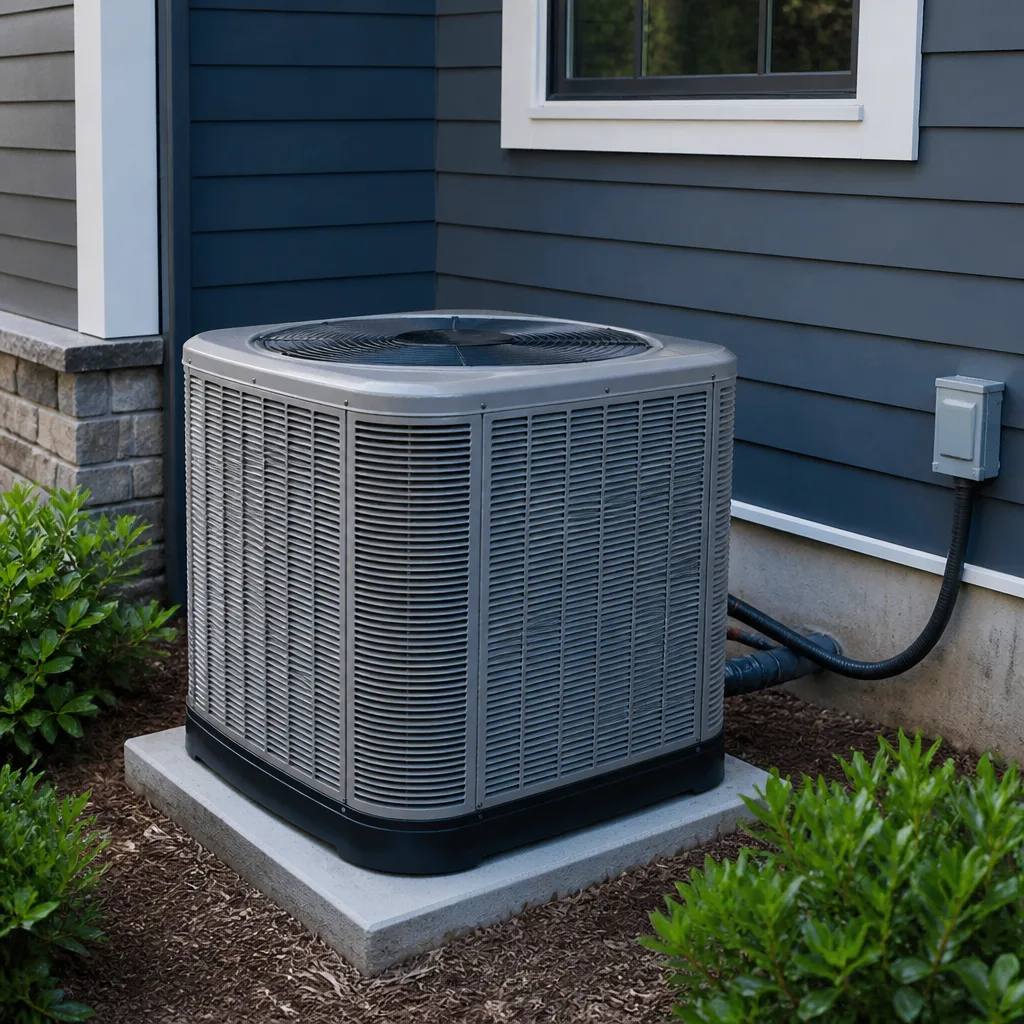 Carrier
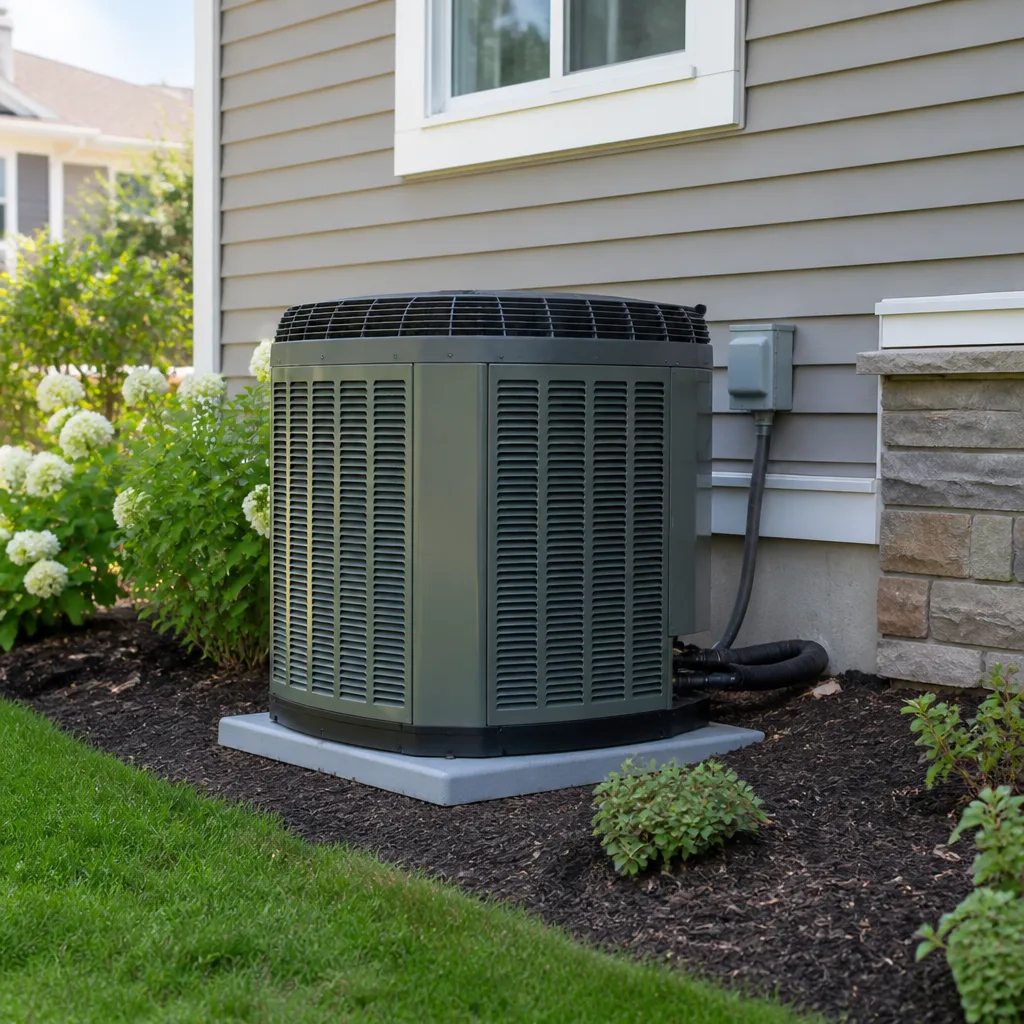 Trane
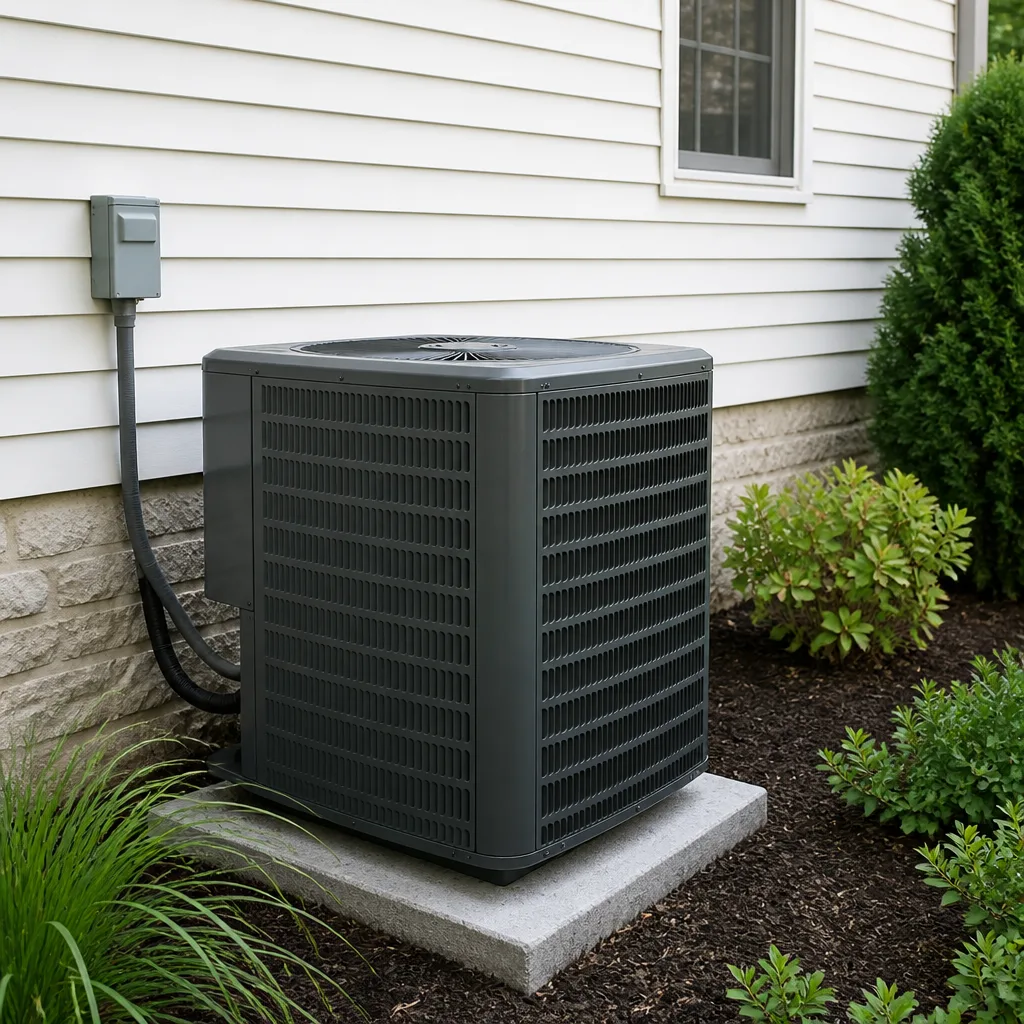 Goodman
Seasonal tune-up and full diagnostic on your Carrier, Trane, or Goodman system - readings shown to you before any repair is proposed
Diagnosis first, numbers second - you approve the repair price before a single part goes in.
Get your free estimateHVAC Emergency Preparedness Guide for Henderson Homes
Henderson averages around 70 days a year above 105°F. That’s not a comfort problem; it’s a safety timeline. When an AC quits in that kind of heat, a single-story home with a low-pitch roof and west-facing windows can climb into dangerous indoor temperatures within four to six hours. We’ve walked into Henderson houses at 94°F indoors with the blinds open and no plan. This guide gives you one: the temperature thresholds that matter for each family member, how to slow the heat climb, what to have ready before you call, where the city’s cooling stations are, and which parts you can legally keep on hand. Read it now, before you need it.
Quick Answer
An HVAC emergency in Henderson heat is a medical event waiting to happen, not a home comfort inconvenience. If your AC fails during a heat advisory, get vulnerable household members (elderly, infants, pets) into a cooled space within two hours, slow the indoor temperature rise with window and fan management, and call for service with your system’s model number and a photo of the unit ready. Preparedness before the failure is what keeps a bad afternoon from becoming a hospital visit.
Styles & brands we work with
- AC repair
- Furnace & heating
- Heat pumps
- Ductless mini splits
- Carrier
- Trane
- Goodman
Table of Contents
- The indoor temperature thresholds that actually matter
- How to slow indoor temperature rise after AC failure
- What to have ready before you call
- Henderson’s cooling station network
- Parts you can legally stock in advance
- A real Henderson heat scenario, start to finish
- Common mistakes to avoid
- When to call a professional
The Indoor Temperature Thresholds That Actually Matter
Not every hot afternoon is an emergency, but there are specific indoor temperatures at which certain people cross from uncomfortable into physiological risk. Henderson’s dry heat helps sweat evaporate, which is why 100°F here feels different from 100°F in Houston, but dry heat also masks dehydration. People don’t notice they’re losing water until it’s already a problem.
Here’s the ladder we use when talking with Henderson homeowners during a heat advisory:
- Under 80°F indoors: Fine for most healthy adults. Check on elderly neighbors anyway; they often don’t turn on the AC to save money, and Henderson summers make that a bad bet.
- 80°F to 85°F: Discomfort range. Infants and adults over 65 start showing stress. Move pets to the coolest room, hydrate, close the west-facing blinds.
- 85°F to 90°F: Risk range for elderly, infants, and anyone with heart or lung conditions. Get them to a cooled space, whether that’s a neighbor’s house, a library, or a rec center. Don’t wait to see if the AC “catches up.”
- 90°F and above indoors: Treat as an emergency for vulnerable household members. Pets, especially flat-faced breeds and elderly dogs, are at genuine risk. This is when heat stroke becomes a live possibility, and the difference between a cooled car ride to a cooling station and staying put can be significant.
- 95°F and above: Dangerous for everyone. Get out of the house.
We’ve seen Henderson homeowners sit at 92°F indoors because “the technician is coming in three hours.” Three hours at 92°F with an infant in the house is three hours too many. When we dispatch for AC Repair in Henderson, we ask about household members first; that changes our urgency, and it should change yours.
How to Slow Indoor Temperature Rise After AC Failure
You can’t stop the heat, but you can buy hours. The physics is simple: Henderson’s peak sun hits west and southwest walls hard from about 3 p.m. to 7 p.m., and a house with a low-pitch roof absorbs radiant heat all day. Your job after a system failure is to slow that heat from getting in and to move what’s already inside out.
- Close every window and exterior door. Sounds counterintuitive, but opening windows in 108°F Henderson air lets hotter air in than the house already has. Keep the envelope sealed until outdoor temps drop below indoor temps, which in July might not happen until 10 p.m. or later.
- Close the west- and south-facing blinds and curtains. Radiant heat through glass is the single biggest contributor to indoor temperature climb. A cheap blackout curtain on a west window can drop the room 5-8°F.
- Run ceiling fans on high, but only in occupied rooms. Fans don’t cool air; they cool people via moving air across skin. Running them in empty rooms just adds motor heat.
- Use thermal mass strategically. Fill a bathtub with cool water and leave it. Close off north-facing rooms and dark bathrooms; those hold cooler air longer. Tile floors in a Henderson bathroom stay surprisingly cool for hours.
- Cook outside or not at all. The oven and stove can spike kitchen temperature 10°F in an hour. This is the day for cold food.
- Set up a “cool room.” Pick the smallest, most interior room with no exterior walls if you have one, close the door, and gather the household there. Body heat management is real; one room is easier to keep cooler than five.
This buys you time until a technician arrives or you can move to a cooling station. It does not replace either.
What to Have Ready Before You Call
When your AC fails and you call us, the first few minutes of the conversation determine how fast a technician can diagnose the problem. Homeowners who have three pieces of information ready cut diagnostic time by 20 to 30 minutes, which matters on a 110°F afternoon.
- Your system’s model and serial numbers. These live on a metal plate on the outdoor condenser unit and on the indoor air handler or furnace. Photograph both plates with your phone while the system is working and store them in a notes app. When it fails, you’ll have them instantly. The model number tells us what parts to bring and what common failures to expect.
- A labeled breaker panel. If your AC tripped a breaker, we need to know which one. A photo of a labeled panel or a quick list (“AC condenser = breaker 14, air handler = breaker 16”) saves a diagnostic step and helps you reset safely when the manufacturer’s manual says to.
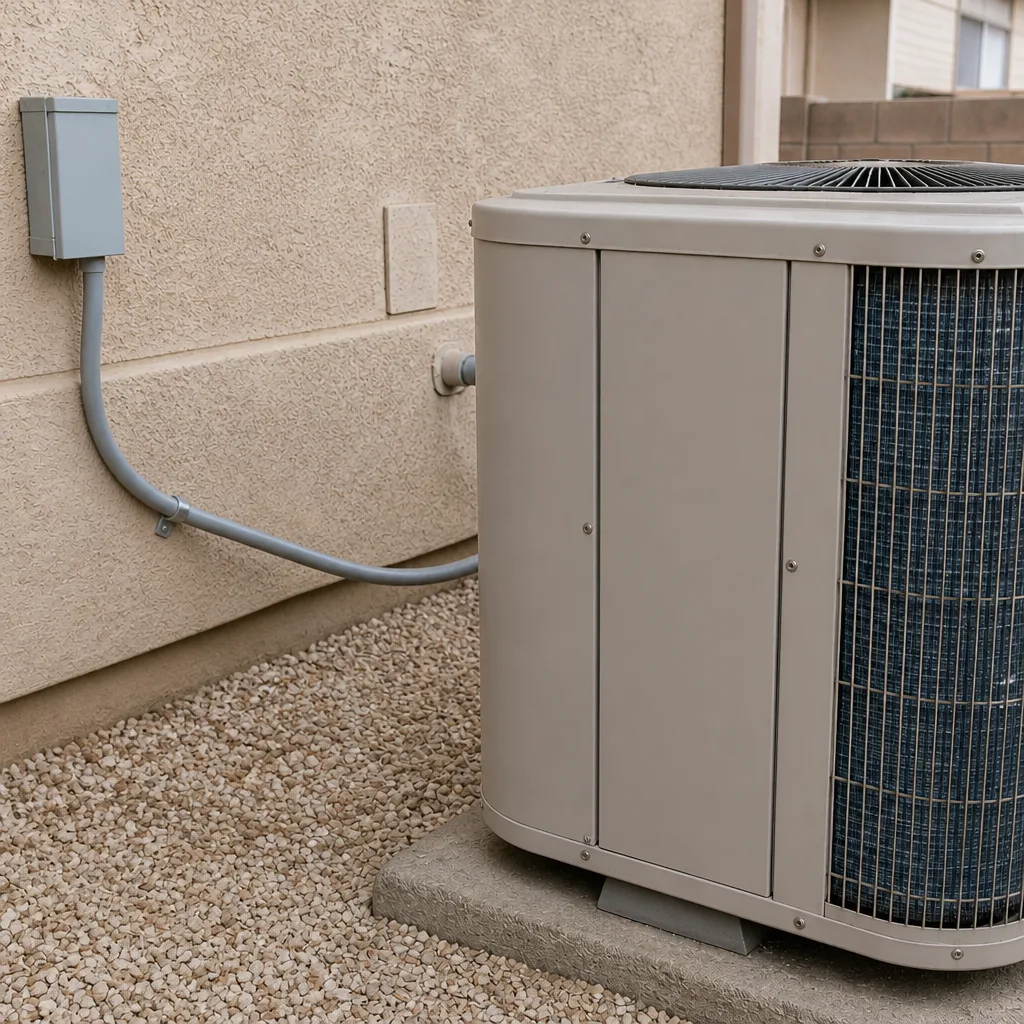
- Photos of the unit and the area around it. A photo of the outdoor unit shows us whether it’s clear of debris, whether the disconnect is accessible, and whether there’s a clearance problem. A photo of the indoor unit and filter tells us about filter condition and whether the coil is iced.
- A short written note of what happened. “Cool air stopped at 2:15 p.m., thermostat says 86, outdoor fan running but no cold air, no strange noises.” That’s diagnostic gold. “It’s broken” is not.
- Household member notes. Infants, elderly, pets, anyone with a medical condition. This drives urgency scheduling.
Store all of this in one place on your phone. You’ll thank yourself under stress.
Henderson’s Cooling Station Network
Most Henderson homeowners discover the city’s cooling resources after they need them. Here’s the map before the day comes. Henderson operates and coordinates cooling resources during heat advisories through Clark County and partnership programs, and the general categories are stable enough to plan around now.
- Henderson libraries. Branches including the Paseo Verde, Gibson, Green Valley, and James I. Gibson locations serve as cooling centers during advisories, typically open regular library hours with extended hours announced during extreme heat events. Free, no eligibility required. Bring water; you can stay for hours.
- Henderson recreation centers. The Downtown Recreation Center, Black Mountain Recreation Center, and Multigenerational Center open as cooling stations during heat advisories, with hours posted on the city’s website and through the Parks and Recreation department. Some require a small daily fee for full facility use; cooling-station access is typically free during declared events.
- Clark County and NV Energy programs. NV Energy maintains a cooling assistance and bill-payment program for income-qualified households, and the state’s Low-Income Home Energy Assistance Program (LIHEAP) helps with cooling bills and sometimes with repair or replacement of a failed system. Eligibility is income-based; applications run through the state and through Clark County Social Service.
- Senior and community centers. Heritage Park Senior Facility and similar sites provide cooling access during heat events, with priority for older adults.
Save the phone number for Henderson’s Parks and Recreation and check the city’s cooling-station page each May. Hours and locations shift year to year. Don’t wait until your system fails on a Saturday to look them up.
Parts You Can Legally Stock in Advance
Some of the most common AC failures in Henderson homes are resolved by parts you can keep on a shelf. Others are not, and we want to be direct about which is which. Stocking the right items means you’re not waiting on a service window for a $30 part.
What you can safely keep on hand:
- A spare run capacitor sized to your unit. A capacitor is a small cylindrical part that gives the compressor and fan motors the boost they need to start. It’s the single most common failure on a Henderson AC during a heat wave. Look at the label on your existing capacitor (it will list microfarads, like “35/5 µF, 370V”) and buy an exact-match replacement. Cost: $15 to $40 online. This is a plug-and-play swap for someone comfortable working with a power-off breaker and a screwdriver, but we’d still recommend a technician do it if you’re not confident; capacitors hold a charge and can bite.
- A spare thermostat. A basic programmable or smart thermostat (Lennox, Rheem, and Trane models are common) can be swapped in if yours dies. Match your system’s wiring (R, W, Y, G, and often C). Cost: $80 to $250.
- Extra air filters. Buy a stock of the MERV 8 or MERV 11 filters sized to your return grille. Change them every 60 days during Henderson’s dust season (spring and early summer). A clogged filter causes iced coils and frozen systems, which is one of the failures we see most.
- A shop vac and a hose. Not a part, but the tool for clearing a clogged condensate drain, which is a top cause of AC shutdown.
What not to stock or replace yourself: high-voltage capacitors in some commercial equipment, contactors, compressors, refrigerant, circuit boards, and anything requiring opening the sealed refrigerant circuit. High-voltage HVAC components and refrigerant handling are genuinely dangerous; a trained professional should do that work. We say that without exception.
A Real Henderson Heat Scenario, Start to Finish
Here’s what a well-prepared Henderson afternoon looks like when the AC fails.
2:10 p.m., 112°F outside, thermostat reads 82 and climbing. Homeowner checks the breaker; it’s not tripped. She goes to her phone, pulls up the notes app, and finds the model number of her Trane condenser, a photo of the outdoor unit showing the fan not spinning, and a note that the thermostat is calling for cool. She calls Coldharbour Heating & Air Henderson, mentions she has a 4-month-old and an 82-year-old parent in the house. That moves her up the schedule; a live person answers at any hour, not a voicemail tree.
While she waits, she closes the west blinds, moves everyone into the interior bedroom with a running ceiling fan, fills the tub with cool water, and texts her neighbor that they may need a cool house within the hour. She also checks the Paseo Verde library hours on her phone. It’s a backup plan, not a panic move.
The technician arrives inside the window we promised; the printed written price is handed over before any tools come out. It’s a failed run capacitor ($180 – $280 parts and labor), which takes about 30 minutes to replace. The written guarantee is signed and left with her before he goes: 365 days on that repair.
That scenario works because the homeowner was ready. Preparedness is three-quarters of the emergency.
Common Mistakes to Avoid
- Opening windows in peak heat. In Henderson, opening the house to “let the breeze in” during a 112°F afternoon lets more heat in than it lets out. Keep the envelope closed until outdoor temps fall below indoor temps, usually well after dark.
- Waiting “just one more hour” because the technician is coming. If your indoor temperature crosses the 85°F or 90°F threshold with vulnerable people in the house, the technician can’t get there fast enough. Move to a cooling station; the repair still gets done.
- Not labeling the breaker panel. Half of the diagnostic delay we see on emergency calls is because nobody knows which breaker is which. It’s a 15-minute job and it fixes itself for the next 20 years.
- Setting the thermostat to 60°F hoping the AC “catches up.” That doesn’t cool faster; it just runs the system longer and can ice the coil, which makes the problem worse and the repair more expensive.
- Stocking the wrong capacitor. A mismatched microfarad rating can burn out the compressor in seconds. Read the label and buy the exact match, or let a technician handle it.
- Ignoring the filter during monsoon season. Henderson’s dust storms clog filters fast. A filter running past 90 days stresses the blower motor and can freeze the coil. Change it every 60 days in spring and early summer.
- Waiting for a cooling station search until after the failure. Save the Henderson Parks and Recreation number and check the city page every May. Under stress, you don’t want to be searching.
When to Call a Professional
Call a trained professional for any failure involving high-voltage electrical components, refrigerant circuits, compressors, contactors, or control boards. These are genuinely dangerous and sometimes lethal; we say that plainly. Call also when the AC is running but not cooling, when you hear the compressor click repeatedly without starting, when the outdoor unit hums but the fan won’t spin, or when ice forms on the indoor coils or the line set. Any of those can indicate a capacitor, a refrigerant charge issue, or a failing compressor, and all of them deserve a trained diagnosis. Coldharbour Heating & Air Henderson offers free estimates in Henderson; call (844) 797-5122 and a live person answers, day or night. If a repair is needed, the written price is in your hand before tools come out, and the work is covered for 365 days by the written Done Right Promise. If you’re weighing a bigger decision, our AC Installation in Henderson page walks through the replacement option, and our Furnace Repair in Henderson page covers the same written-price, written-guarantee standard for heating.
See the difference
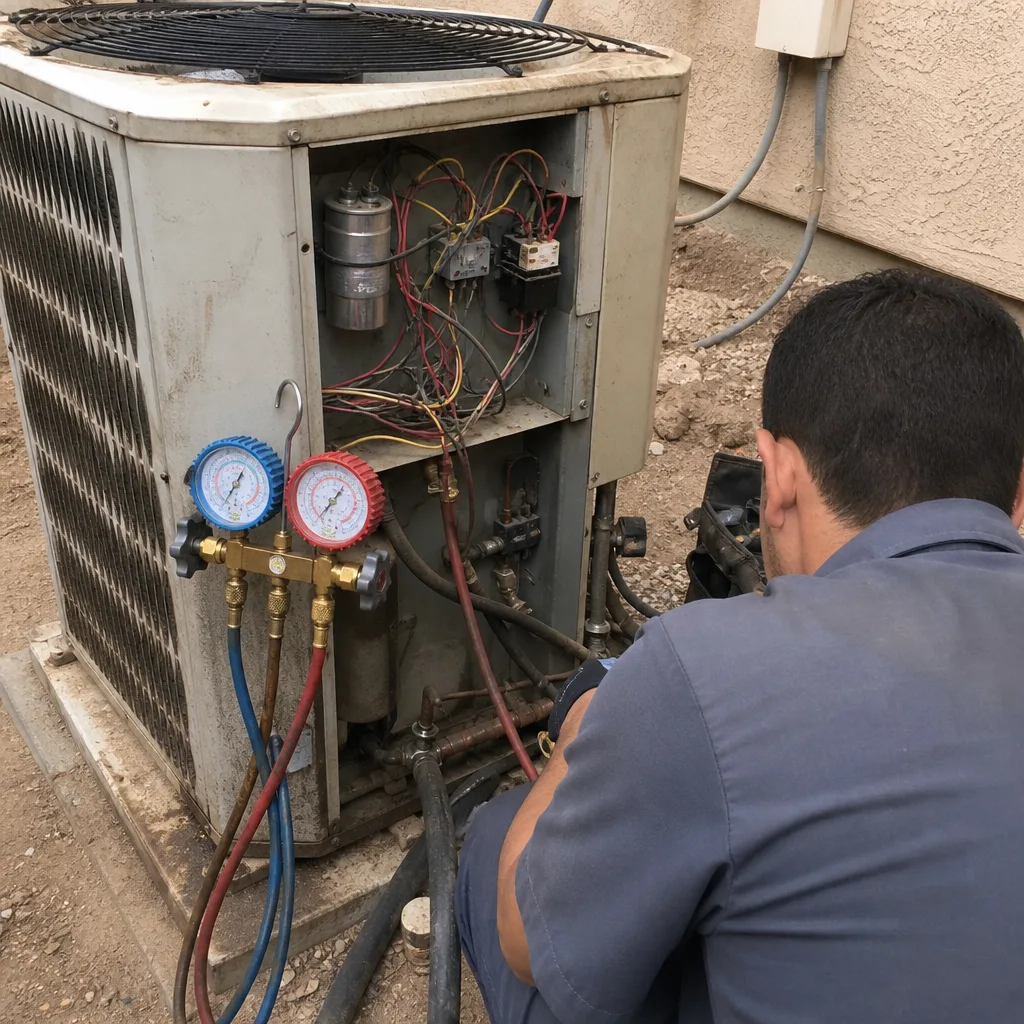 Before
 After
 Before
 After
 Before
 After
Frequently Asked Questions
A single-story Henderson home with west-facing windows and a low-pitch roof can reach 90 – 100°F indoors within four to six hours of an AC failure on a 110°F day, and higher if windows are left open. Two-story homes with more thermal mass run a bit cooler, but not by much, and interior bedrooms without windows hold heat longest. If you’re tracking indoor temperatures and they pass 85°F with elderly or infant family members at home, treat it as an emergency and get them to cooled space while you wait for service.
For elderly adults and infants, 85°F indoors already carries heat-stress risk; 90°F and above becomes an urgent situation; 95°F is dangerous for everyone. Elderly adults often don’t feel thirst the way younger adults do and can dehydrate without noticing. Infants can’t regulate body temperature as effectively, and their risk rises faster. Pets count too. Flat-faced breeds and older dogs are the highest risk. If any of those household members are present and your AC is out, call us and mention it; we prioritize scheduling accordingly, and a live person answers 24 hours a day. Call (844) 797-5122 for an exact quote on the repair; estimates are free.
Henderson libraries, recreation centers (Downtown, Black Mountain, Multigenerational), and senior centers serve as cooling stations during declared heat events, typically open regular hours with extended hours announced during advisories. Cooling-station access is free during declared events. Hours and specific locations shift year to year, so check Henderson’s Parks and Recreation page each May and save the number to your phone. NV Energy and the state’s LIHEAP program also help income-qualified households with cooling bills. Call (844) 797-5122 if you’d like to talk through whether your system issue is repairable before you plan around being out of the house.
Nevada homeowners can legally buy and install filters, thermostats, and run capacitors sized to their unit, plus non-refrigerant accessories like fan blades and disconnect switches. You cannot legally handle refrigerant yourself without EPA Section 608 certification, and opening the sealed refrigerant circuit, replacing a compressor, or working on the high-voltage contactor or control board are jobs for a trained professional for safety reasons alone. A mismatched capacitor can destroy a compressor in seconds, so if you’re not confident, let a technician handle it. Call (844) 797-5122; the written price is handed to you before any work starts.
We schedule same-day AC repair in Henderson whenever the schedule allows, and households with infants, elderly, or medical conditions move to the front. A live person answers the phone at any hour, every day, so you’re never stuck in a voicemail tree at 2 a.m. on a Sunday. We give you a firm arrival window and show up in it; the price is written down before the technician starts. Call (844) 797-5122 to check today’s availability.
Most Henderson AC repairs run $150 to $650 depending on the part, and the most common failures land in the middle of that range: a run capacitor replacement is typically $180 – $280, parts and labor included; a blower motor runs $350 – $650; a refrigerant recharge (topping off the cooling fluid your AC needs to run) is $200 – $450 depending on the amount needed. Prices don’t climb because of the heat wave. The written price is in your hand before any work begins and does not change at the door. Call (844) 797-5122 for an exact quote; estimates are free.
The Bottom Line
An HVAC emergency in Henderson isn’t a comfort problem; it’s a safety scenario, and the difference between a rough afternoon and a dangerous one is preparation. Know your indoor temperature thresholds. Have your model number, breaker panel, and unit photos saved on your phone. Stock the small parts that resolve the most common failures, and don’t touch the ones that can hurt you. Learn where Henderson’s cooling stations are before you need them. When the system fails, call a company that answers the phone, gives you a written price before work starts, and puts the guarantee on paper. That’s how we work at Coldharbour Heating & Air Henderson, and we’re here if you need us.
When the heat is on, call (844) 797-5122 for a free estimate. A live person answers every hour of every day, technicians are background-checked and trained on nine major brands including Trane, Lennox, Goodman, and Rheem, and every repair comes with the written 365-Day Done Right Promise. Our technicians have up to 23 years of experience, and they show up in the window you were promised.
Written by the team at Coldharbour Heating & Air Henderson.