
Last updated November 17, 2026
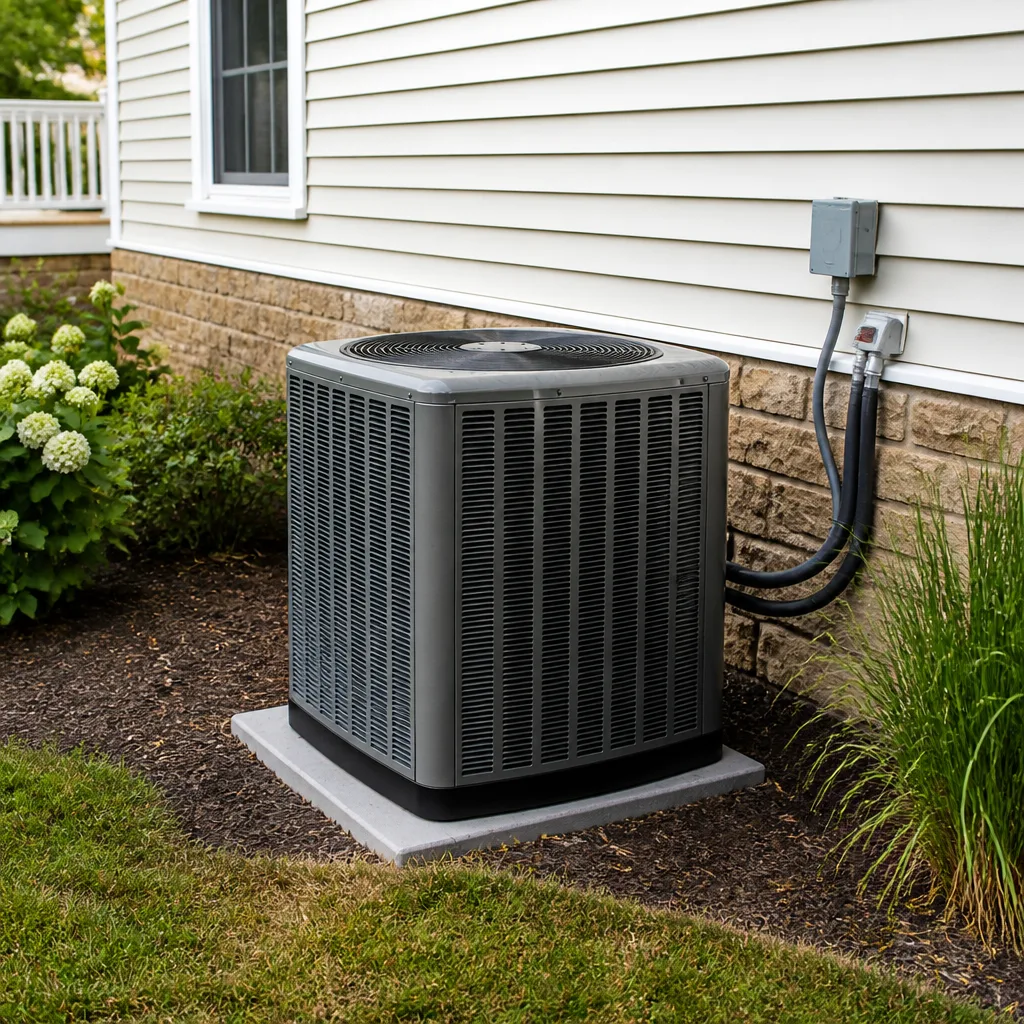 AC repair
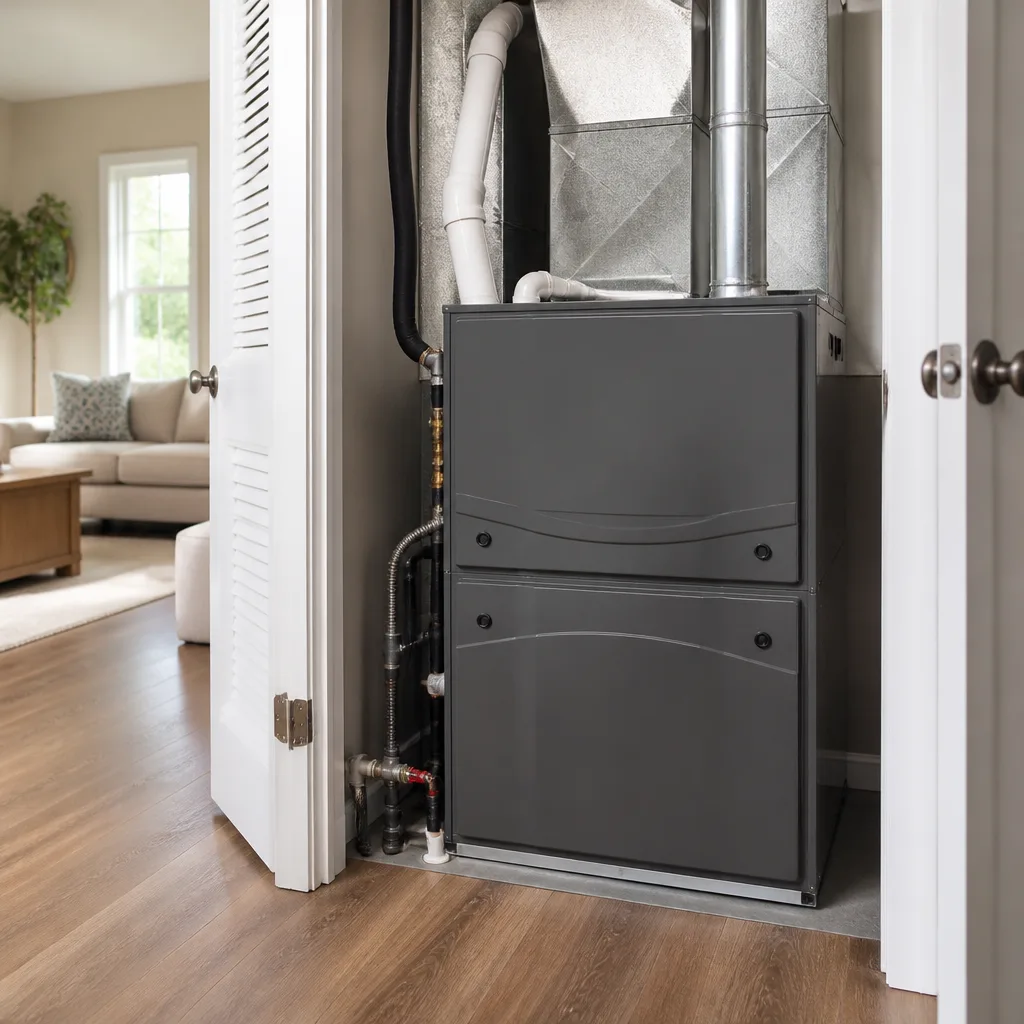 Furnace & heating
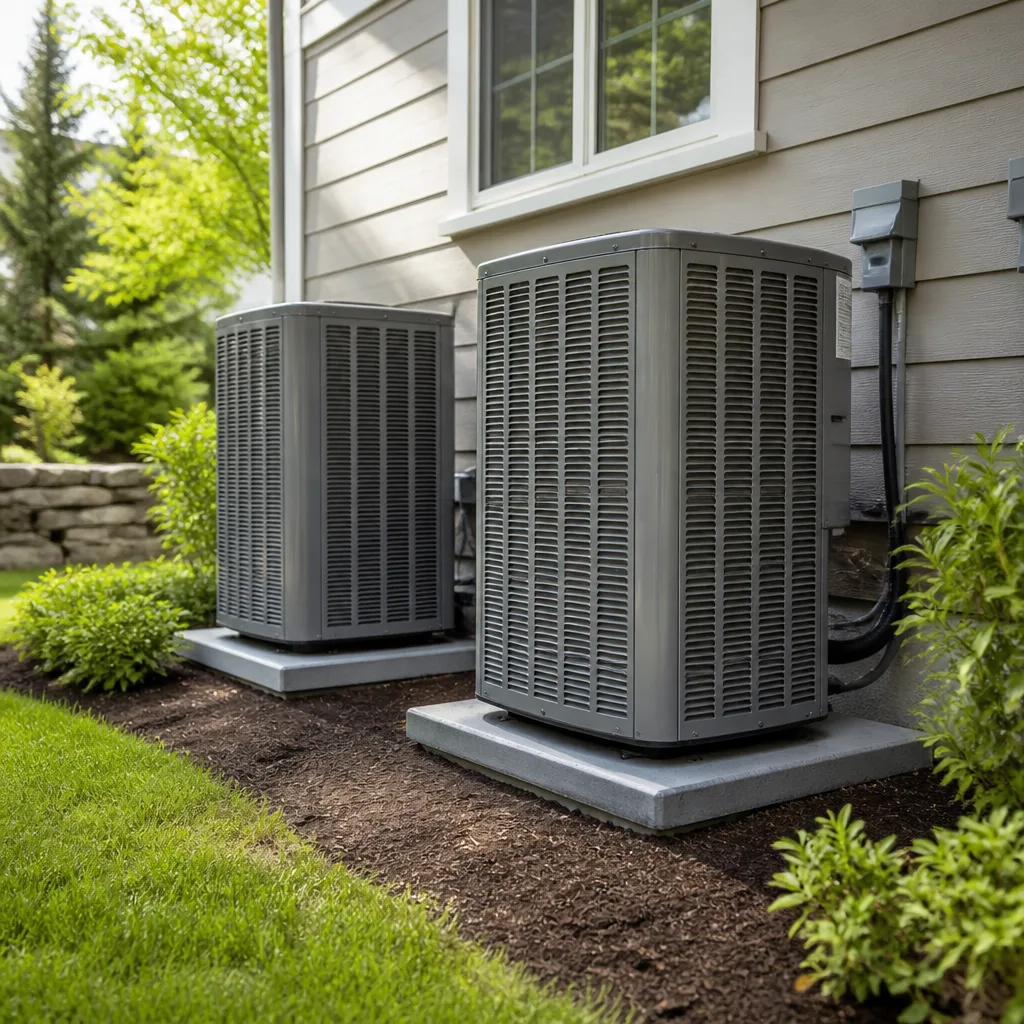 Heat pumps
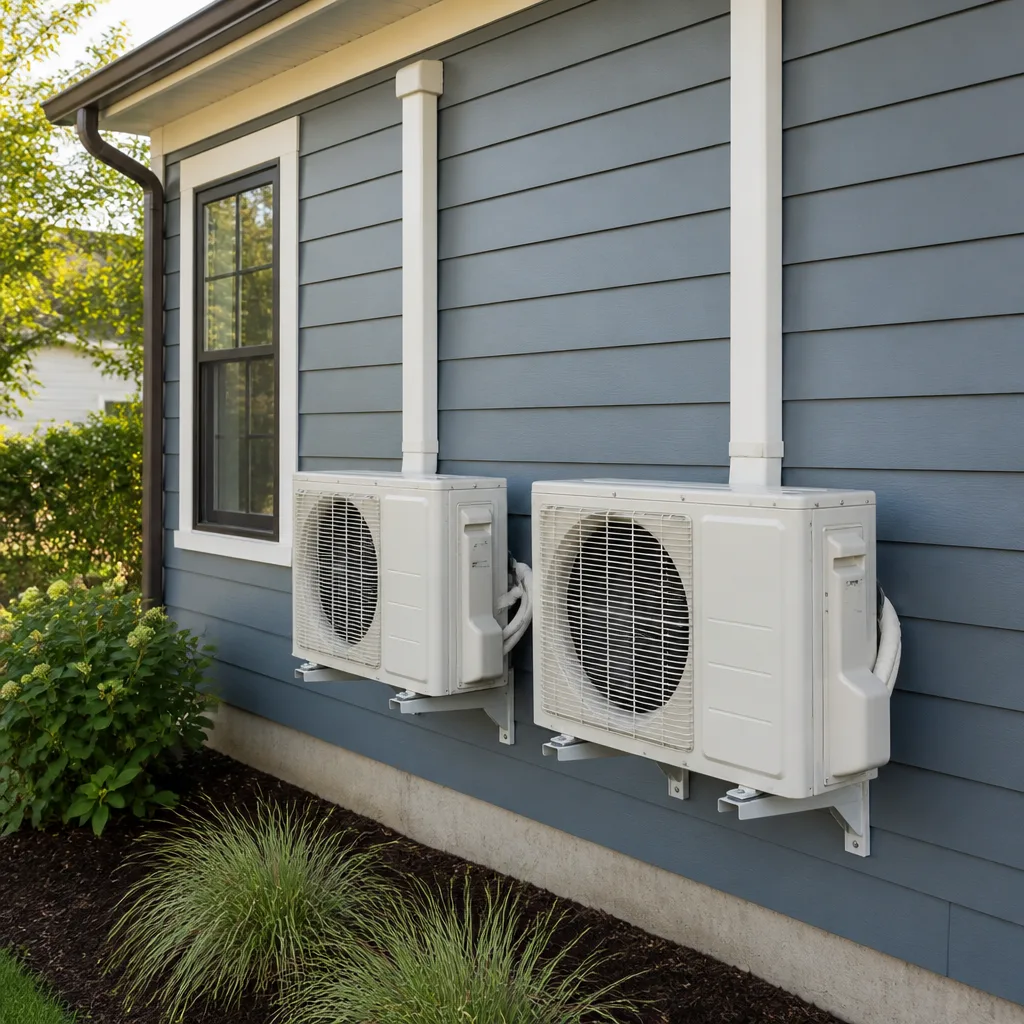 Ductless mini splits
 Carrier
 Trane
 Goodman
Seasonal tune-up and full diagnostic on your Carrier, Trane, or Goodman system - readings shown to you before any repair is proposed
Diagnosis first, numbers second - you approve the repair price before a single part goes in.
Get your free estimateAC Repair Troubleshooting: Common Problems and How to Fix Them
Here’s a number that surprises most homeowners: the single most common AC service call we run in Henderson during July and August is a system blowing air that never drops below 80°F, and about 40% of those calls trace back to a dirty condenser coil. That’s a part you can check yourself with a garden hose in about five minutes. Before you pick up the phone, there are five checks worth doing. Each one either solves the problem outright or hands whoever you call a clean, accurate symptom description that cuts diagnostic time and often the bill. This guide walks through the symptom-to-cause matrix, the exact order of homeowner checks, which problems are safe to watch and which mean shut it off now, and what a good technician actually does when they arrive.
Quick Answer
If your AC isn’t cooling, check four things in order before calling anyone: the thermostat is set to COOL and the fan to AUTO, the air filter isn’t clogged, the outdoor breaker and the disconnect box by the condenser are both switched on, and the condensate drain line isn’t backed up. If those check out and the system still blows warm air, you’re looking at a refrigerant, compressor, or coil problem that needs a licensed technician. Shut the system off and call if you hear loud banging or grinding, smell burning, or see the breaker trip repeatedly.
Styles & brands we work with
- AC repair
- Furnace & heating
- Heat pumps
- Ductless mini splits
- Carrier
- Trane
- Goodman
Table of Contents
- The Symptom-to-Cause Matrix for Henderson Homes
- The Five Homeowner Checks: A 15-Minute Sequence
- Symptoms You Can Watch vs. Symptoms That Mean Shut It Off
- How to Describe What You’re Seeing So the Right Parts Get Pre-Staged
- What a Technician’s Diagnostic Process Actually Looks Like
- Henderson-Specific Problems: Heat, Dust, and Why Springs Fail Here
- How to Follow Along and Verify the Diagnosis Makes Sense
- What AC Repair Typically Costs
The Symptom-to-Cause Matrix for Henderson Homes
Most Henderson AC complaints fall into six recognizable patterns, and each one points a trained eye toward a specific set of causes. Matching your symptom to a cause before you call saves everyone time.
- Warm air from the vents, system running. Low refrigerant from a leak, a failed compressor, a dirty condenser coil, or a reversing-valve issue on heat pumps. In Henderson’s summer heat, a system running 12 hours a day in 110°F weather can also simply be undersized or past its useful life.
- Short cycling (kicks on and off every few minutes). A clogged filter choking airflow, an oversized unit, a failing capacitor, or a thermostat placed where afternoon sun hits it. Short cycling burns out compressors fast.
- Water pooling around the indoor unit or ceiling stains. A clogged condensate drain line. Henderson’s dry air plus monsoon-season humidity makes pan overflow a late-summer staple.
- Loud compressor (banging, grinding, or a hard knock on startup). A failing start capacitor, loose internal components, or a compressor on its way out. This is a shut-it-off symptom, not a wait-and-see.
- Tripped breaker. A shorted compressor wire, a failing compressor, or an undersized breaker. Reset once. If it trips again, stop.
- Ice on the indoor coil or outdoor lines. Restricted airflow or low refrigerant. Turn the system off and let the ice melt before anyone inspects it.
We see this matrix play out across Henderson neighborhoods every summer. Green Valley homes with mature trees collect more cottonwood and dust on condenser coils than newer builds out near Inspirada or Lake Las Vegas, where the windblown desert dust does the damage instead. The symptom looks the same; the cause and the cleaning differ.
The Five Homeowner Checks: A 15-Minute Sequence
Work through these in order. Stop as soon as you find the problem. Each check tells you what you’re looking for.
- Thermostat settings. Confirm the mode is COOL, not FAN or HEAT, and the setpoint is at least 3 degrees below the current room temperature. On programmable and smart thermostats, check the schedule hasn’t been knocked off. What you’re looking for: a mode or schedule error, which solves the problem with zero tools.
- Air filter. Pull the filter and hold it up to a light. If you can’t see light through it, it’s choked. A clogged filter restricts airflow and causes both warm air and frozen coils. What you’re looking for: a filter that’s gray, matted, or more than 90 days old.
- Breaker panel. Find the breaker labeled for the AC (usually a double-pole 30 or 40 amp) and confirm it isn’t tripped. A breaker that’s halfway between ON and OFF is tripped. Reset it once. What you’re looking for: a clean reset that holds. A breaker that trips again is a stop signal.
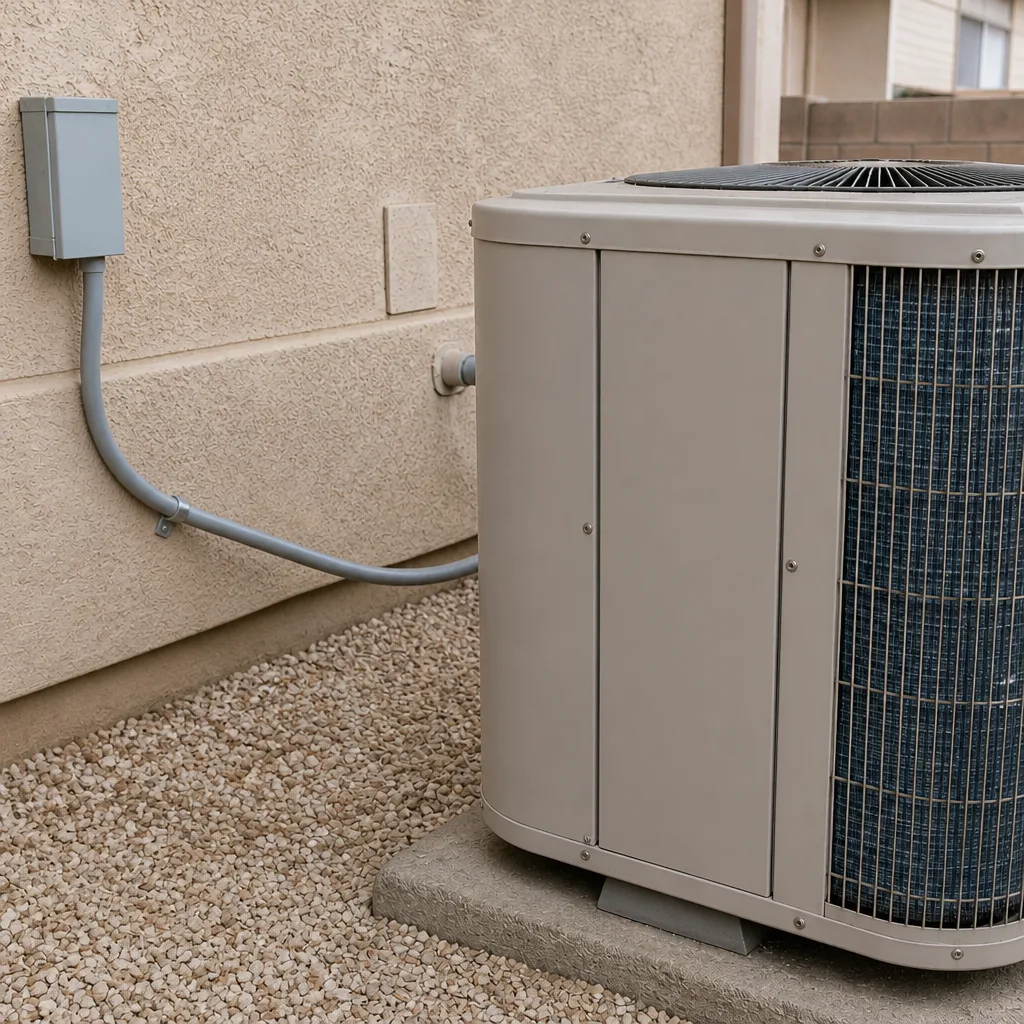
- Disconnect box. That small metal box mounted on the wall near the outdoor condenser has a pull-out handle or a switch inside. Confirm it’s seated in the ON position. This gets bumped during yard work more often than people expect in Henderson, where the condenser often sits near a side-yard gate or pool equipment.
- Condensate drain. Find the drain line (the white PVC pipe running from the indoor unit) and check for standing water in the drain pan or a wet spot on the floor. Fill a cup with water and pour it into the drain pan. What you’re looking for: water that runs off freely. If it backs up, you have a clog.
If all five check out and the system still won’t cool, you’ve narrowed the problem to refrigerant, compressor, or electrical. That’s the point where a technician with gauges and a multimeter earns their visit. Our AC Repair in Henderson team walks through these same checks on every call, which is why we ask what you’ve already tried.
Symptoms You Can Watch vs. Symptoms That Mean Shut It Off
Not every problem is urgent, but a few are genuinely dangerous to ignore. The distinction matters: a system you shut off tonight is a repair. A compressor run to failure is a replacement.
Safe to watch for 24 hours
- Slightly warm air on a 105°F afternoon with a system running nonstop.
- A single breaker trip that resets and holds.
- A slow drain with no overflow onto the floor.
- A brief rattle at startup that clears within a minute.
Shut it off immediately and call
- Any burning smell from the indoor or outdoor unit.
- Banging, grinding, or screeching from the compressor.
- Repeated breaker trips after one reset.
- Ice on the indoor coil or refrigerant lines (let it thaw before inspection).
- Water actively dripping from a ceiling or through a wall.
Refrigerant lines and compressor circuits carry high voltage and pressurized refrigerant. Diagnosing them yourself is genuinely dangerous and, in Nevada, requires an EPA-certified technician to handle refrigerant at all. We’ll say it plainly: turn it off, call, and let a trained professional open the panel. That’s a duty of care, not a sales line. When one of these symptoms shows up, call (844) 797-5122 and a live person answers, day or night.
How to Describe What You’re Seeing So the Right Parts Get Pre-Staged
Here’s a piece of the trade most homeowners never hear: when you describe a symptom accurately, a good dispatcher can load the right capacitor, contactor, or blower motor onto the technician’s van before anyone drives out. That’s how you avoid the dreaded second trip.
Instead of “my AC is broken,” say something specific:
- “The outdoor unit hums but the fan never spins, and it started three days ago.”
- “The breaker trips about five minutes after we reset it.”
- “Cold air blows for the first 20 minutes, then it’s room temperature.”
- “There’s a rattle at the outdoor unit that gets louder when the compressor kicks on.”
- “The indoor unit is dripping and the drain pan is full.”
Add the brand and rough age of the system if you know it. A 14-year-old Bryant condenser and a two-year-old Daikin have different likely failure points. Our technicians are trained across Carrier, Trane, Lennox, Goodman, Rheem, York, Daikin, Bryant, and American Standard, so a make and model helps us match the right replacement part on the first visit.
What a Technician’s Diagnostic Process Actually Looks Like
Understanding the diagnostic sequence lets you ask better questions and recognize when someone is guessing. A thorough diagnostic on a Henderson system usually follows this path:
- Confirm the complaint. The technician asks what you’ve observed and repeats back the symptom before touching a tool.
- Visual and airflow check. Filter, return grilles, evaporator coil for dust or ice. In Henderson’s dusty summer air, a coil that looks clean can still be matted halfway down.
- Electrical check. Capacitor, contactor, and voltage at the disconnect. A weak capacitor is one of the most common failures we find on systems older than eight years.
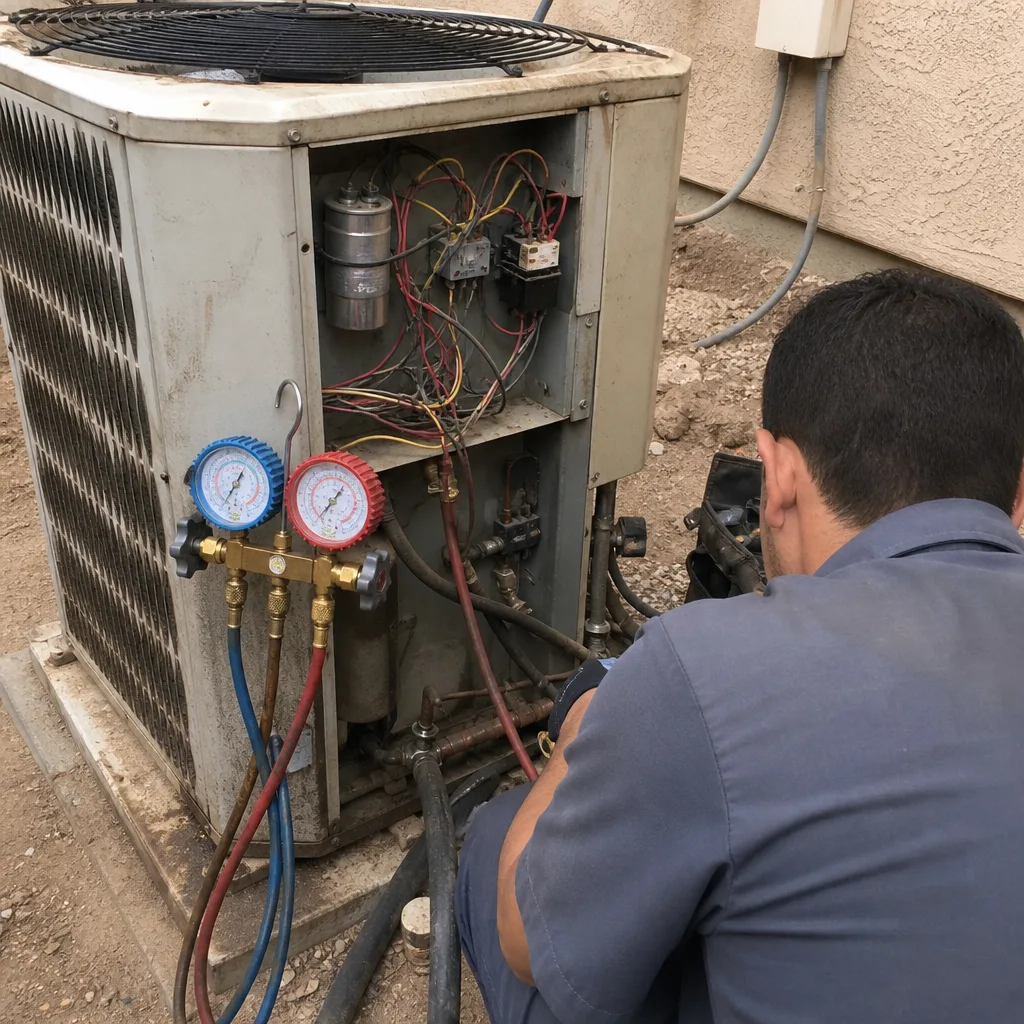
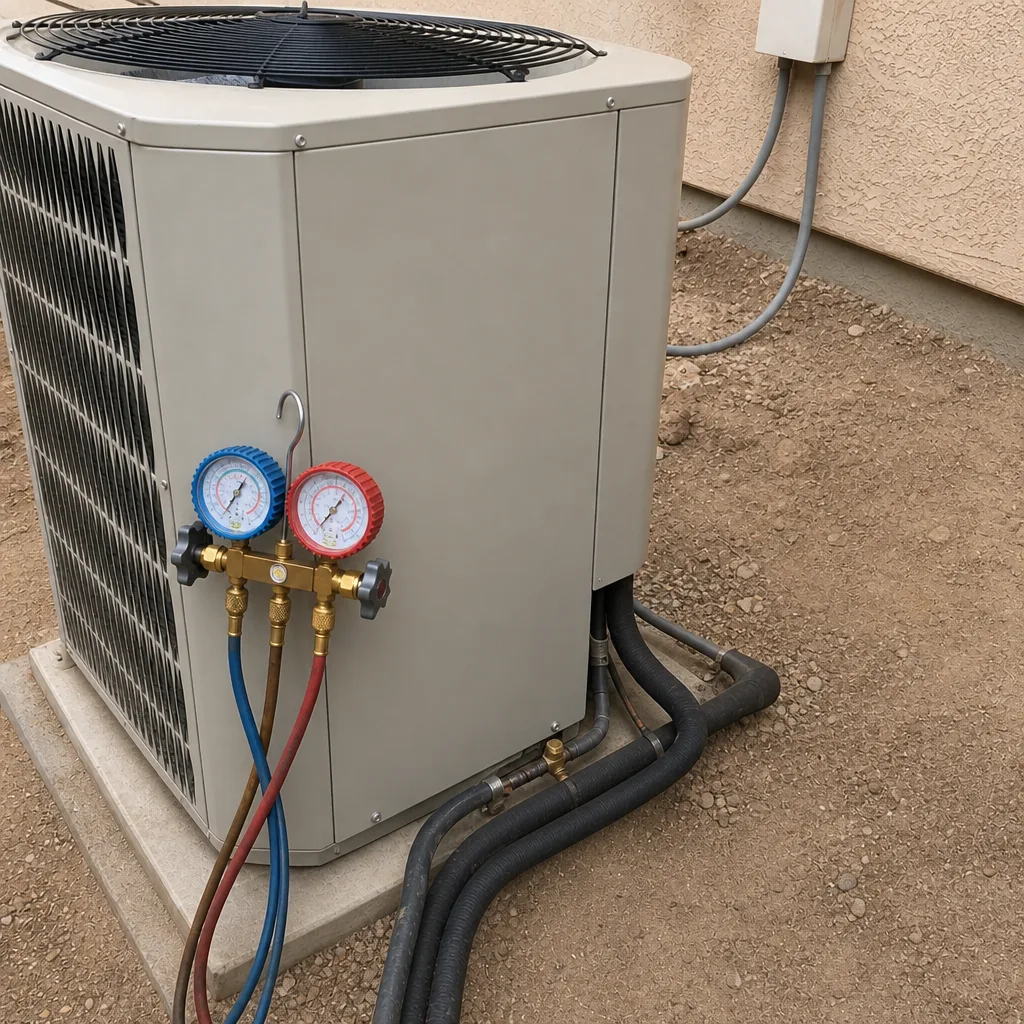
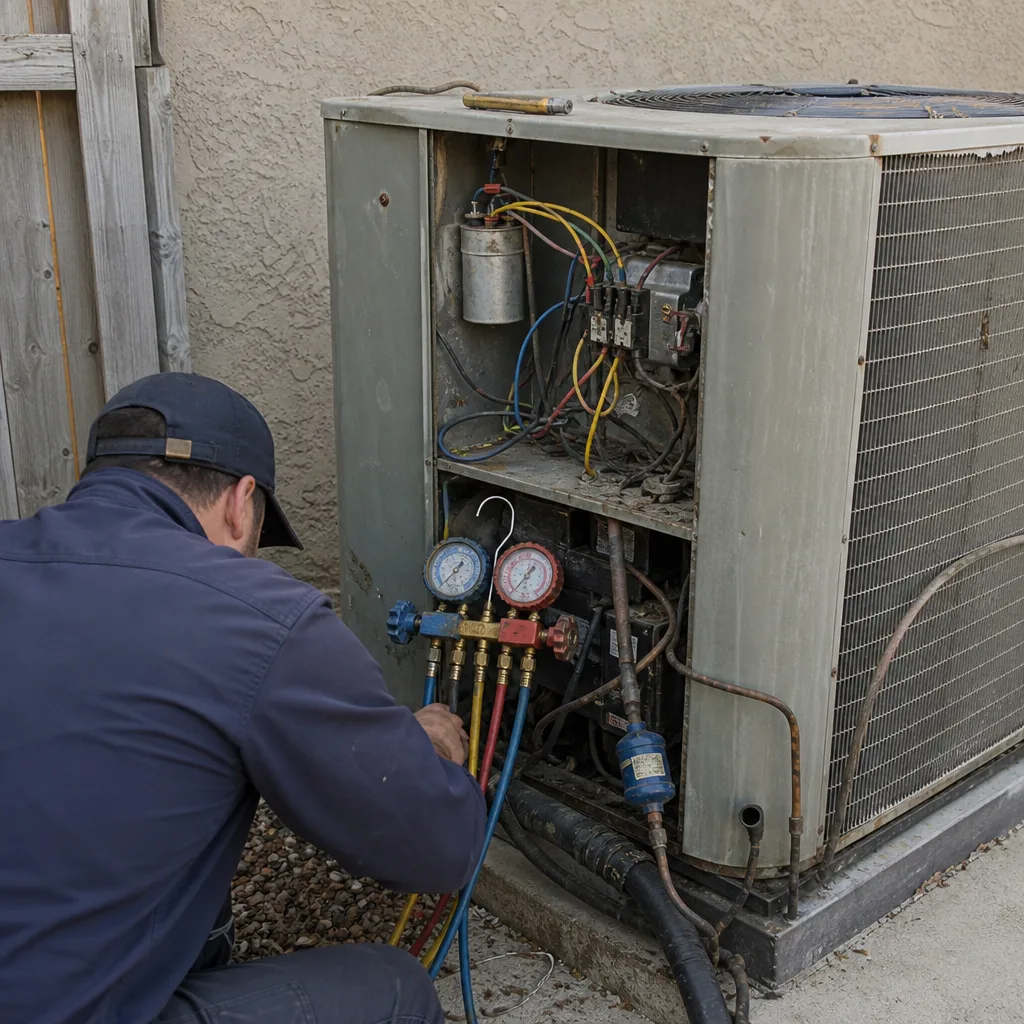
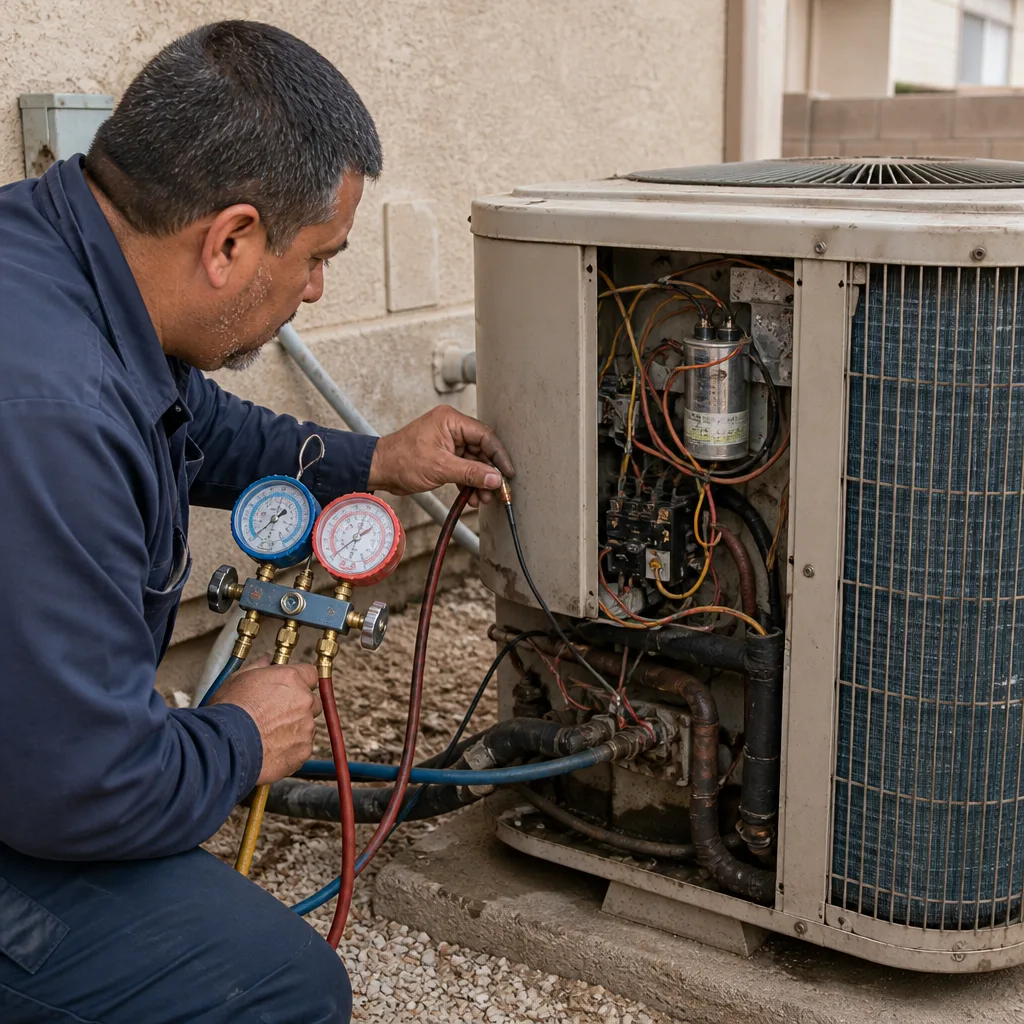
- Refrigerant pressure check. Gauges on the service ports to read suction and liquid pressures, then compare to the manufacturer’s target superheat.
- Temperature split. Measure the return-air temperature and the supply-air temperature. A healthy split is roughly 15-20°F. A 5°F split means the system isn’t removing heat.
- Contaminant and coil inspection. Condenser coil for dirt and cottonwood, condensate drain for flow.
Ask the technician to show you what they found. Every repair we do comes with a written price before any tool comes out, and the 365-Day Done Right Promise in writing before the technician leaves. If a repair fails inside that year, we come back and correct it at no charge. That’s the standard we hold to under Coldharbour Heating & Air Henderson home, and it’s worth asking any company you call whether they put the same promise on paper.
Henderson-Specific Problems: Heat, Dust, and Why Springs Fail Here
Henderson’s climate attacks cooling equipment in ways that a milder region never tests. Three local patterns repeat every year, and knowing them helps you spot trouble early.
Monsoon humidity and condensate clogs. From July through September, the moisture swings from single digits to storm-level humidity. That’s when drain lines back up and ceiling stains appear. If you live near the foothills in Calico Ridge or along the wash in Lake Las Vegas, the dust that settles in the drain pan accelerates the clog. Check the pan monthly during monsoon season.
Dust and cottonwood on the condenser. The desert dust that coats everything in Henderson also packs the condenser coil fins. A coil that’s 30% blocked loses cooling capacity fast. A gentle rinse from a garden hose (never a pressure washer, which bends the fins) once a season is one of the cheapest preventive steps a homeowner can take.
Overworked compressors on aging systems. In Henderson, an AC runs roughly 2,500 to 3,000 hours a year. That’s more runtime than most of the country, which means parts wear out faster. A system that’s 12-15 years old and short cycling is a compressor waiting to fail. That’s the point where an honest conversation about AC Installation in Henderson beats another patch.
We’ve also seen heat pump failures spike when the first cold snap hits and the reversing valve has been dormant all summer. That’s a heating-side issue, and our Furnace Repair in Henderson team handles the switchover inspection.
How to Follow Along and Verify the Diagnosis Makes Sense
You don’t need to read a schematic to sanity-check a diagnosis. You need to know whether the explanation fits the evidence. Ask these questions when the technician finishes the evaluation:
- “Can you walk me through what you measured and what number was off?”
- “Does this explain the specific symptom I described?”
- “Is this a symptom of the problem, or the problem itself?” (A dirty filter can be a symptom of restricted return, not the root cause.)
- “What’s the alternative? Could it be X instead of Y?”
- “What happens if I do nothing for a week?”
A technician who can answer those cleanly is worth keeping. One who can’t, or who reaches for the biggest part on the van first, isn’t. When you call (844) 797-5122, the person who answers is a live local voice, not a phone tree, and the written price arrives before the work starts. If something doesn’t add up, say so before you approve the repair.
What AC Repair Typically Costs
Here’s a practical range of line-item costs most Henderson homeowners see, parts and labor included. Actual prices depend on your system and the specific part.
| Repair | Typical Cost |
|---|---|
| Capacitor replacement | $180 – $320 |
| Contactor replacement | $150 – $280 |
| Condensate drain clearing | $120 – $220 |
| Condenser coil cleaning | $150 – $300 |
| Refrigerant leak detection and recharge | $250 – $650 |
| Blower motor replacement | $400 – $800 |
| Compressor replacement | $1,200 – $2,400 |
Those numbers vary with the brand and the age of the system. A Daikin or American Standard compressor quote runs higher on parts than a Goodman. We give a written price before any tool comes out, and the number on the paper doesn’t change at the door.
Common Mistakes to Avoid
- Resetting a tripped breaker more than once. A breaker that trips repeatedly is protecting the circuit from a real fault. Resetting it again can weld the contacts or start a fire. Reset once, then call.
- Washing the condenser with a pressure washer. High pressure bends the coil fins flat, which blocks airflow and makes the problem worse. A garden hose on low pressure is all a Henderson coil needs.
- Running the system with ice on the coil. Icing means airflow or refrigerant trouble. Running it iced up can flood the compressor with liquid refrigerant and destroy it. Turn it off and let it thaw.
- Oversizing the air filter for “better” filtration. A MERV 13 filter in a system designed for MERV 8 chokes airflow and causes the very warm-air problem you’re trying to fix. Match the filter rating to the system.
- Ignoring a slow condensate drip during monsoon season. A small drip becomes a ceiling stain in one storm. Check the drain pan monthly in July and August.
- Covering the outdoor unit for the summer. Some Henderson homeowners cover the condenser to keep dust out. That blocks the heat exchange and can cook the compressor. Leave it open and open-topped.
- Accepting a verbal diagnosis with no written price. If someone won’t put the price and the guarantee on paper before starting, that’s your cue to get a second opinion.
See the difference
 Before
 After
 Before
 After
 Before
 After
When to Call a Professional
Call a professional when you’ve run the five checks and the system still won’t cool, when the breaker trips more than once, when you see ice or hear grinding, or when the system is over 12 years old and short cycling. Those are the cases where a homeowner’s best move is a trained set of eyes and gauges. Refrigerant work and compressor diagnostics fall squarely into that category: the pressure and voltage involved make DIY handling genuinely unsafe, and Nevada requires certified technicians for refrigerant.
Coldharbour Heating & Air Henderson offers free estimates in Henderson. Call (844) 797-5122 and a live person answers around the clock. We’ll tell you what we found, hand you a written price before anything begins, and stand behind the repair with the 365-Day Done Right Promise in writing.
Frequently Asked Questions
The most common causes are a dirty condenser coil (about 40% of warm-air calls), a clogged air filter, low refrigerant from a leak, or a failing capacitor. In Henderson’s summer heat, a system that runs nonstop and never drops below 80°F usually points to restricted airflow or low refrigerant. Run the five homeowner checks first, then call (844) 797-5122 for a free estimate if the problem persists.
Yes. Reset a tripped AC breaker one time and see if it holds. If it trips again, stop and call a professional. Repeated trips mean a real electrical fault, and forcing the breaker can damage the compressor or start a fire.
A clogged condensate drain line is almost always the cause. The drain carries moisture away from the indoor coil, and in Henderson during monsoon season the dust that settles in the pan clogs the line quickly. Pour a cup of water into the pan; if it doesn’t drain freely, the line needs clearing. Call (844) 797-5122 if water is reaching the ceiling.
If the repair is under about $600 and the system isn’t short cycling, repair usually makes sense. Once you’re facing a compressor replacement or a second major repair on a 14-year-old unit, replacement often costs less over the next five years. In Henderson, where systems run 2,500 to 3,000 hours a year, a 14-year-old unit has already done a long tour of duty.
A bad capacitor usually shows up as a system that hums but won’t start the fan or compressor, or one that starts hard. A failing compressor shows up as a loud knock, a grinding noise, or repeated breaker trips. Capacitors are inexpensive to replace (roughly $180-$320); compressors are not. That’s why the diagnosis matters.
Call (844) 797-5122 and a live person answers 24 hours a day, every day of the year. We’ll tell you the earliest arrival window and stick to it. For a free estimate on a Henderson repair, just ask when you call.
The Bottom Line
Before you call anyone, run the five checks: thermostat, filter, breaker, disconnect box, and condensate drain. Those 15 minutes either solve your problem or hand the technician a clean symptom description that speeds up the diagnosis. Know the difference between symptoms worth watching and symptoms that mean shut it off, because a compressor run to failure turns a repair into a replacement. When you do call, insist on a written price before the work starts and a guarantee in writing when it’s done. That’s what we do, and it’s what we stand behind under the Kingswell Way. Call (844) 797-5122 for a free estimate in Henderson.
Written by the team at Coldharbour Heating & Air Henderson.