
Last updated November 17, 2026
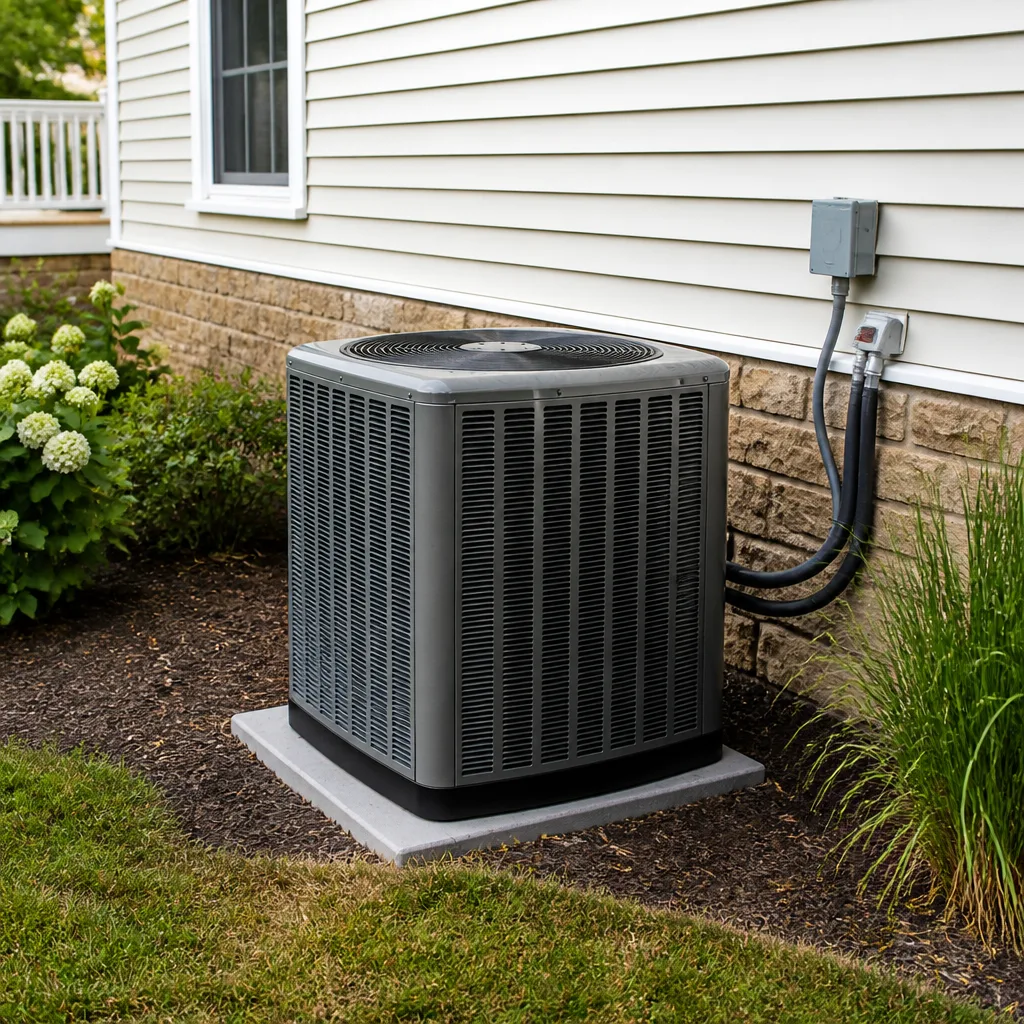 AC repair
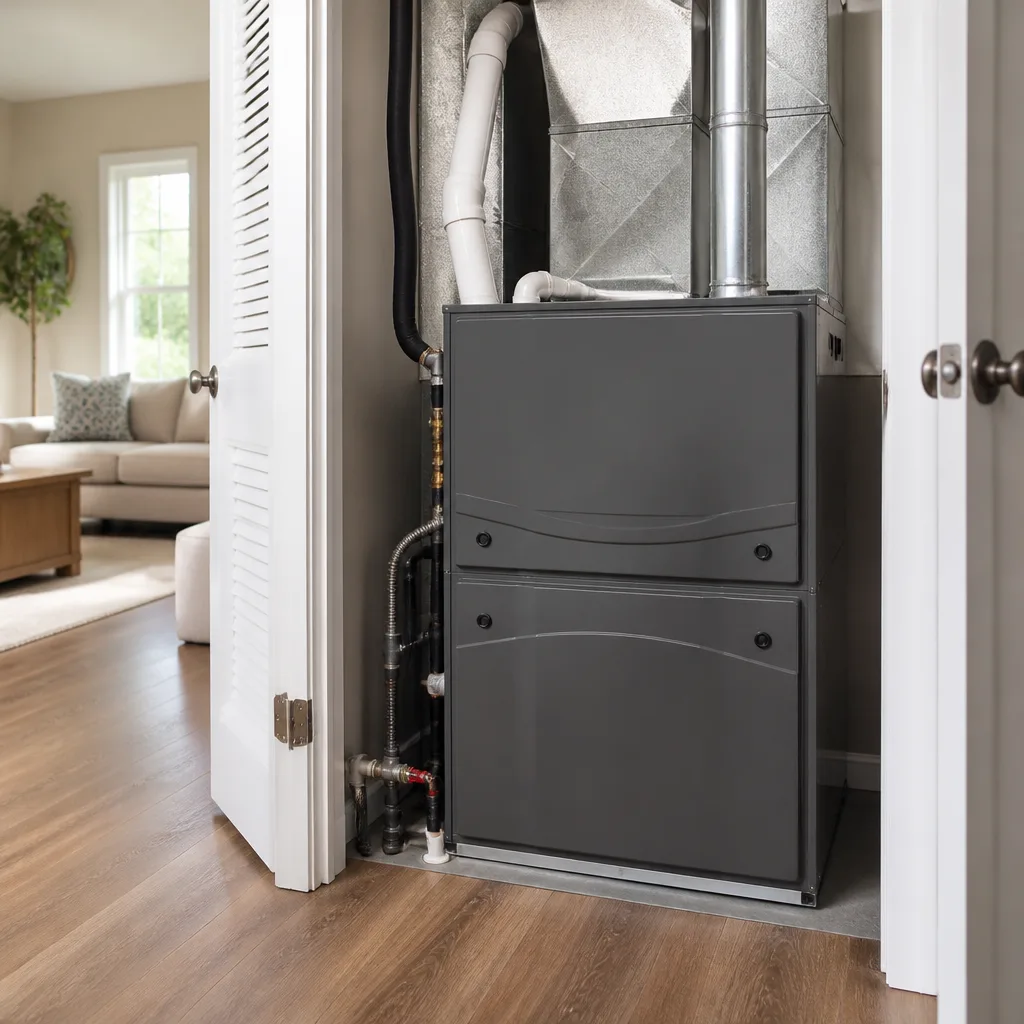 Furnace & heating
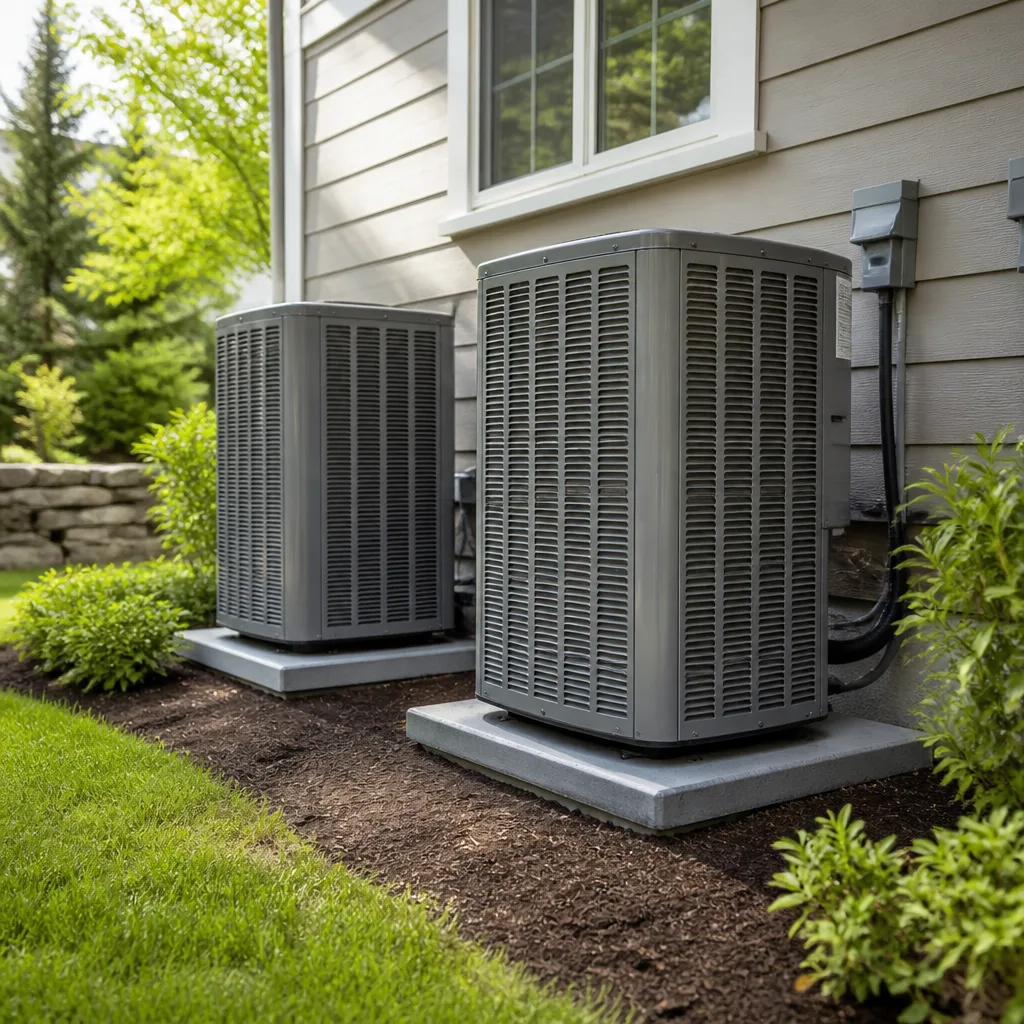 Heat pumps
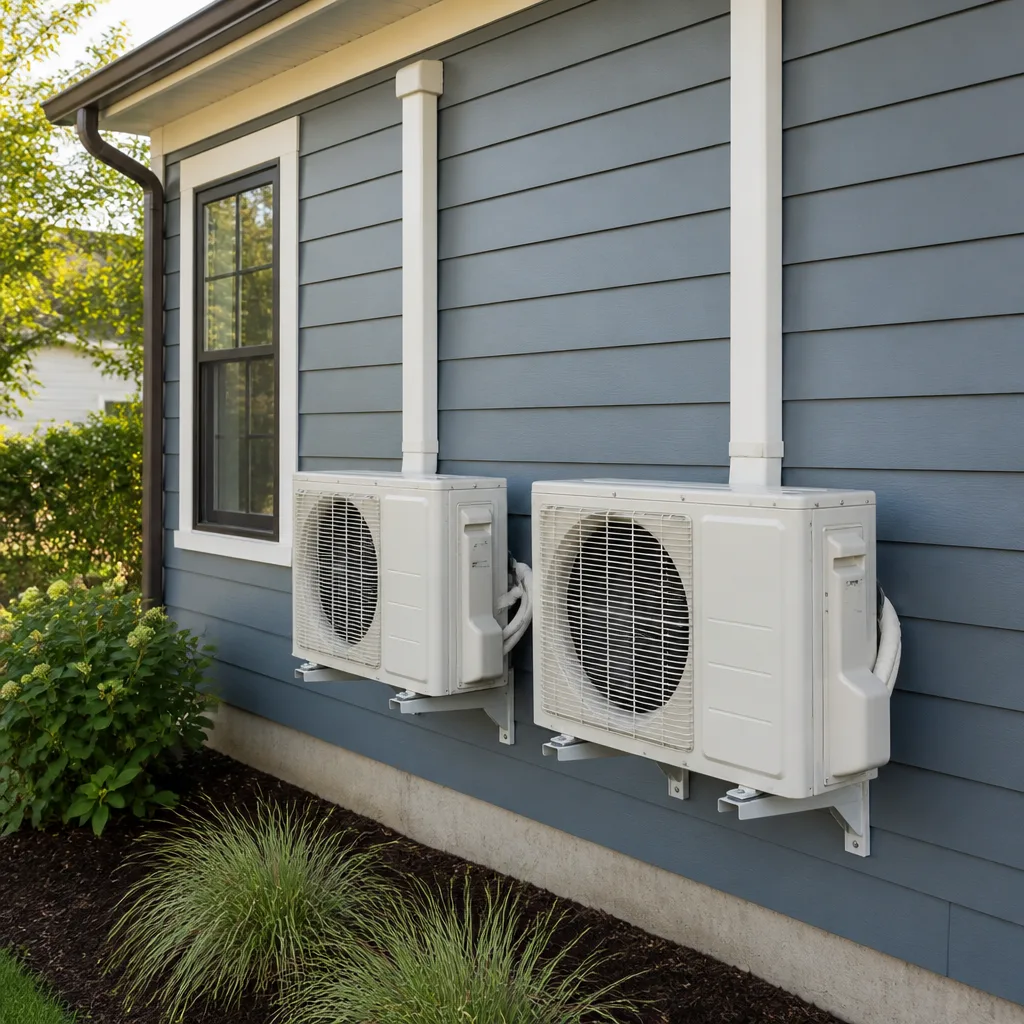 Ductless mini splits
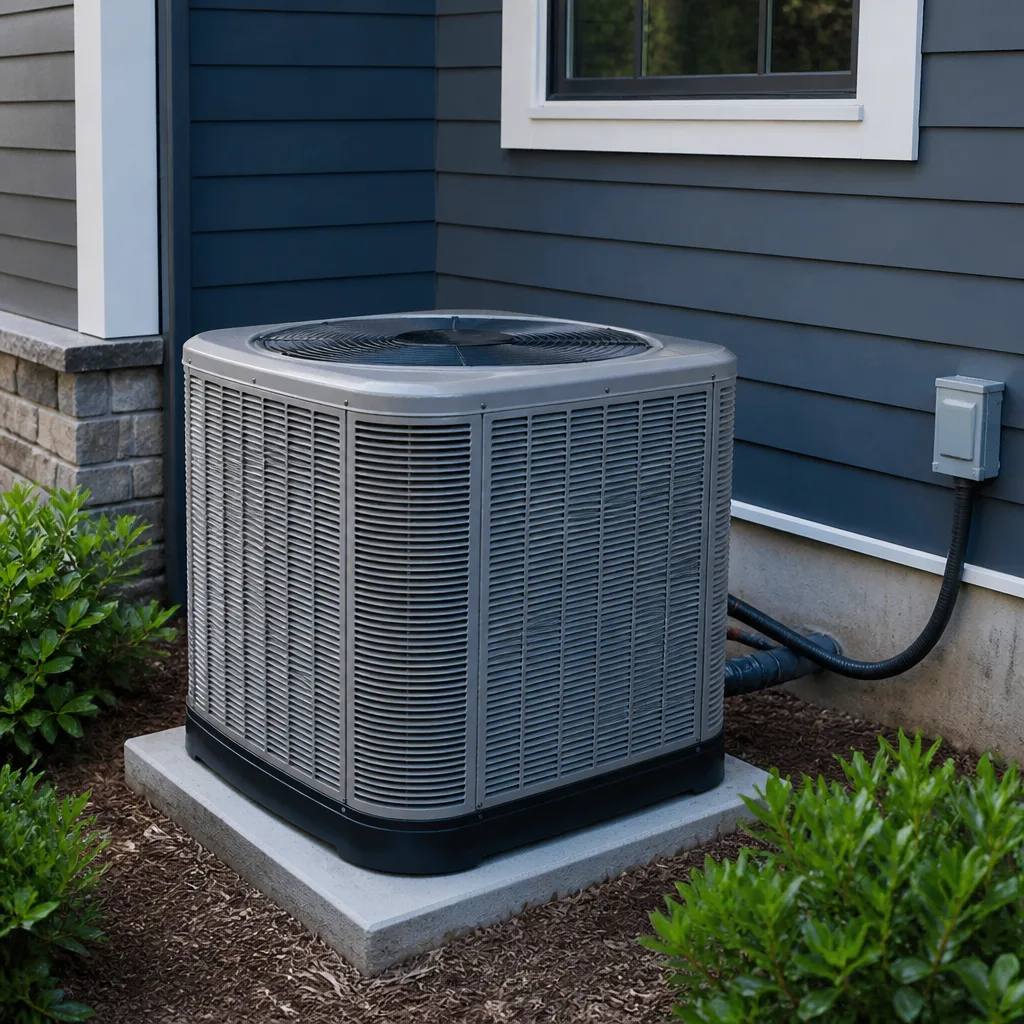 Carrier
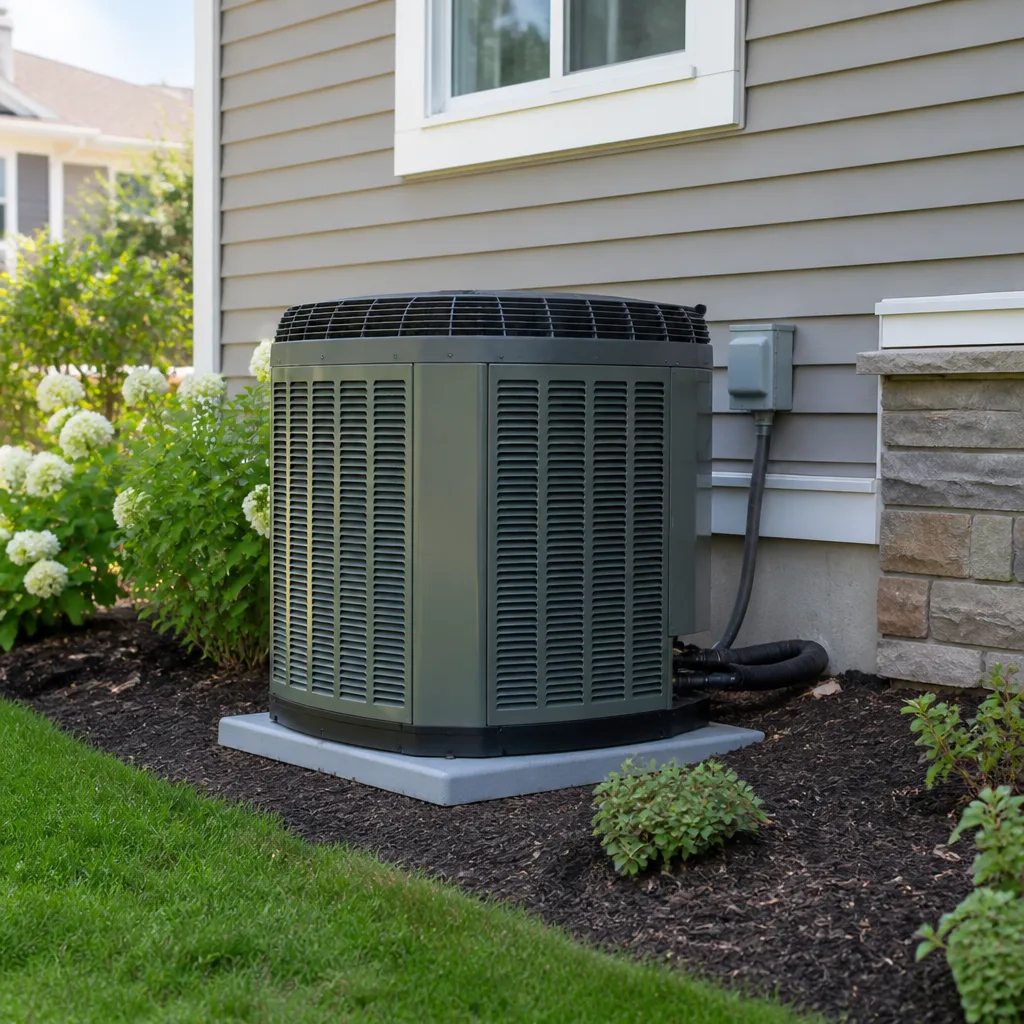 Trane
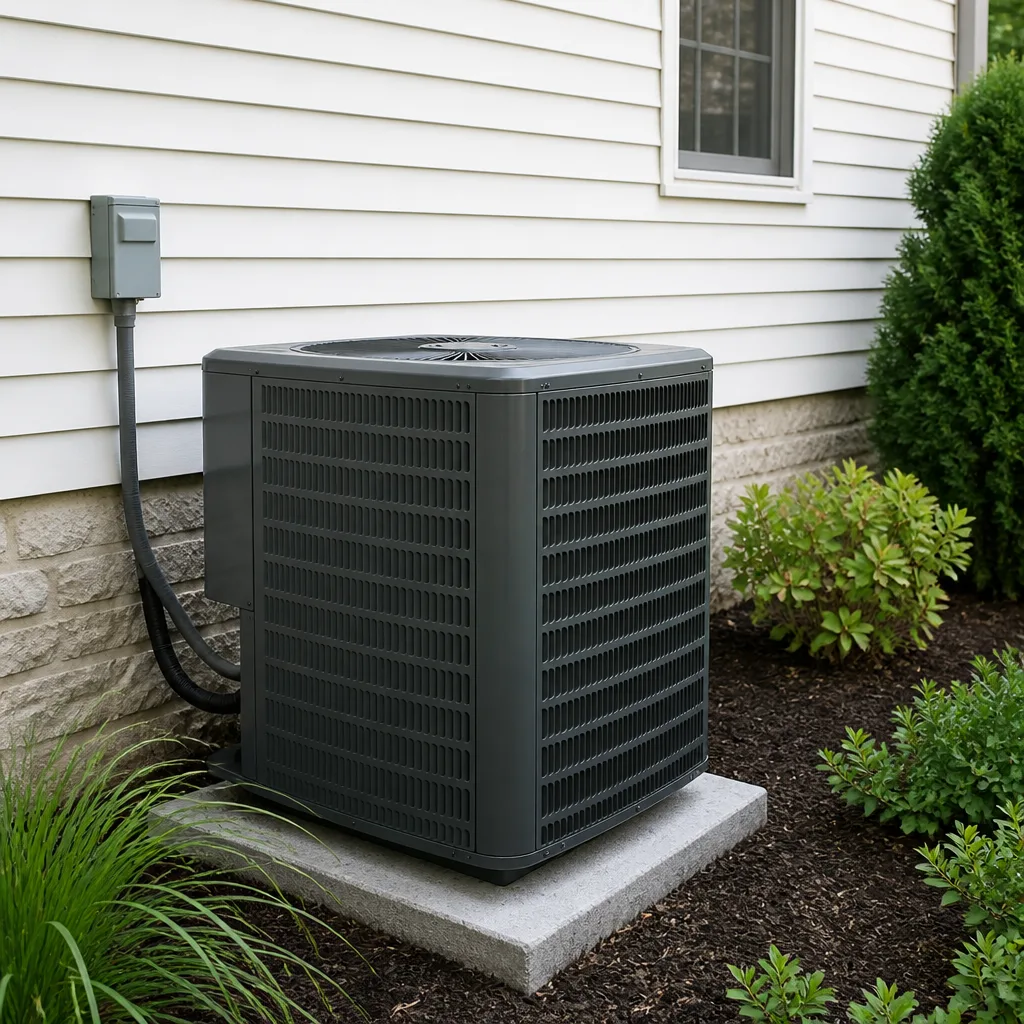 Goodman
Seasonal tune-up and full diagnostic on your Carrier, Trane, or Goodman system - readings shown to you before any repair is proposed
Diagnosis first, numbers second - you approve the repair price before a single part goes in.
Get your free estimateAC Repair Warning Signs Every Homeowner Should Know
A Henderson AC that trips its breaker once every few days isn’t having a breaker problem. It’s a struggling compressor pulling excess amperage, and within two to four weeks that compressor will likely lock up on the hottest afternoon of the year. The loud failures get all the attention. The expensive ones start quiet. This guide covers the five early signals that show up on your utility bill, your thermostat, and your airflow weeks before anything sounds broken. We’ll also walk through the 20-minute temperature test that catches refrigerant loss early, what breaker trips and short cycling actually tell you about how far along the failure is, and how to photograph the evidence so your technician’s visit starts with proof instead of a guess.
Quick Answer
The most reliable early AC warning signs are a power bill that climbs 15-25% with no change in usage, a thermostat that drifts from its setting, weak airflow at some vents, ice on the indoor or outdoor coil, and short cycling. Any one of these means schedule a repair visit soon. Two or more together, especially in a system past 10-12 years old, means you should get a replacement quote at the same time.
Styles & brands we work with
- AC repair
- Furnace & heating
- Heat pumps
- Ductless mini splits
- Carrier
- Trane
- Goodman
Table of Contents
- The Five Quiet Signals That Show Up First
- The 20-Minute Test That Catches Refrigerant Loss Early
- Breaker Trips, Short Cycling, and Ice: How the Stages Progress
- The Age-and-Warning-Sign Combination That Changes the Advice
- How to Document Warning Signs Before a Technician Arrives
- Why Henderson Homes Wear Differently
- Common Mistakes to Avoid
- Frequently Asked Questions
The Five Quiet Signals That Show Up First
By the time an AC rattles or refuses to start, the problem has been building for weeks. These five signals show up first, and every one of them is easy to dismiss as normal.
- Your power bill climbs without a usage change. A residential AC in Henderson might run 18 to 22% of your summer bill. When a capacitor weakens or a compressor strains, the same cooling costs more electricity. A jump from $180 to $220 in July with identical habits is a diagnostic clue, not a budget problem.
- The thermostat drifts from its setting. You set it at 75, it reads 78 by mid-afternoon. If the unit runs continuously and still can’t close a 3-degree gap, something in the refrigerant charge or airflow has changed.
- Airflow weakens at specific vents. Walk the house on a hot afternoon and hold your hand to each register. A bedroom blowing noticeably softer than the others points to a restricted duct, a failing blower, or a coil that’s icing over.
- The indoor coil ices over. Look at the copper line running into the air handler; if it’s frosted like a freezer coil, you have a refrigerant restriction or low charge. Ice is never a sign of good cooling.
- The outside unit runs longer than it should. A normal cooling cycle is 12-18 minutes. If yours is running 25-30 minutes and barely holding temperature, the system is losing efficiency quietly.
One of these is worth a phone call. Two together, especially in mid-July, means schedule now, before you’re in an emergency. That’s the whole reason we put the 365-Day Done Right Promise in writing: if we repair a warning-sign issue and it fails again inside a full year, we come back and correct it at no charge.
The 20-Minute Test That Catches Refrigerant Loss Early
Refrigerant doesn’t get used up like fuel; it leaks. The trick is catching low charge before it starves the compressor and takes the whole system with it. You can measure this at home with an ordinary digital thermometer. Here’s the test we walk Henderson owners through on the phone.
- Run the AC for at least 20 minutes on a hot afternoon. You want the system fully cycled and the indoor temperature stable.
- Place the thermometer at the return grille (the big central intake, usually in a hallway). Record the reading.
- Place the thermometer at a supply register (the closest vent to the air handler) and record it after 3-4 minutes.
- Subtract the supply reading from the return reading. On a properly charged system, you should see a 15-22°F difference. Anything under 12°F is a red flag.
- Also note the outside temperature. If the outdoor unit runs but the air coming out the top is barely warm, or you can feel cool air blowing off it, the system is not exchanging heat properly.
A 10°F gap or less, together with a climbing power bill, is textbook low refrigerant. This is a leak, and stopping it early costs a fraction of what an emergency recharge plus compressor replacement does. We see it often in Henderson homes built in the 1990s and early 2000s where the original refrigerant lines have slowly lost charge through pinhole leaks. Photograph both readings with your phone. That data gives your technician a starting point instead of a blank page.
Breaker Trips, Short Cycling, and Ice: How the Stages Progress
Warning signs aren’t random; they follow a sequence. Knowing where you sit on that sequence tells you how much time you have.
| Stage | What You’ll Notice | Likely Cause | Typical Cost Range |
|---|---|---|---|
| Stage 1: Early | Rising bill, drifting thermostat, uneven airflow | Dirty coil, weak capacitor, low charge | $120-$280 |
| Stage 2: Mid | Short cycling (runs 5-8 min, pauses, restarts) | Failing capacitor, overcharged or undercharged system | $180-$420 |
| Stage 3: Serious | Intermittent breaker trips, indoor coil ices over | Compressor drawing excess amperage, refrigerant restriction | $280-$650 |
| Stage 4: Critical | Compressor locks up, hard-start tripping | Compressor failure | $900-$2,400+ or replacement |
The key insight: a breaker that trips every few days is the last quiet stage before a compressor death. A breaker is a safety switch. When it trips, it’s protecting your wiring from the excess current a struggling compressor pulls. Some Henderson homeowners replace the breaker itself; that’s the wrong move. The breaker is doing its job. The compressor is the one telling you something. By the time a compressor seizes, you’re looking at roughly 4-8x the repair cost of addressing it in Stage 1, and often that’s when replacement becomes realistic.
The 20-minute temperature test above catches you around Stage 1 or 2. That’s the sweet spot. That’s when a repair is affordable, a technician can complete it in one visit, and you don’t lose a night of sleep on a 112°F evening. Whether your system is a Carrier, Trane, American Standard, or Bryant, the sequence holds: early inefficiency, then short cycling, then breaker trips, then lockup.
The Age-and-Warning-Sign Combination That Changes the Advice
Age alone isn’t a red flag. A well-maintained 14-year-old AC can run beautifully. But age plus warning signs is where the math starts to flip.
Here’s how we think about it: a repair on a system under 10 years old with good refrigerant charge and clean coils is almost always the right call. Between 10 and 12 years, a single mid-stage repair still usually pays for itself. At 12-15 years with two or more warning signs, or any stage 3-4 issue, the replacement conversation becomes worth having. Past 15 years, an expensive repair often buys you a year or two, then you’re back to square one.
Get a replacement quote in Henderson at the same time your technician is onsite. Not because you have to replace, but because you should know the number while you’re deciding. If the repair is $650 and a new system is $5,400, the repair makes sense when the unit is 8 years old and stops making sense at 15. Having both numbers in hand, written down, is the difference between a decision and a guess.
One more local factor: the older neighborhoods around Water Street and down in Lake Las Vegas have a mix of original 1980s-1990s systems and newer swaps. Where a system is pushing 15 years with the original R-22 refrigerant, any warning sign should trigger the replacement conversation immediately. R-22 is phased out, expensive, and every repair is a stopgap.
How to Document Warning Signs Before a Technician Arrives
The most useful thing a homeowner can do before a visit is collect evidence. It shortens the diagnostic window, it usually speeds up the repair, and it makes the price more accurate. Here’s what to gather.
- Photograph the thermostat. The displayed temperature, the set temperature, and the mode. If it drifts, take one photo at 2pm and another at 5pm.
- Photograph the indoor coil and the copper line. A phone flash on a frosted copper line is far better than a verbal description of “it’s kind of cold.”
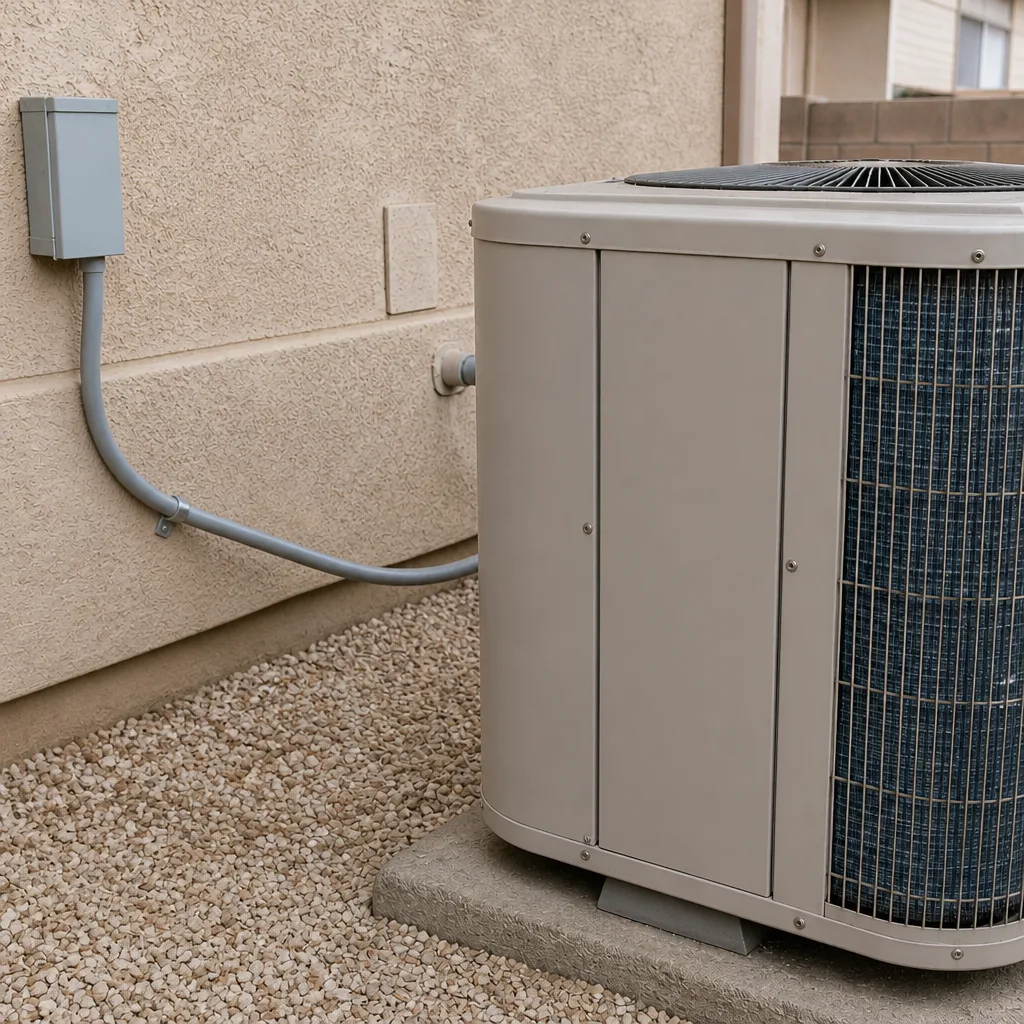
- Photograph the outside unit. The data plate with model and serial numbers, and any visible ice or rusting.
- Photograph the breaker panel. Note whether any breaker is tripped, and if so, which one.
- Time your cooling cycle once. Note the start time and end time. If it’s running under 6 minutes or over 25, write both down.
- Write down the 20-minute temperature test results. Return temperature, supply temperature, and the outdoor temperature when you took them.
If your technician walks in and you can hand over six photos and two temperature readings, they’ll know more in ten minutes than most calls reveal in an hour. Those photos also become the written record. When we hand you a price before any tool comes out, both of us are working from the same evidence: your photographs and our diagnostics. Nothing gets added at the door because nothing is being discovered twice.
For systems that have moved to the emergency stage, see our AC repair in Henderson guide for the fastest path from call to cool air.
Why Henderson Homes Wear Differently
Not all AC warnings are universal. Henderson sits in a desert climate with a specific wear pattern most national guides ignore.
- Dust load. Our air carries fine particulate from the desert floor and nearby construction. Air filters clog two to three times faster here than they would in a humid-climate city. A dirty filter raises the system’s static pressure, strains the blower, and mimics the symptoms of low refrigerant.
- Thermal cycling. Henderson summers swing from 85°F at sunrise to 112°F by 4pm. That daily expansion and contraction of copper lines and brazed joints is what eventually creates the pinhole leaks that lead to slow refrigerant loss.
- Decorative rock landscaping. Common in Green Valley and Anthem, rock mulch reflects radiated heat back at the outdoor condenser unit. A condenser sitting in 6 feet of rock against a south-facing wall runs hotter than the thermostat says, and its compressor works harder.
- Condenser coil build-up. Fine desert dust packs into condenser fins faster than in wetter climates. When the coil can’t shed heat, the compressor runs longer, drawing more current. Over time, that’s where the frequent breaker trip begins.
In our experience, an AC in Henderson that would last 18 years in a milder climate often reaches end-of-life at 12-15 years. That’s why we recommend a filter check every 30 days from June through September and an annual tune-up before the first 100°F week, not after. The early warning signs we walk through here show up sooner in Henderson homes because the system carries a heavier load from May through September.
Common Mistakes to Avoid
- Replacing a tripping breaker instead of investigating the compressor. The breaker is protecting your wiring. Swapping in a new one doesn’t fix the amperage draw, and it doesn’t stop the eventual lockup.
- Running the AC with ice on the indoor coil. Ice means restricted refrigerant flow; running the system while frozen starves the compressor and makes the repair more expensive. Turn it off and schedule a visit.
- Adding refrigerant without finding the leak. Refrigerant doesn’t “wear out.” If you’re low, you have a leak, and topping it off without finding the source is a temporary fix that costs more every season.
- Waiting for the system to fail on a hot day. Emergency calls are faster to book but usually cost more because the failure has reached stage 4 by then. A scheduled repair visits the same week at a lower cost.
- Ignoring the utility bill trend. A $30 jump in July is not a fluke. Track the same month against the same month in prior years; a steady climb with stable habits is a clear AC warning sign.
- Never checking the air filter for a full month. In Henderson, a filter can load up in 3-4 weeks during the summer. A clogged filter is the single most common cause of the “my AC isn’t cooling” call we get, and it’s the cheapest to fix.
- Calling an unlicensed or unvetted contractor for the repair. A cheap repair that fails inside a month costs twice as much. Our technicians are background-checked and uniformed, and every repair is backed by the 365-Day Done Right Promise in writing for a full year.
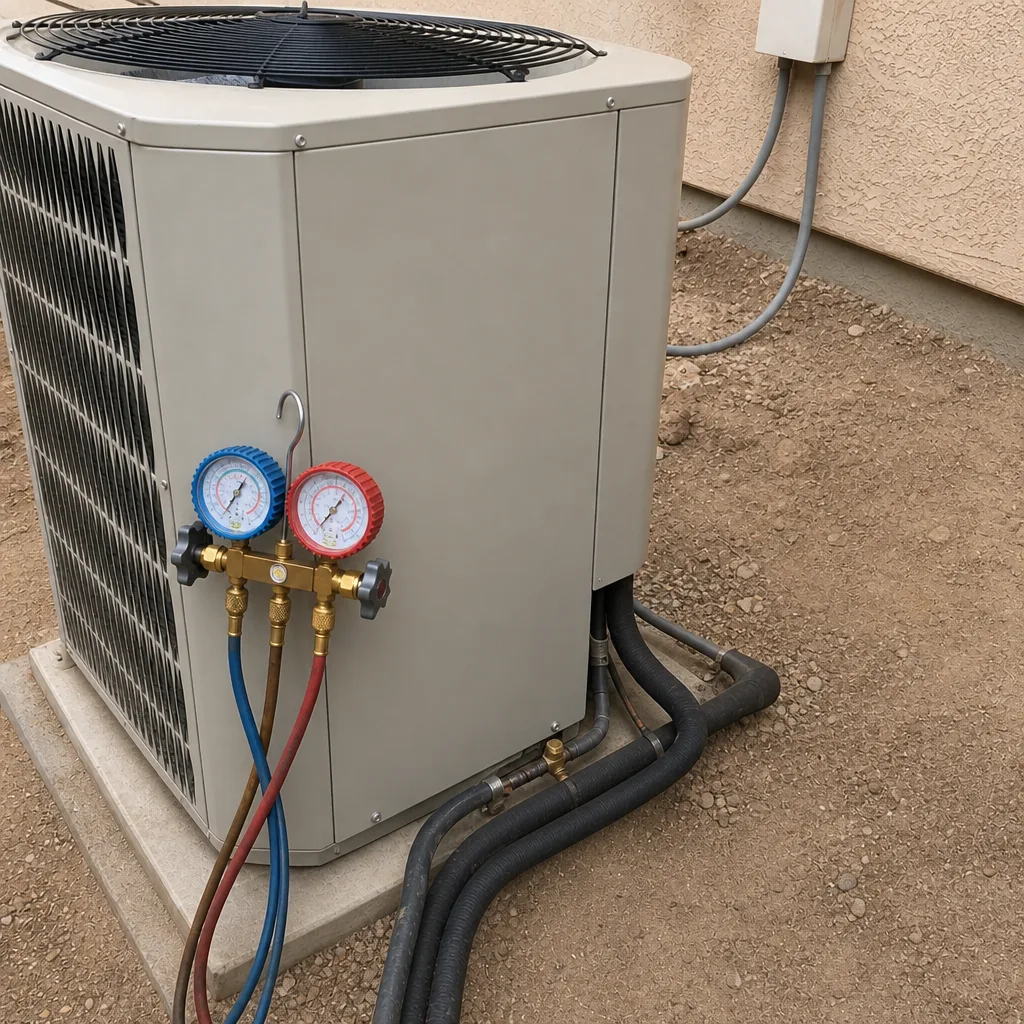
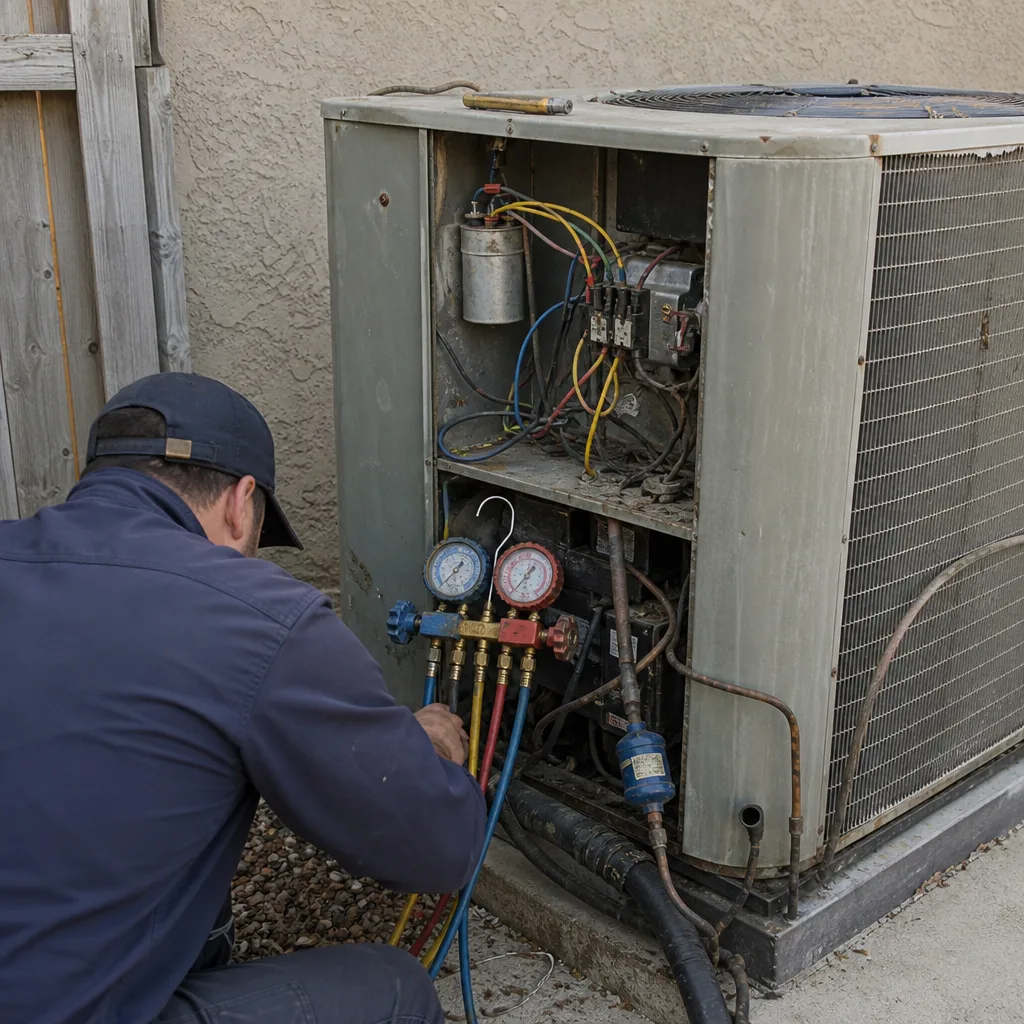
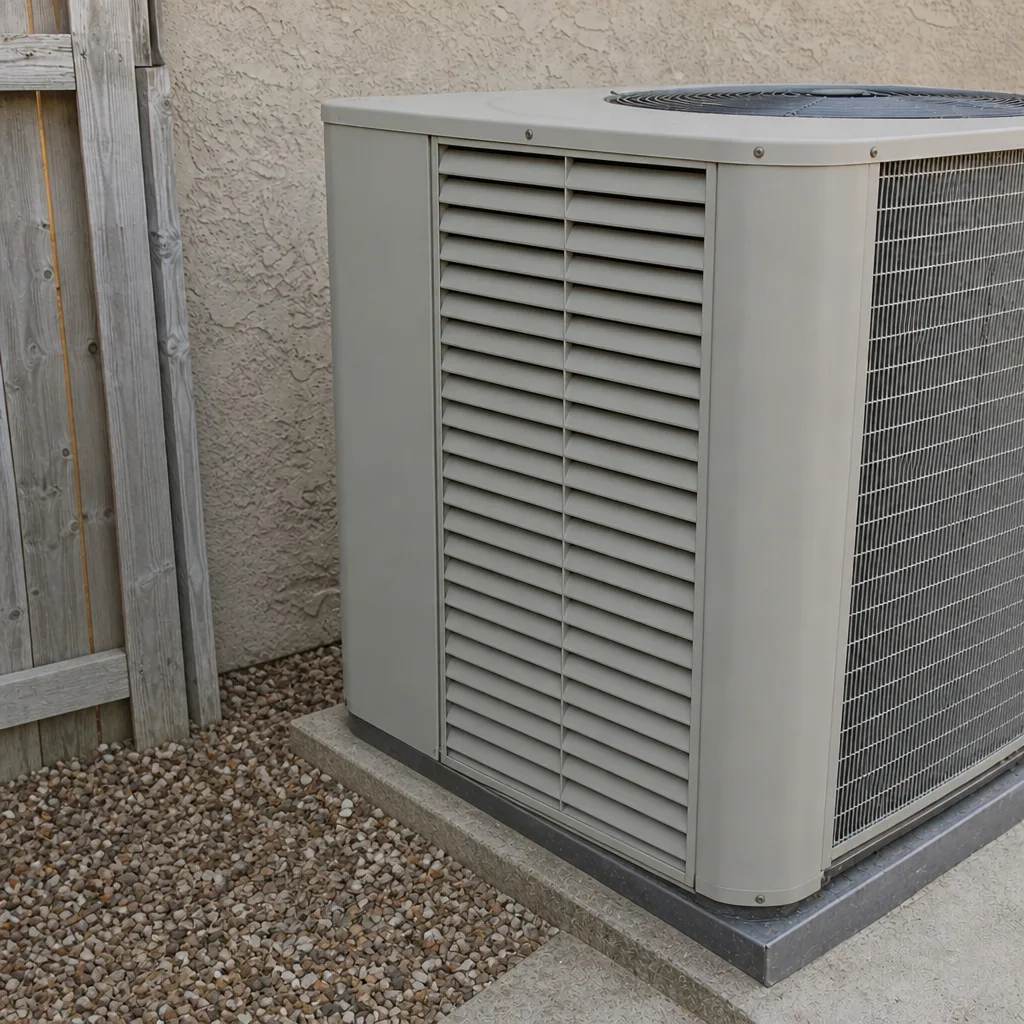
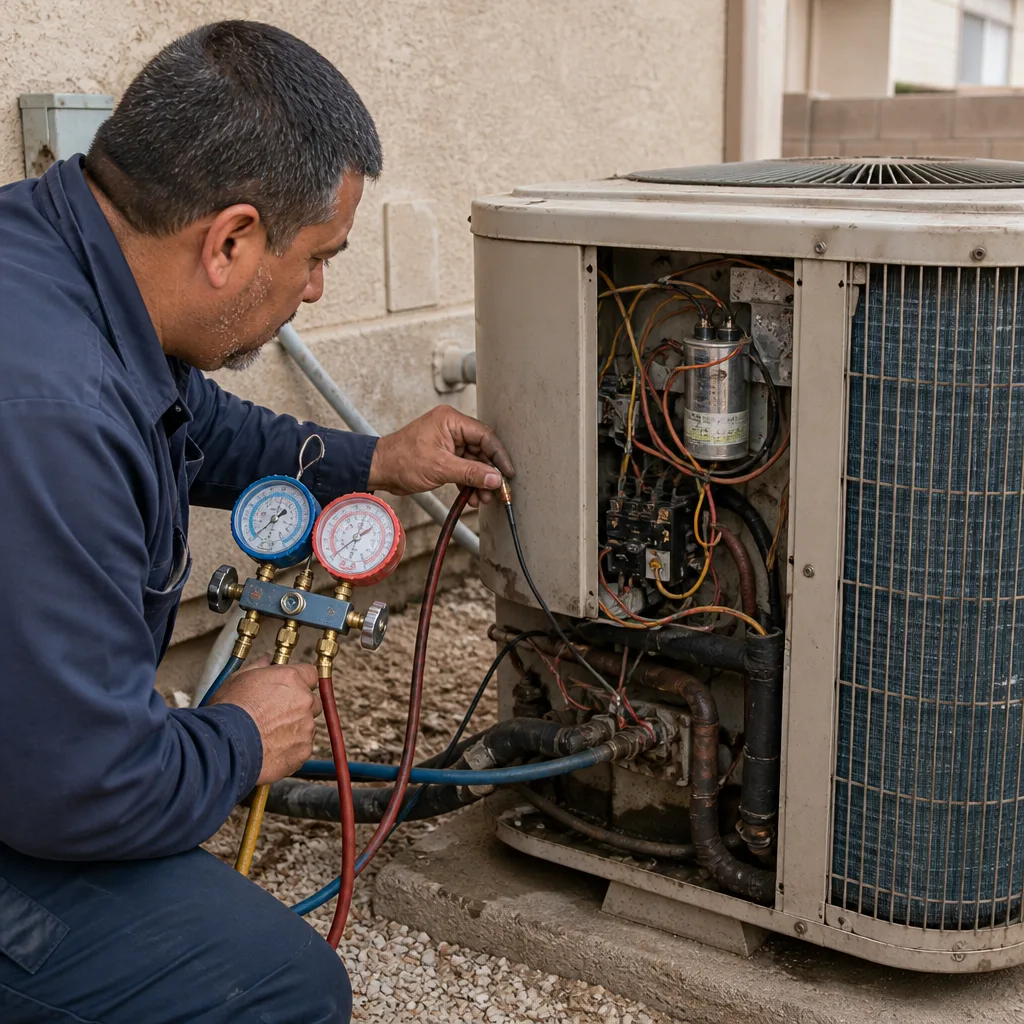
See the difference
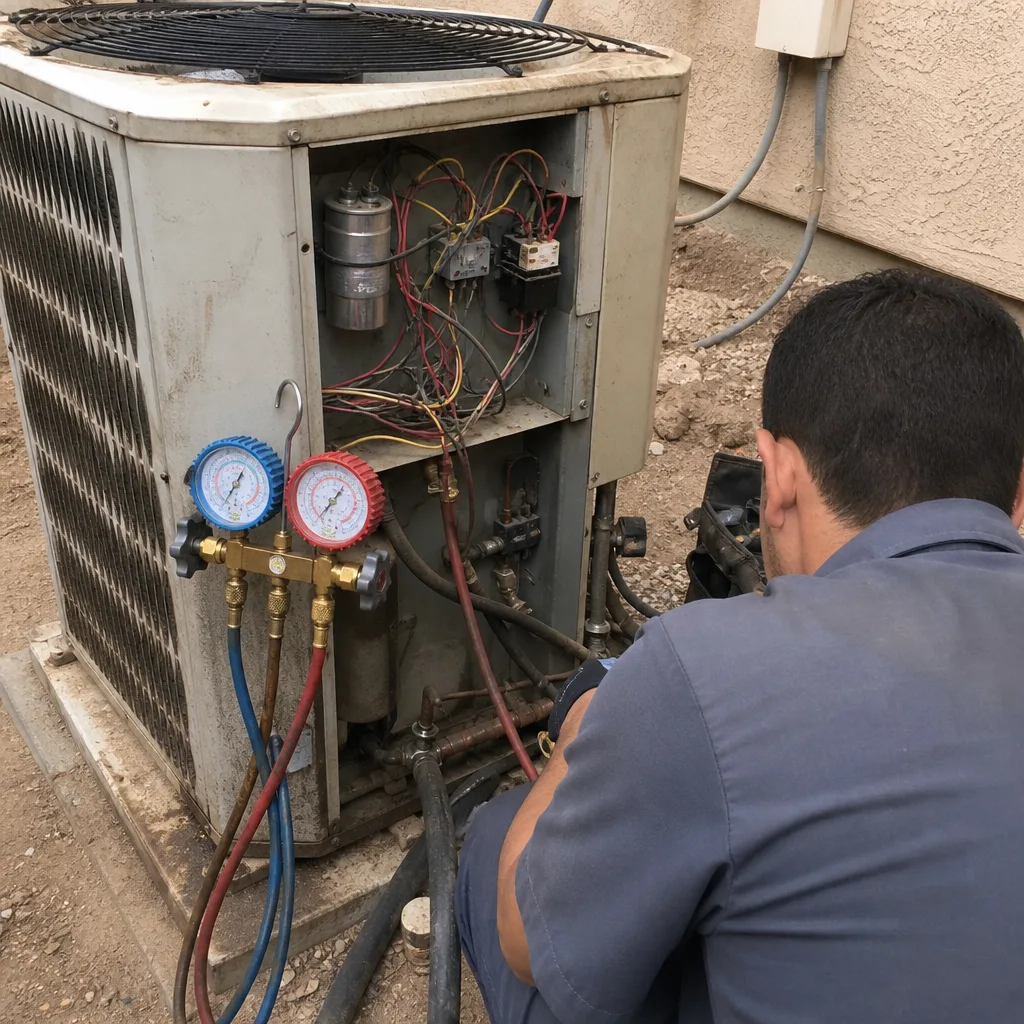 Before
 After
 Before
 After
 Before
 After
When to Call a Professional
Call a professional the moment you have any of the following: a breaker that trips more than twice in a week, ice on the indoor or outdoor coil, a temperature differential under 12°F on the 20-minute test, a system that’s short cycling every few minutes, or two or more early warning signs showing up at once. Scheduling now costs far less than an emergency repair at stage 4, and it’s the difference between picking your technician and taking whoever answers first on a 110°F afternoon. Coldharbour Heating & Air Henderson offers free estimates in Henderson. Call (844) 797-5122 for a same-week visit, upfront pricing in writing, and a live person on the line at any hour.
Frequently Asked Questions
For most Henderson homeowners, the first warning sign is a climbing power bill without a usage change, usually a 15-25% increase. It shows up before the noise, before the reduced cooling, and before the breaker starts tripping. Catch it there and the repair is small; wait and the same problem becomes a compressor.
Run the AC for 20 minutes, then measure the return air temperature and supply air temperature with a cheap digital thermometer. A 15-22°F difference is normal. Anything under 12°F suggests a refrigerant or airflow problem and warrants a service call. Write down both readings and the outdoor temperature at the time.
Yes, and it’s one of the most urgent ones. A breaker that trips every few days is almost always protecting the wiring from a compressor pulling excess amperage. In our experience, that pattern often precedes a compressor lockup by 2-4 weeks. Call a technician before the hottest week of summer, not after.
Most warning-sign repairs, including capacitor replacement, refrigerant leaks, and blower motor service, are completed in a single visit of 1-3 hours. Common repairs like a capacitor run $180-$340, and refrigerant leak repair plus recharge typically runs $320-$650. We provide the price in writing before the technician starts work, and the repair is covered for 365 days.
A standard 3-ton residential system replacing a like-for-like unit typically runs $4,800-$7,200 installed in the Henderson market. If you’re adding a heat pump or moving to a higher-efficiency system, expect $6,500-$9,500. Get a written replacement quote alongside any repair estimate when your system is 12 years or older, so you can compare honestly.
For a single warning sign and one mid-priced repair, repair usually wins. For two or more warning signs, a stage 3-4 issue, or any R-22 system, the math usually favors replacement once the repair quote passes roughly a third of a new install price. Request both numbers in writing before you decide.
For systems that fail on the hottest afternoon regardless of warning signs, see our AC Repairs, and for winter-ready heating review our furnace repair in Henderson page. When it’s time to plan a replacement, our AC installation in Henderson team can review brand options from Bryant, American Standard, Carrier, and Trane in a single visit.
The Bottom Line
The expensive AC failures in Henderson never arrive without warning. They start as a modest power bill climb, a thermostat that can’t quite hit its target, one vent blowing weaker than the others. Those quiet signals show up weeks before the grinding noise and the emergency call. Score your system against the five early signs, run the 20-minute temperature test once a summer, and photograph the evidence when something looks off. If you catch it in stage 1 or 2, you’re looking at a repair in the hundreds. Stage 4 is replacement territory. Coldharbour Heating & Air Henderson backs every repair with a written price before the work starts and a 365-Day Done Right Promise after it. Call (844) 797-5122 for a free estimate and a live person on the line, any hour.
Start with our Coldharbour Heating & Air Henderson home page for the full picture of how we work, including The Kingswell Way and what each of its five promises means for you.
Written by the team at Coldharbour Heating & Air Henderson.