
Last updated November 17, 2026
 AC repair
 Furnace & heating
 Heat pumps
 Ductless mini splits
 Carrier
 Trane
 Goodman
Seasonal tune-up and full diagnostic on your Carrier, Trane, or Goodman system - readings shown to you before any repair is proposed
Diagnosis first, numbers second - you approve the repair price before a single part goes in.
Get your free estimateFurnace Repair Troubleshooting: Common Problems and How to Fix Them
Every November in Henderson, the calls start arriving in a predictable wave: furnaces that won’t ignite on the first cold night of the season. Here’s the part most homeowners don’t expect. Roughly one in four of those calls isn’t a broken furnace at all. It’s a tripped safety switch on the filter compartment, tripped because the filter door was closed a little too firmly after a filter change. The system is fine. The switch just did its job. This guide walks through a start-to-finish troubleshooting sequence you can run in about ten minutes with a flashlight and a phone, then shows you exactly which symptoms are safe to watch and which ones mean you turn off the gas and call for help right away.
Quick Answer
A furnace that won’t start usually traces back to one of four causes: a thermostat set wrong or calling for the wrong mode, a closed gas valve or empty supply, a tripped filter-door safety switch, or a failed igniter. Three of those you can check yourself in ten minutes. If you hear clicking but no flame, smell gas, or see a flashing error code you can’t clear, stop and call a technician. Call (844) 797-5122 for a free estimate in Henderson.
Styles & brands we work with
- AC repair
- Furnace & heating
- Heat pumps
- Ductless mini splits
- Carrier
- Trane
- Goodman
Table of Contents
- Start With the Thermostat: The Most Common False Alarm
- Is the Gas Actually On?
- The Filter-Door Safety Switch That Trips Henderson Furnaces
- Pilot and Igniter: What You Should and Shouldn’t Touch
- How to Read LED Error Codes Without a Manual
- What the Sounds Are Telling You
- Safe to Monitor vs. Gas Off and Call Now
- How to Describe the Symptom So the Right Part Arrives
Start With the Thermostat: The Most Common False Alarm
Before you touch anything on the furnace itself, check the thermostat. A surprising share of “dead furnace” calls end with the thermostat set to COOL, set to FAN ON instead of AUTO, or powered off after a power blip. Henderson’s mild shoulder seasons make this worse – homeowners flip the system to cool during a warm October afternoon and forget to switch back when the first cold front rolls through the valley.
Here’s the ten-second check:
- Confirm the thermostat is set to HEAT, not COOL or OFF.
- Set the fan to AUTO, not ON. If it’s on ON, the blower runs constantly and can mask a furnace that isn’t actually heating.
- Raise the setpoint at least 3 degrees above the current room temperature so the system knows to fire.
- Check the thermostat display for a blank screen or a low-battery icon. A blank screen often means dead batteries or a tripped breaker at the panel.
- If your thermostat is battery-powered, swap the batteries and try again.
If the thermostat is calling for heat and the system still sits silent, move to the gas supply. If you’re seeing a problem that keeps returning after a thermostat reset, our Furnace Repair in Henderson team can diagnose it in one visit with a written price before any work starts.
Is the Gas Actually On?
It sounds obvious, and it’s still one of the most common culprits. A gas valve that got bumped closed during summer maintenance, a supply shut off after a utility interruption, or a propane tank that ran low will leave a perfectly healthy furnace unable to ignite.
Walk the gas line from the meter or tank to the furnace. You’re looking for a valve handle that should be parallel to the pipe – not perpendicular. Perpendicular means closed. If the valve is closed and you didn’t close it, don’t just open it and walk away. Ask why it was closed. Sometimes a technician shut it off for a safety reason and the homeowner doesn’t remember.
While you’re at it, listen for gas flow at the meter. If you have any reason to believe gas is leaking – a sulfur or rotten-egg smell anywhere in the house – stop immediately. Don’t flip switches, don’t light matches, don’t run the furnace to “test it.” Get everyone out, call your gas utility from outside, and then call us. A suspected gas leak is never a troubleshoot-it-yourself situation.
If the gas is on and the valve is open, move to the filter compartment.
The Filter-Door Safety Switch That Trips Henderson Furnaces
This is the one that catches people off guard. Modern furnaces have a safety switch tied to the filter access door. When the door is properly seated, the switch closes and the furnace is allowed to fire. Push the door in a little too hard, or seat it slightly crooked, and the switch stays open – and the furnace will not run, no matter what else is working.
We see this constantly in Henderson after a filter change. The homeowner pops the door off, slides in a new filter, pushes the door back on with a firm shove, and the system goes dead. The furnace isn’t broken. The safety switch is doing exactly what it was designed to do: keep the system from running with an open compartment.
Try this:
- Locate the filter access door on the side or bottom of the furnace cabinet.
- Remove it fully and look for a small button-style switch on the frame or a tab the door presses against.
- Use a flashlight to confirm the switch plunger isn’t stuck in the “in” position.
- Reseat the door slowly and evenly. You should feel it click or settle snug against the cabinet – not forced.
- Turn the thermostat back up and listen for the furnace to fire within a minute or two.
If the door is seated correctly and the system still won’t start, the switch itself may have failed. That’s a repair, not a homeowner fix. Our Coldharbour Heating & Air Henderson home page covers how we handle diagnostics and written pricing.
Pilot and Igniter: What You Should and Shouldn’t Touch
Most Henderson furnaces installed in the last 25 years use electronic ignition – a hot-surface igniter or a spark igniter – rather than a standing pilot light. If your furnace is old enough to have a standing pilot, and the pilot flame is out, the correct move is generally to stop and call a technician rather than re-light it yourself. Pilot assemblies sit inside the combustion chamber, and if the flame keeps going out there’s usually a reason – a dirty orifice, a bad thermocouple, a draft issue – and re-lighting without fixing the underlying cause is a short cut to a repeat problem.
On a modern furnace, the igniter is the glowing element or the spark assembly in the burner compartment. You can inspect it with a flashlight through a small view port, but don’t touch it. The igniter is fragile – one nudge can crack a silicon nitride element and turn a $150 job into a $300 one.
Watch what happens after a call for heat:
- You hear a click, then a steady glow, then the flame lights. Igniter is working. If the flame goes out within seconds, the flame sensor is dirty or failing – a technician job.
- You hear clicking without a glow and no flame. The igniter is likely cracked or the control board isn’t sending voltage. Call a technician.
- You hear nothing at all after a call for heat. Go back to the thermostat, gas supply, and filter-door switch before assuming igniter failure.
- You hear a whoosh or boom on ignition. Turn the gas off and call immediately. Delayed ignition can mean a burner or gas pressure issue and it’s a genuine safety concern.
How to Read LED Error Codes Without a Manual
Modern furnaces put an LED light on the control board – usually a small window near the bottom of the cabinet – and the way it flashes is the furnace’s way of telling you what’s wrong. You don’t need the manual for most of the common codes. You need to count the flashes.
Turn off power to the furnace at the breaker, remove the lower access panel, restore power, and watch the LED through one full cycle. A standard pattern is a pause followed by a run of short flashes, then another pause. That’s a code. Write it down as a number, like “3 flashes” or “4 flashes repeated.”
Here’s the translation for the most common codes on furnaces we work on across the Henderson area, including Carrier, Trane, Lennox, and American Standard units:
- Continuous on, no flashing: Usually normal – the board is powered but no fault is present.
- 1 flash: Often a flame-sensed-without-call or a flame rollout condition. Treat as a safety lockout. Call immediately.
- 2 flashes: Frequently a pressure switch or inducer fault. The system can’t prove airflow for safe combustion.
- 3 flashes: Commonly a pressure switch stuck open or a blocked flue. Venting issues matter – don’t run the system until checked.
- 4 flashes: Often a limit switch trip – the furnace got too hot, sometimes because of a clogged filter or restricted airflow.
- Continuous rapid flashing: Usually a flame-sensor or ignition fault. The system tried to light and gave up.
Codes vary by brand and model year. The meaning is close but not identical. When you call us, read the flash count and the brand, and we’ll pull the exact code reference before the technician walks in. That’s part of what our technicians trained on nine major brands do best.
What the Sounds Are Telling You
A furnace is one of the few appliances that talks to you. The sounds are worth learning, because they map to specific problems and they’re the fastest way to give a technician a head start.
- Rapid clicking with no ignition. The igniter is trying to fire but the gas isn’t lighting. Causes: cracked igniter, dirty flame sensor, gas valve issue, or air in the gas line after a service interruption.
- A boom or whoosh on startup. Delayed ignition. Gas builds up before it lights, then it lights all at once. This is a safety issue. Turn the gas off at the valve and call.
- Rattling at shutdown. Loose panels, a failing inducer motor bearing, or a blower wheel out of balance. Usually not urgent, but worth fixing before it becomes a bigger repair.
- Screeching or squealing while running. A blower motor bearing that’s drying out. Catch it early and you replace a motor. Wait too long and it takes the control board with it.
- Whistling through the vents. Restricted airflow – clogged filter, blocked return, or closed registers. Cheap to fix, and it protects the furnace from overheating.
- Rumbling from the flue area. Potential combustion or venting problem. Turn it off and call.
Write down what you heard and when. “Boom on startup, twice this week, once last week” tells a technician much more than “it’s making noise.”
Safe to Monitor vs. Gas Off and Call Now
Not every furnace symptom is an emergency, and not every furnace symptom is safe to wait on. Here’s the split.
Safe to monitor through one heating cycle:
- Furnace runs but the house never quite reaches the set temperature – often a filter, duct, or thermostat calibration issue.
- Rattling at shutdown that doesn’t affect heating.
- A filter-door switch that trips repeatedly but resets fine and the furnace runs normally afterward.
- Occasional clicking at startup that resolves with a normal ignition.
Turn the gas off and call immediately:
- Any sulfur or rotten-egg smell anywhere in the house.
- Booming or whooshing on ignition.
- Flame visible outside the burner compartment, or a scorched or discolored panel.
- Repeated lockouts with a flame-rollout code.
- Furnace runs but you feel cold air from the vents – the system may be blowing unheated air, which can indicate a serious combustion issue.
- Headaches, nausea, or drowsiness in the house that improve when you go outside. Possible carbon monoxide – get everyone out and call your gas utility, then call us.
If the situation is a heating emergency, our team answers the phone around the clock, every day of the year. A live person picks up, not a voicemail tree. That matters when you’re standing in a cold house at 2 a.m. with a symptom that worries you.
How to Describe the Symptom So the Right Part Arrives
The single biggest reason a first furnace visit turns into two is a vague symptom description. “It’s not working” can mean a dozen different things, and the technician has to guess which parts to bring. A specific description lets them load the right part onto the vehicle and often finish the repair on the same visit.
Before you call, gather these five facts:
- Brand and approximate age of the furnace. Look for the data plate on the interior of the cabinet. It lists model and serial numbers.
- The flash code you saw, counted exactly. “Four flashes, pause, four flashes” is enough for us to pull the code reference.
- What happens after a call for heat, in order. Clicking? Glow? Flame? Fan? Nothing? List them in sequence.
- Any sounds or smells, and how often. “Boom on startup, twice in the last ten days” is useful. “Loud” is not.
- What you’ve already tried. Thermostat reset, filter change, breaker reset, gas valve – all good to mention.
When you call (844) 797-5122, we take those five facts, match the code to the brand, and note the probable part on the ticket. That’s what lets our technicians trained on nine major brands – including Carrier, Trane, Lennox, and American Standard – arrive with the right component the first time. Our AC Installation in Henderson team works the same way on cooling jobs: gather the facts, bring the right parts, finish the visit.
Common Mistakes to Avoid
- Shoving the filter door closed. The most common November call we get in Henderson starts here. Push the door in slowly and evenly until it seats, and confirm the safety switch is depressed.
- Relighting a pilot without finding out why it went out. If a pilot flame keeps quitting, there’s a reason – a dirty orifice, a bad thermocouple, or a draft. Relighting delays the real fix and can put unburned gas into the compartment.
- Swapping in a higher-MERV filter to “improve air quality.” The wrong filter chokes airflow and trips the high-limit switch. Match the filter to what the furnace was designed for – usually MERV 8 to MERV 11 for a residential system in the Henderson climate.
- Running the furnace to “test” a suspected gas smell. Never. Turn off the gas, get out, and call the utility from outside.
- Ignoring a boom on startup. Delayed ignition is a safety concern. Waiting it out is how a small repair becomes a bigger one, or worse.
- Calling with “it’s not working” and no details. You’ll likely get a technician who has to guess what to bring. Two visits instead of one. Read the flash code, note the sounds, and give the brand.
- Assuming a warranty will cover the repair without a written agreement upfront. Get the price in writing before work begins. Any company that won’t put it on paper before the first tool comes out is telling you something.
See the difference
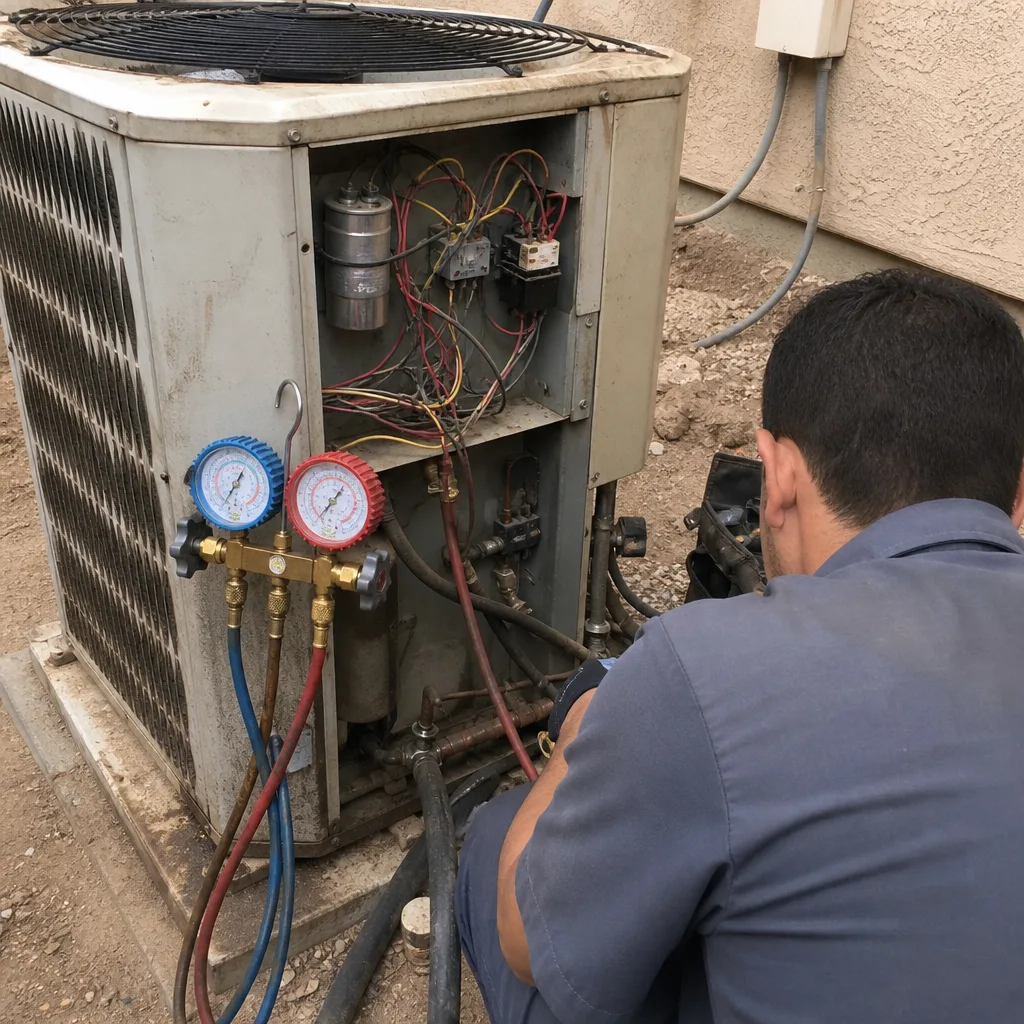 Before
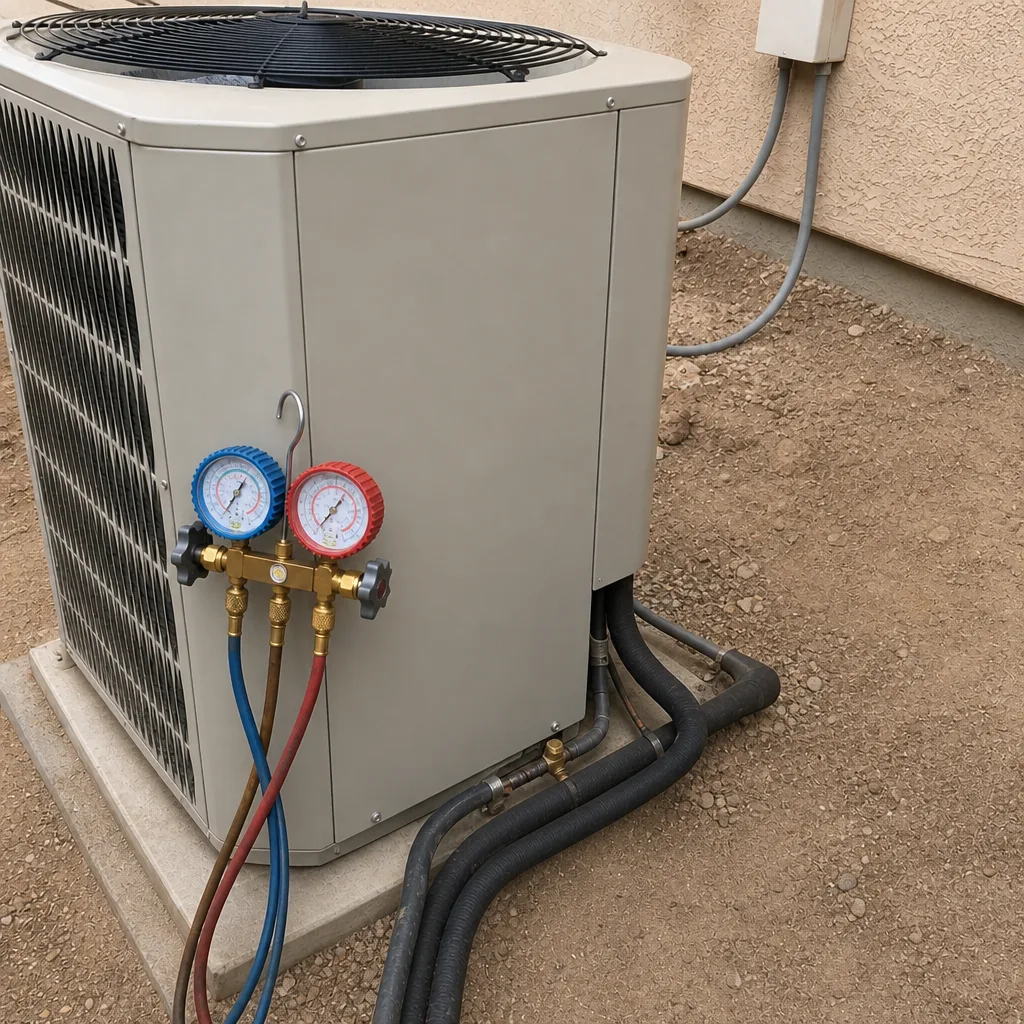 After
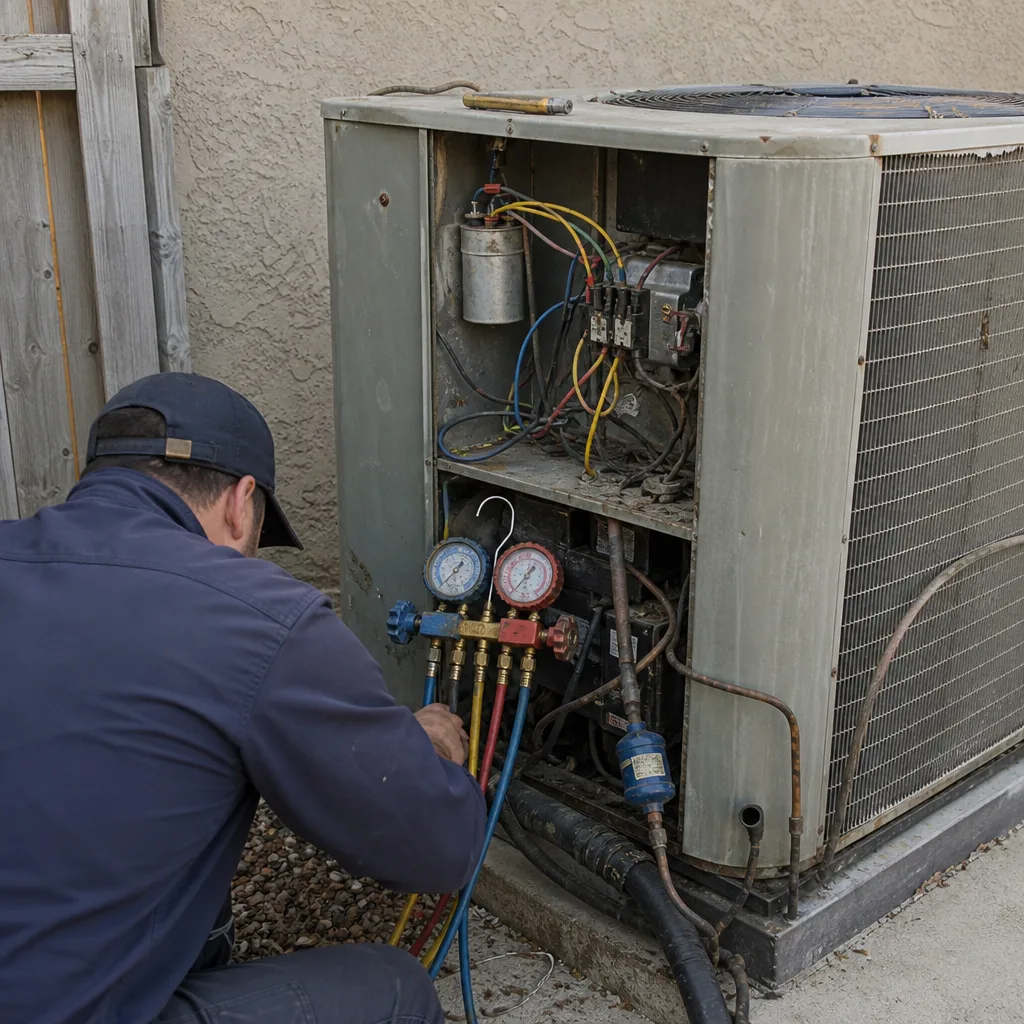 Before
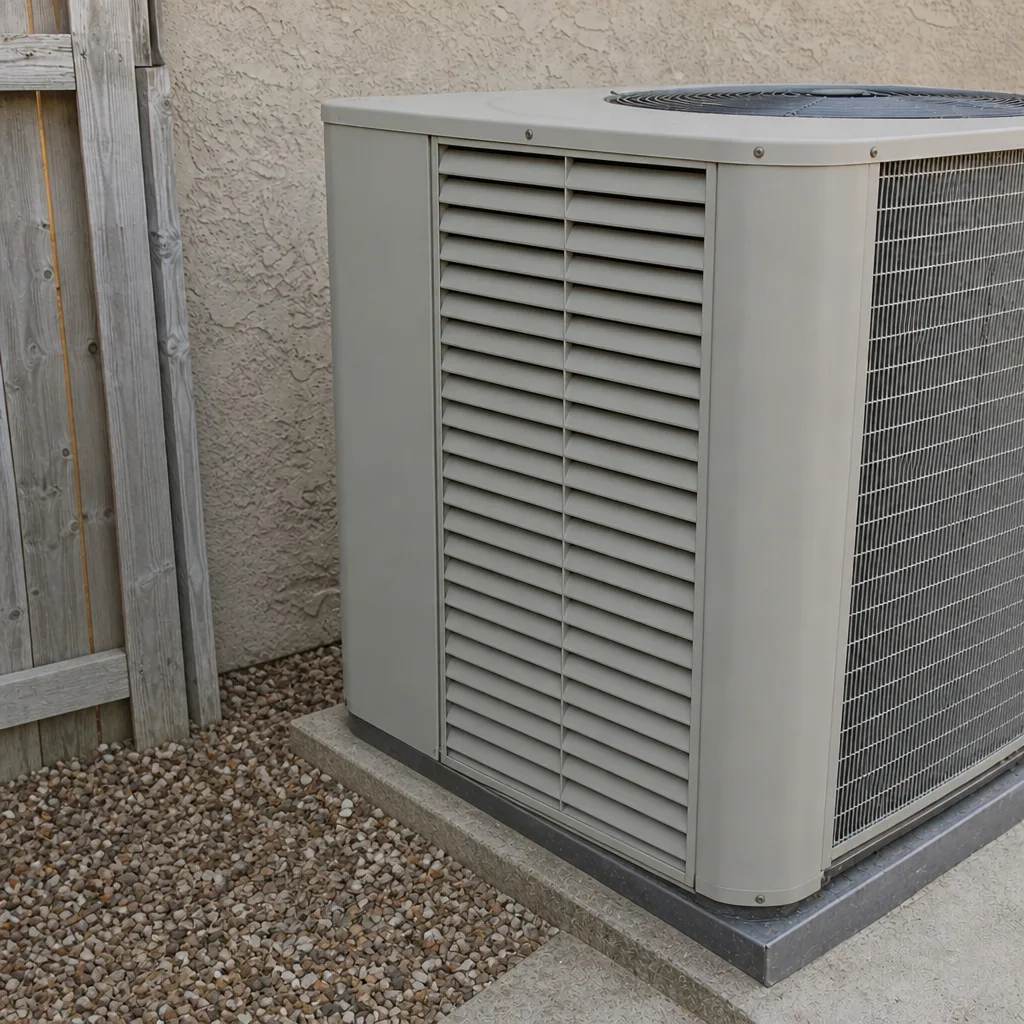 After
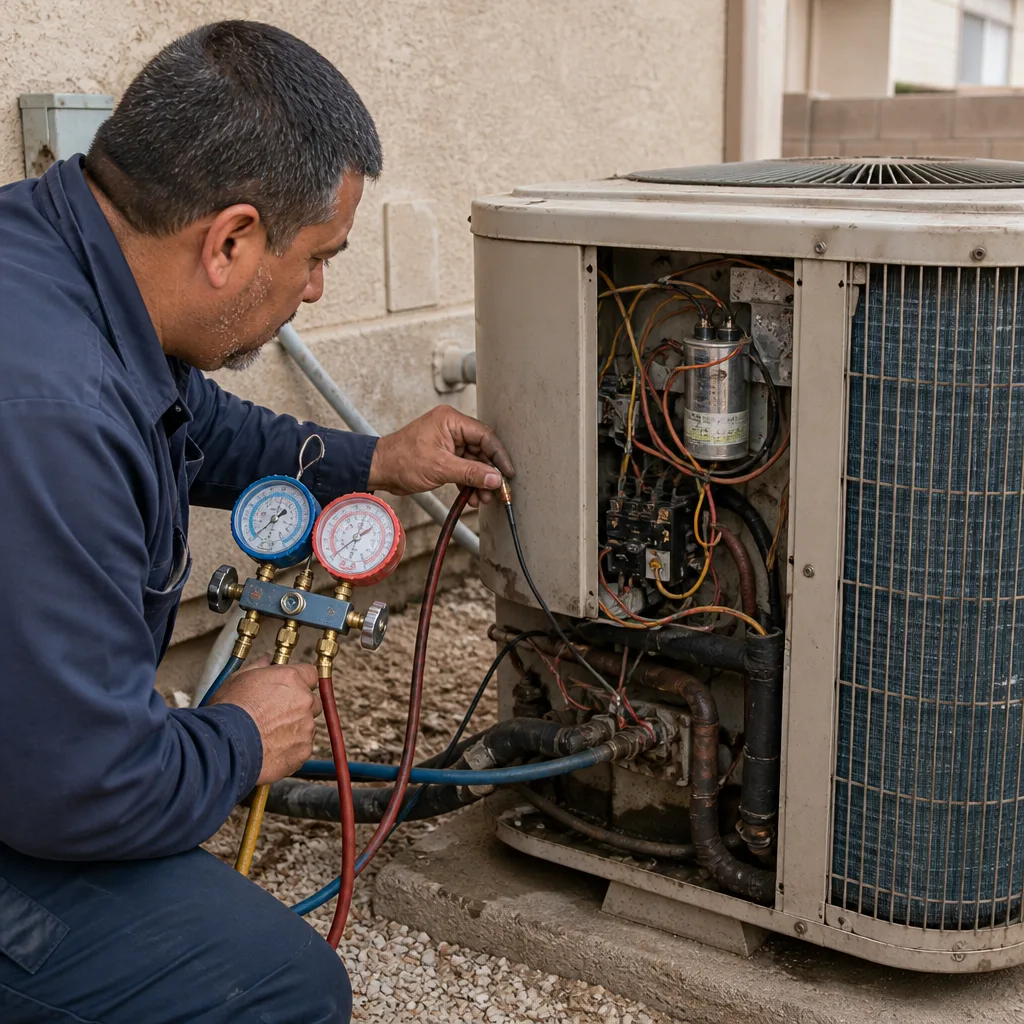 Before
 After
When to Call a Professional
Call a licensed technician when your furnace won’t ignite after you’ve checked the thermostat, the gas valve, and the filter-door switch. Call immediately – gas off, everyone out – for any gas smell, booming on ignition, flame outside the burner compartment, or CO symptoms in the house. Call to schedule a real repair if you see a repeating flash code you can’t clear, if the furnace runs but never heats, or if the blower is screeching. And call if the system is 15 years or older and this is its second or third repair in two seasons – that’s a replacement conversation, not a repair one. Coldharbour Heating & Air Henderson offers free estimates in Henderson – call (844) 797-5122. We answer the phone around the clock, hand you a written price before any work begins, and back every repair with our 365-Day Done Right Promise: if the repair fails within a full year, we come back and fix it at no charge. For a wider look at how our furnace work fits with the rest of the system, see AC Repair in Henderson.
Frequently Asked Questions
The four most likely causes are a thermostat set wrong or in the wrong mode, a closed gas valve, a tripped filter-door safety switch, or a failed igniter. Check the thermostat first, then the gas valve, then seat the filter door firmly and slowly. If none of those fix it and you hear clicking without a flame, the igniter is the next suspect and it needs a technician.
The flash count is a fault code. Count the flashes between pauses and write the number down. Common patterns are 1 flash (safety lockout, call immediately), 2 or 3 flashes (pressure switch or venting issue), and 4 flashes (limit switch trip – often a clogged filter). The exact meaning shifts a little by brand, so give us the brand and the flash count when you call (844) 797-5122.
If your furnace has a standing pilot, we recommend against relighting it yourself. The pilot assembly sits inside the combustion chamber, and if the flame keeps going out there’s an underlying cause – a dirty orifice, a bad thermocouple, or a draft issue – that relighting doesn’t fix. Call a technician. Modern furnaces with electronic ignition don’t have a pilot to relight; if it won’t fire, the igniter or flame sensor is the issue.
Yes. A boom on startup is delayed ignition: gas builds up before it lights and then lights all at once. Turn the gas off at the valve and call us immediately. Don’t run another cycle to “see if it does it again.”
Most furnace repairs in the Henderson area run between $180 and $550 depending on the part. Igniter replacements typically come in around $150-$280, flame sensor cleanings around $120-$180, and blower motor replacements $400-$700. We hand you a written price before any work begins, and it doesn’t change at the door. Call (844) 797-5122 for a free estimate – no overtime charges for evening or weekend calls.
If the furnace is under 12 years old and this is its first or second repair, repair usually wins. If it’s 15 or older, has had three or more repairs in two seasons, or the repair cost is more than a third of a replacement, replacement is the better call. A furnace replacement in Henderson typically runs $3,800-$7,500 depending on size and efficiency. We’ll give you both numbers in writing before you decide, and if the honest answer is repair, we’ll tell you that.
The Bottom Line
Four causes account for the vast majority of “furnace won’t start” calls in Henderson, and three of them – thermostat, gas valve, filter-door switch – you can check yourself in ten minutes with a flashlight and a phone. On a modern furnace with electronic ignition, the igniter sits right behind the flash code, and the flash code is just a number you count and report. Learn the sounds – clicking without a flame, a boom on startup, a rattle at shutdown – and you have a real diagnostic vocabulary to give a technician. And know the line: a gas smell, a boom, or CO symptoms are a gas-off, get-out, call-right-now situation, never a wait-and-see. When you’re ready, call (844) 797-5122 for a free estimate. Estimates are free, the phone is answered by a live person around the clock, and every repair is covered by the 365-Day Done Right Promise in writing.
Written by the team at Coldharbour Heating & Air Henderson.