
Last updated November 17, 2026
 AC repair
 Furnace & heating
 Heat pumps
 Ductless mini splits
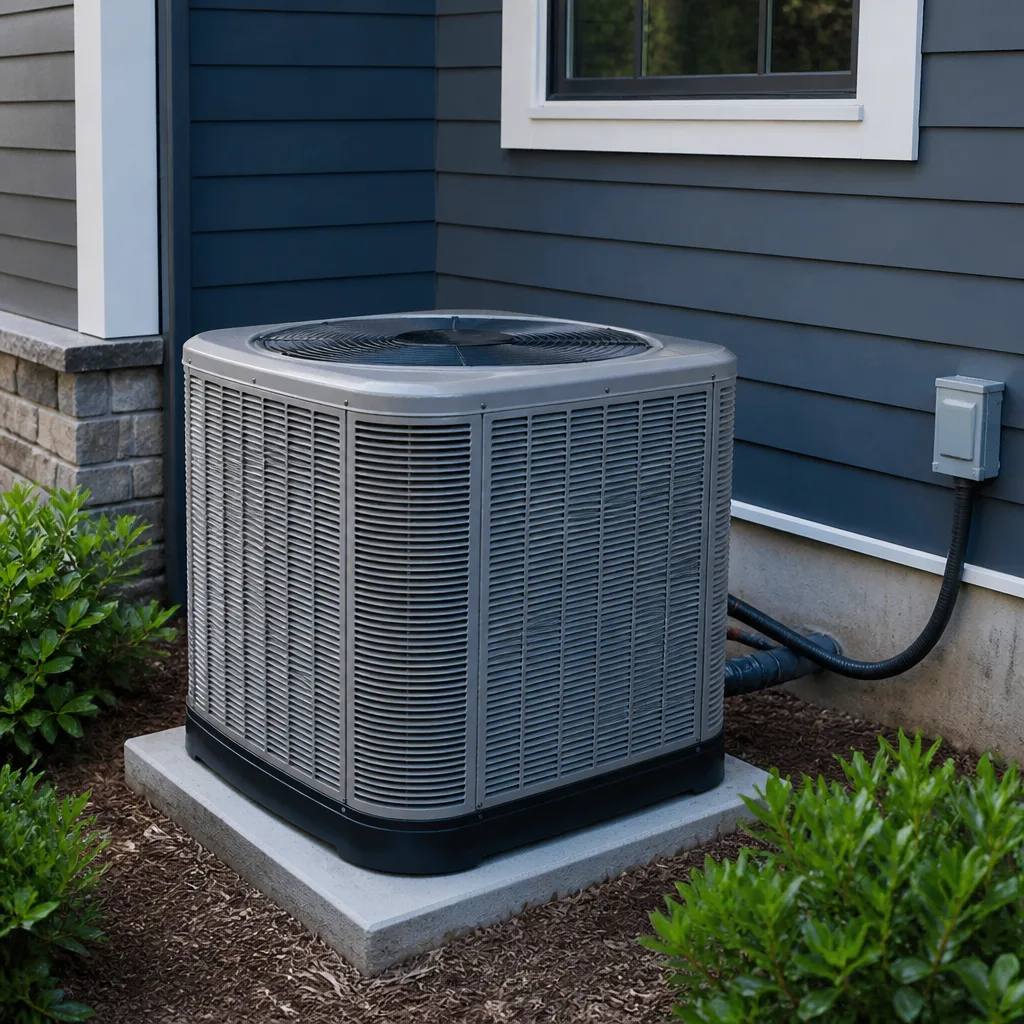 Carrier
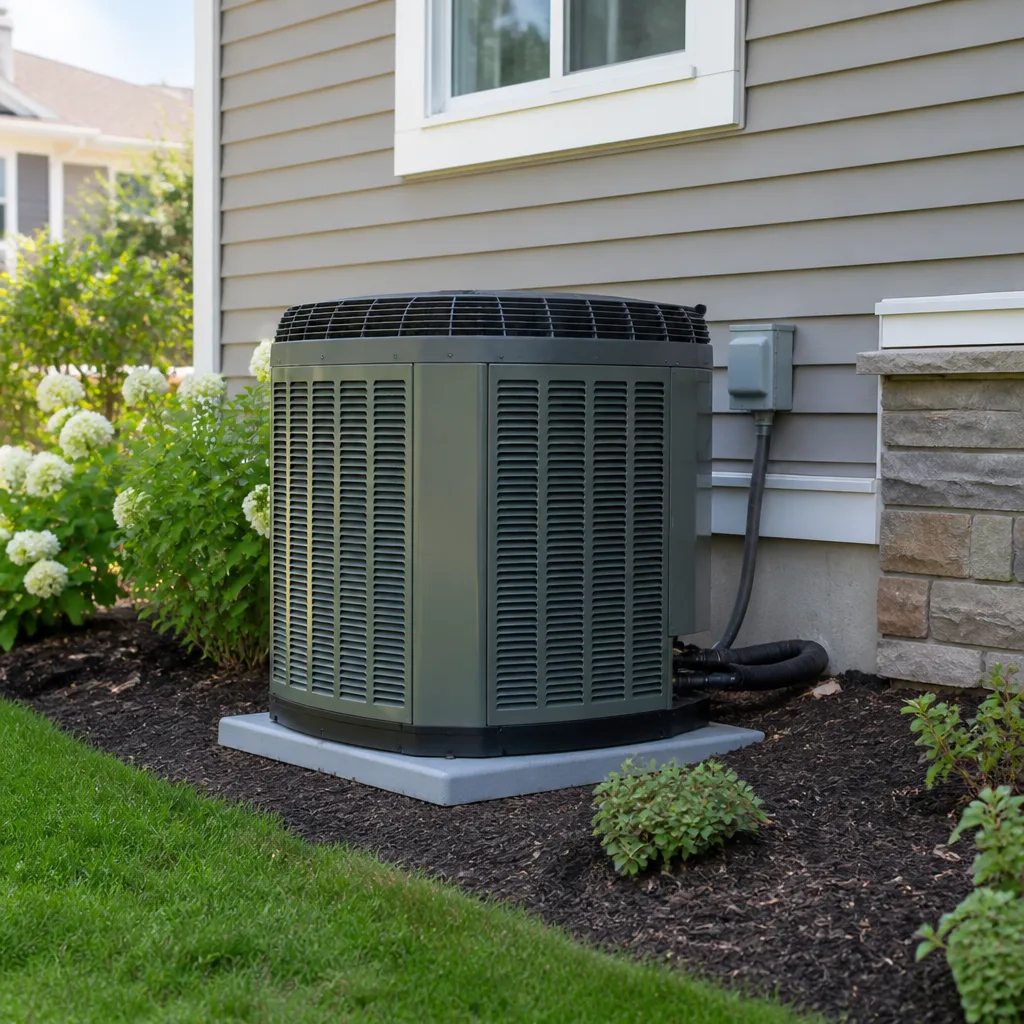 Trane
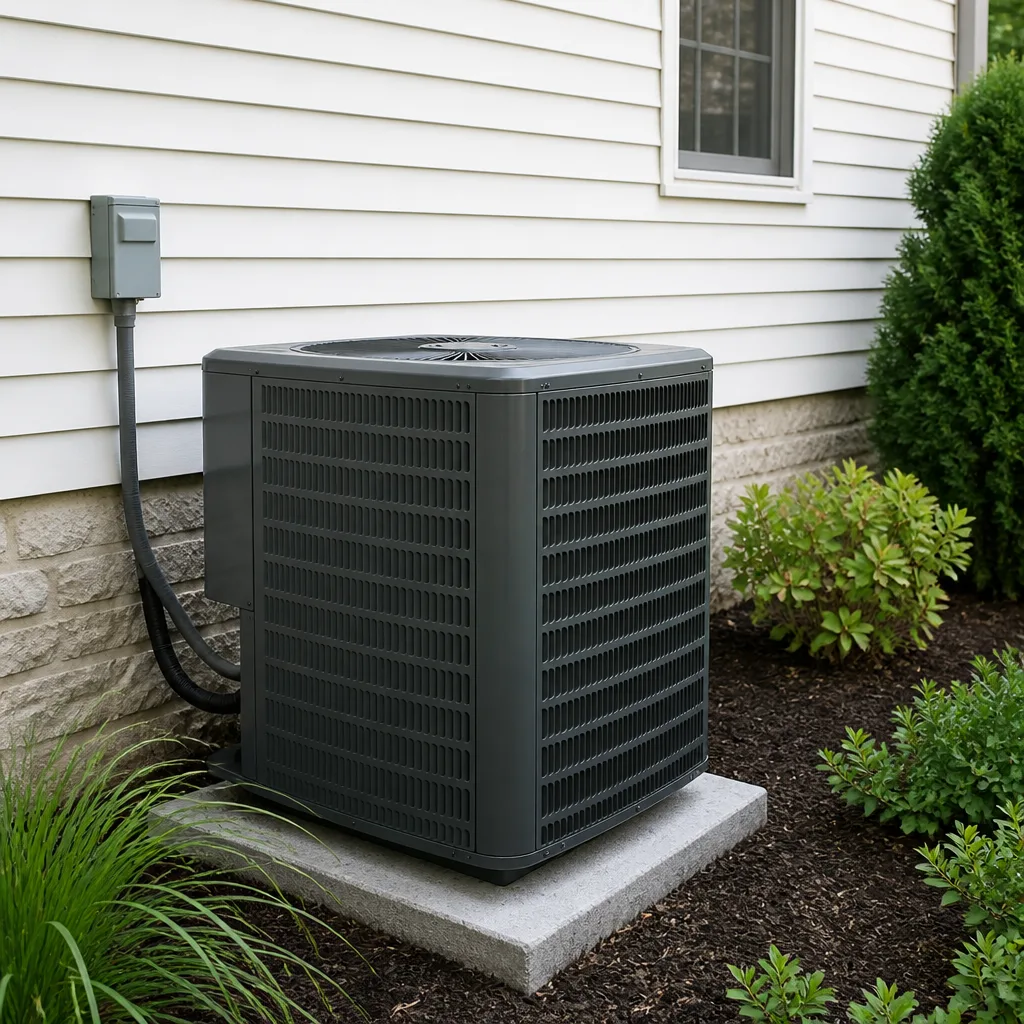 Goodman
Seasonal tune-up and full diagnostic on your Carrier, Trane, or Goodman system - readings shown to you before any repair is proposed
Diagnosis first, numbers second - you approve the repair price before a single part goes in.
Get your free estimateAC Installation Troubleshooting: Common Problems and How to Fix Them
A new air conditioner that runs nonstop on a 95°F Henderson afternoon isn’t automatically broken. Modern units are sized to handle the hottest design day, so long runtimes in July and August are normal. But three post-install symptoms that look like normal behavior are actually early signs the system was set up wrong: a unit that never cycles off even at night, rooms that stay 4 to 6 degrees warmer than the thermostat setting, and a breaker that trips more than once in the first month. This guide walks through the five most common post-installation complaints, what’s really causing them, and how to tell a commissioning mistake from a genuine equipment failure so you have the right conversation when you call back.
Quick Answer
Most problems in the first 30 days after a new AC installation are setup and commissioning issues, not equipment failures. Warm rooms, water around the air handler, tripped breakers, thermostat communication faults, and uneven airflow almost always trace to refrigerant charge, duct connections, wiring, or configuration that should have been verified before the technician left. A properly commissioned system in Henderson should maintain the thermostat setpoint, hold a steady refrigerant charge documented on the job sheet, and run without tripping a breaker.
Styles & brands we work with
- AC repair
- Furnace & heating
- Heat pumps
- Ductless mini splits
- Carrier
- Trane
- Goodman
Table of Contents
- The Five Most Common Post-Installation Complaints
- Refrigerant Charge Verification: Why a Correct Install Can Still Be Undercharged
- Airflow Problems: Duct Connections Made During Install vs. Pre-Existing Ducts
- “It’s Just Settling In”: What That Means and When It’s an Excuse
- The Breakdowns Behind Each Symptom: A Plain-English Cause List
- What to Document Before You Call Back
- Installation Warranty vs. Manufacturer Warranty
- Common Mistakes to Avoid
The Five Most Common Post-Installation Complaints
After a new system goes in, the same five complaints come up again and again. Nearly all of them have a setup cause, not an equipment cause. Here’s the plain-English version of each.
- Warm rooms. The system cools the room with the thermostat but a bedroom or west-facing room stays warm. In our experience this traces to one of three things: an undersized return, a supply register that’s partly closed, or a room that’s simply beyond what the new system was sized to serve. In Henderson, afternoon sun on a west wall can push a poorly sealed window to 130°F surface temperature, and the system has to work harder than the load calculation assumed.
- Water around the air handler. The condensate drain line that carries moisture away from the indoor coil is either clogged, pitched the wrong way, or missing a trap. A new install should include a properly trapped and sloped drain and a float switch that shuts the unit off before water reaches the ceiling. If you see water on day three, the drain was not commissioned correctly.
- Tripped breakers. A breaker that trips repeatedly on a new install points to a wiring issue, a loose lug at the disconnect, or a compressor drawing more than its rated amps. It is not normal. A single trip during an electrical storm is one thing; a pattern of trips in the first month is a callback item.
- Thermostat not communicating. The thermostat doesn’t see the indoor unit or doesn’t call for cooling. Usually this is a wiring fault on the low-voltage control wire or a configuration step skipped during commissioning. Modern communicating thermostats have to be set to match the equipment; if that step was missed, the system may run in a fallback mode that feels “off.”
- Uneven airflow. One room gets blasted and another gets nothing. This is almost always a duct problem, either a connection the install crew made (a flex duct that came loose from a plenum, a supply boot not sealed to the drywall) or a pre-existing duct design the new system has now exposed.
Notice what’s missing from this list. Compressor failures, coil leaks, and board failures do happen, but they are rare in the first 30 days. If you’re staring at a new install that isn’t working right, the odds are strong that something on the commissioning checklist got skipped.
Refrigerant Charge Verification: Why a Correct Install Can Still Be Undercharged
Here’s a detail most homeowners never hear. A new AC can be installed exactly to spec, brazed clean, pressure-tested, and still end up undercharged on day one. That’s because the correct charge depends on the length and diameter of the refrigerant lines between the indoor and outdoor units. If those lines are longer than the factory pre-charge assumes, the technician has to add refrigerant to match. If they added a little too little, the system cools but runs longer, and the indoor coil may frost on a humid day.
The proof that charge was verified should be right on the job sheet. Ask for it. What you want to see:
- Superheat and subcooling readings. These two numbers tell a trained technician whether the system holds the right amount of refrigerant. Ask what they were at the end of the visit and where they should be for your model.
- Line length and line size. The job sheet should note how many feet of refrigerant line were run and what diameter.
- Ambient temperature and indoor wet-bulb at the time of measurement. Charge is verified under load, so the conditions have to be recorded.
If the job sheet only says “checked refrigerant” with no numbers, the charge was not verified, it was assumed. A properly charged system holds its setpoint on a Henderson afternoon without running 100% of the time. If yours runs flat-out every afternoon and rooms never fully catch up, the charge is one of the first things we check.
We use a scale and recovery equipment, not guesswork, on every recharge. If a refrigerant recharge (topping off the cooling fluid the system needs to run) is what your install needs, most recharges run $200 to $450 depending on how much refrigerant has to be added and whether a leak needs to be located and repaired first. If the install is under its 365-day Done Right Promise, that correction is on us, not on you.
Airflow Problems: Duct Connections Made During Install vs. Pre-Existing Ducts
When airflow is uneven after a new install, the first question a good technician asks is: did we touch it? The answer matters because the responsibility is different.
Duct connections made during install are the connections between the new air handler and the existing duct system. Flex duct runs, supply and return plenums, boots where the duct meets the register, and the transition between the new cabinet and the old sheet metal. Any of these can be loose, kinked, or unsealed. A flex duct that got bent at a sharp 90-degree angle loses a huge amount of airflow. A supply boot not sealed to the drywall pushes cold air into the attic instead of the room. These are install issues and belong on the callback list.
Pre-existing duct issues are the ducts the new system inherited. A Henderson home built in the 1990s may have ductwork that was sized for the original unit and now has to move more air than it can handle. A single return running through a hot attic can add 6 to 8 degrees to the supply air before it ever reaches a room. If the new system exposes a duct design problem, the fix is a duct correction, not an equipment fix.
Here’s how a trained technician tells the difference. They’ll run a pressure test on the duct system or use a flow hood to measure airflow at each register. If the new air handler is moving the right CFM (cubic feet per minute, a measure of airflow), the problem is downstream in the ducts. If the air handler isn’t moving the right CFM, the problem may be at the cabinet connection. Either way, the numbers tell the story.
If the ductwork in your home is the issue, our AC Repair in Henderson technicians can measure it and tell you what a proper correction costs before any work begins.
“It’s Just Settling In”: What That Means and When It’s an Excuse
A brand-new air conditioner doesn’t need to “settle in.” That phrase gets used two very different ways, and homeowners deserve to know the difference.
What it legitimately means: a few things genuinely do change in the first week. A new system takes 24 to 48 hours to pull a house down to a lower setpoint from a warm start, especially if the house has been closed up. A new thermostat learning your schedule may behave oddly for the first few days. And new equipment may emit a slight odor for the first day or two as manufacturing oils burn off the heat exchanger in a furnace or air handler. These are real, temporary, and don’t recur.
When it’s being used to dodge a callback: if “settling in” is still the explanation after 7 days and the same symptoms are present, it’s an excuse. The system was set up wrong or there’s an equipment issue, and someone needs to come back. Ask the dispatcher when the technician will return and what they’ll check. If the answer is “wait and see,” push back.
Here’s a homeowner checklist to tell the difference:
- Is the temperature difference across the thermostat at least 15°F between the setpoint and the outdoor temp? If not, something is off.
- Is the system cycling off at least some of the time, or running 100% of the day? A properly sized system in Henderson cycles on most summer days.
- Are the warm rooms the same ones you complained about at the walkthrough, or different? Same rooms mean the problem was never solved.
- Has the water returned, or did the breaker trip again? Recurring symptoms are not settling in.
- Will the technician put the answer in writing? If it can’t be documented, it’s not a real diagnosis.
A technician who’s confident the install is correct will put it in writing and come back if they’re wrong. That’s the whole point of the 365-Day Done Right Promise: if the correction fails within a year, we come back and fix it at no charge, and the guarantee is on the job sheet before the technician leaves.
The Breakdowns Behind Each Symptom: A Plain-English Cause List
If you want to look like you’ve read a manual, here’s the cause map. Use it when you call; it helps the dispatcher send the right technician with the right parts.
- Warm rooms: wrong refrigerant charge, return air undersized, supply boot not sealed, return duct drawing 120°F attic air, thermostat reading the wrong spot on the wall.
- Water around the air handler: condensate drain not trapped, drain pitched wrong, float switch missing or bypassed, indoor coil freezing because of low charge or restricted airflow.
- Tripped breakers: loose lug at the disconnect, undersized wire for the unit, compressor drawing high amps, short in the control circuit.
- Thermostat not communicating: low-voltage wire damaged during install, wrong terminal mapping, thermostat not configured for the equipment, transformer undersized.
- Uneven airflow: flex duct kinked during install, plenum connection leaking, balancing dampers left wide open, pre-existing duct design that the new unit now exposes.
One note on safety: the refrigerant circuit, high-voltage wiring, and gas connections at the furnace are all areas where the wrong move can injure you or void the warranty. We don’t recommend homeowners open any of those panels. A trained technician with the right gauges and a meter is the only person who should be diagnosing any of those five symptoms. If a technician is scheduled, tell them exactly what you’ve seen and let them bring the tools.
See the difference
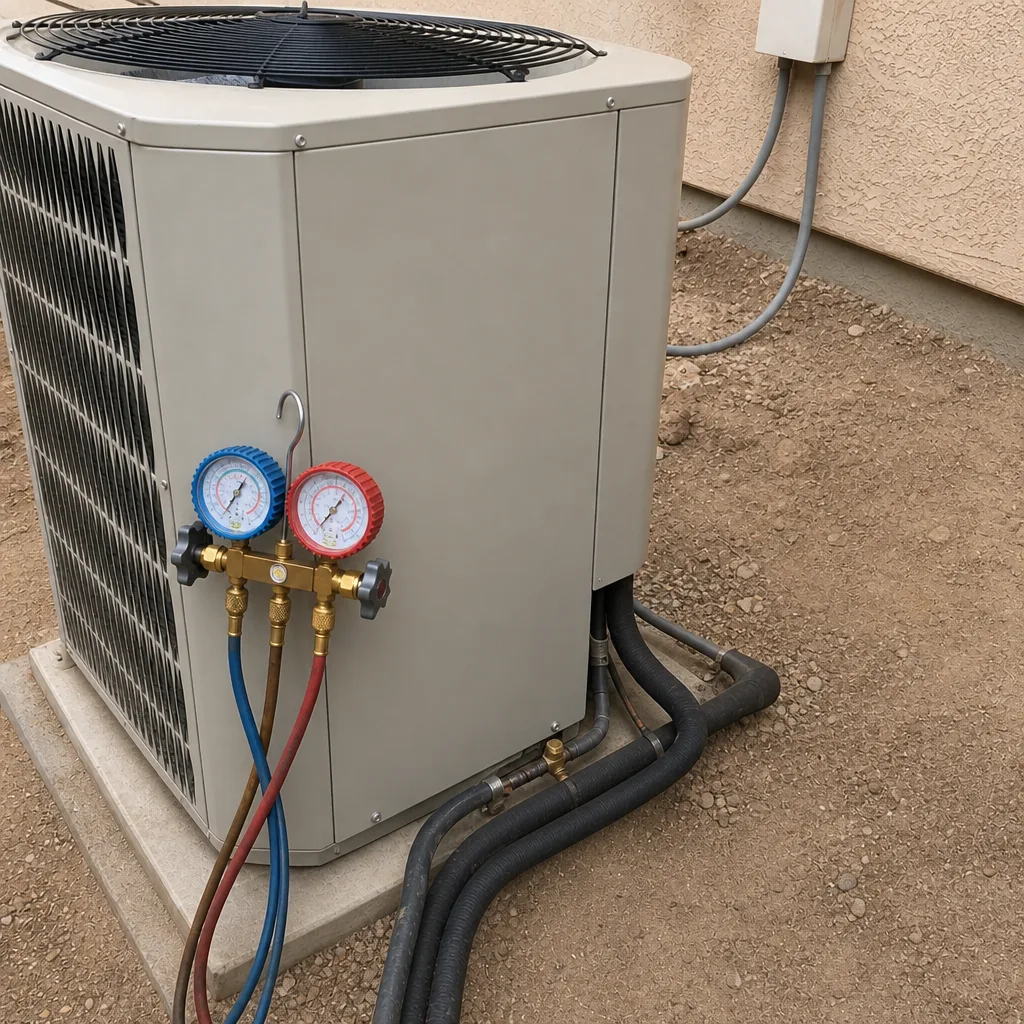
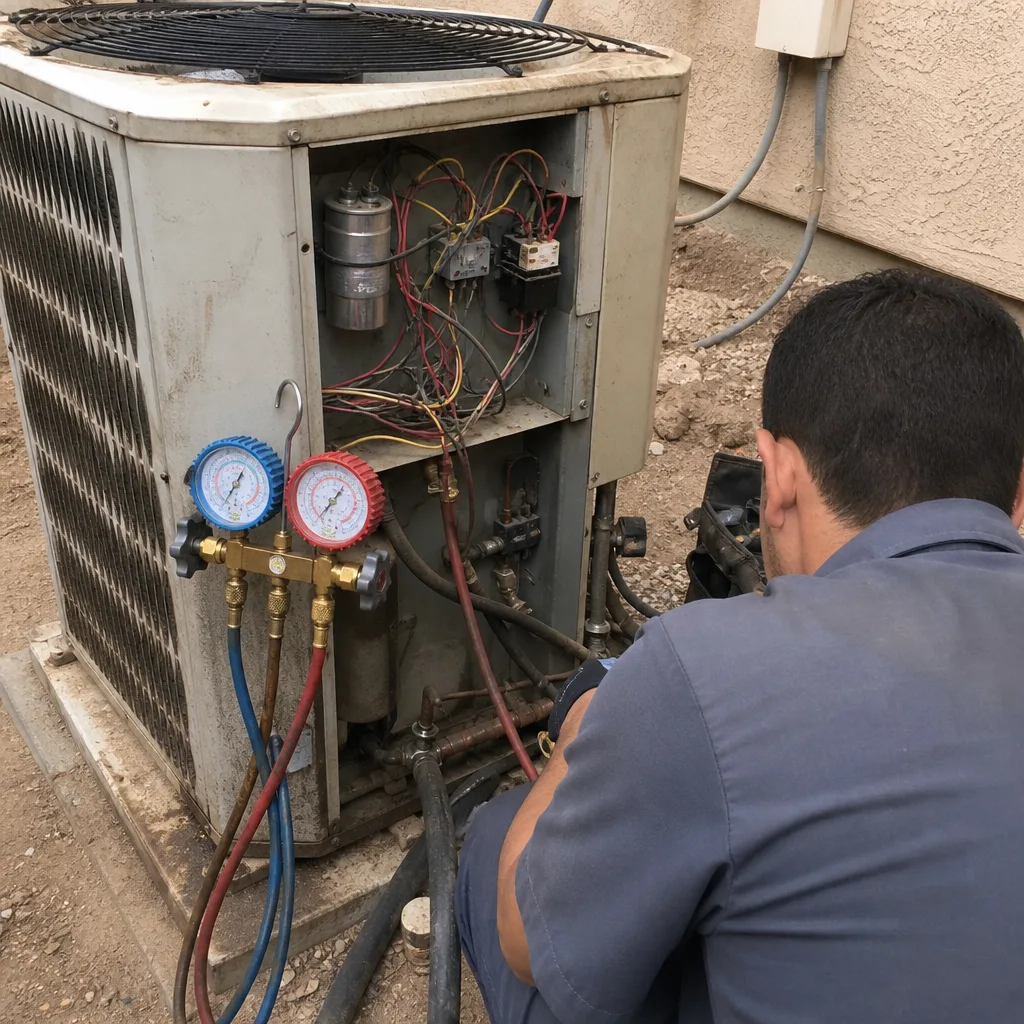 Before
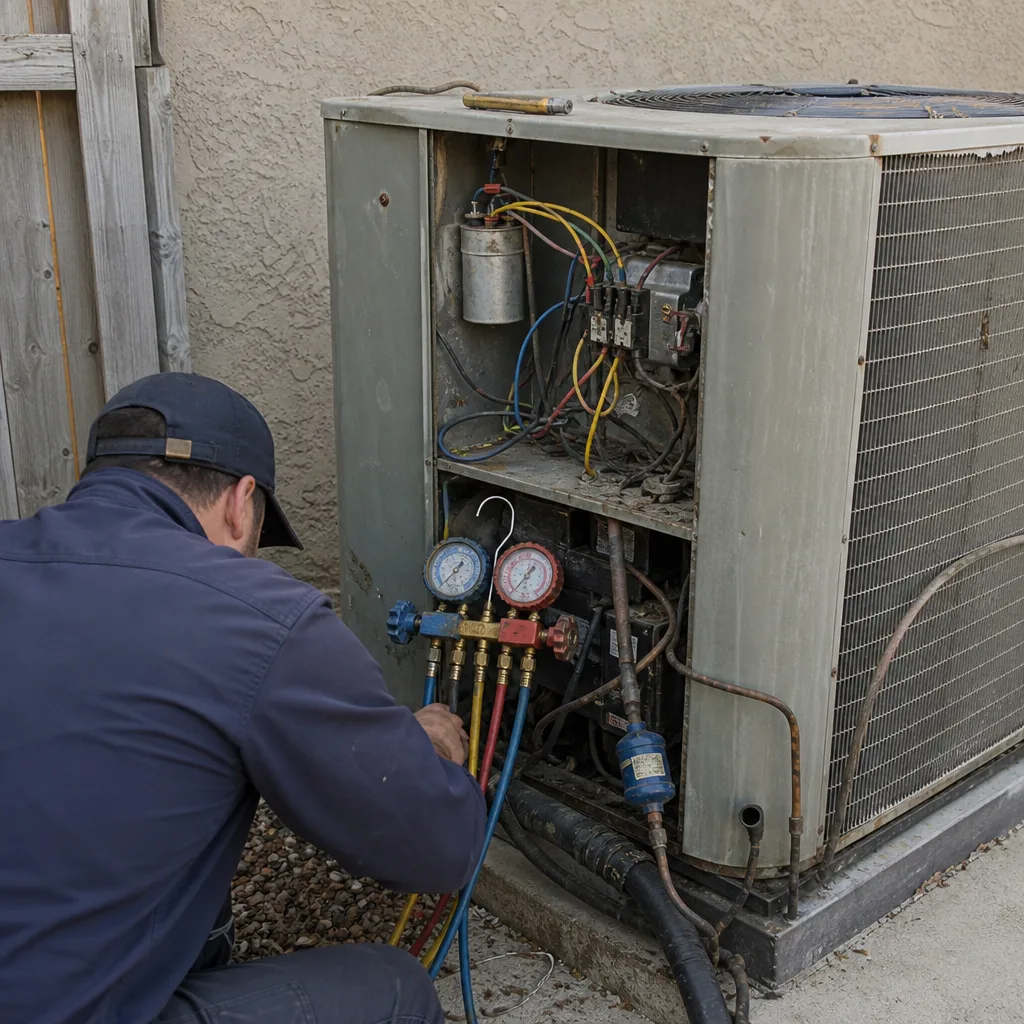
 After
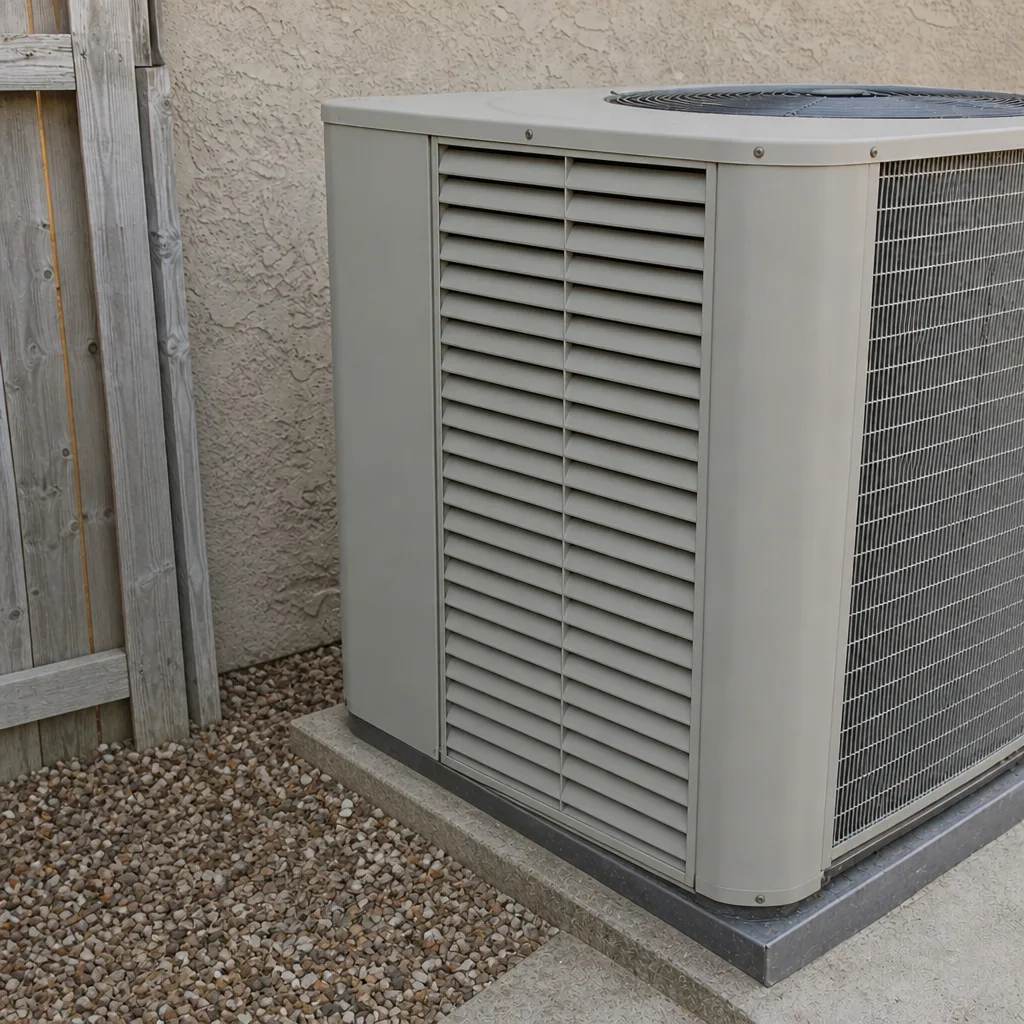
 Before
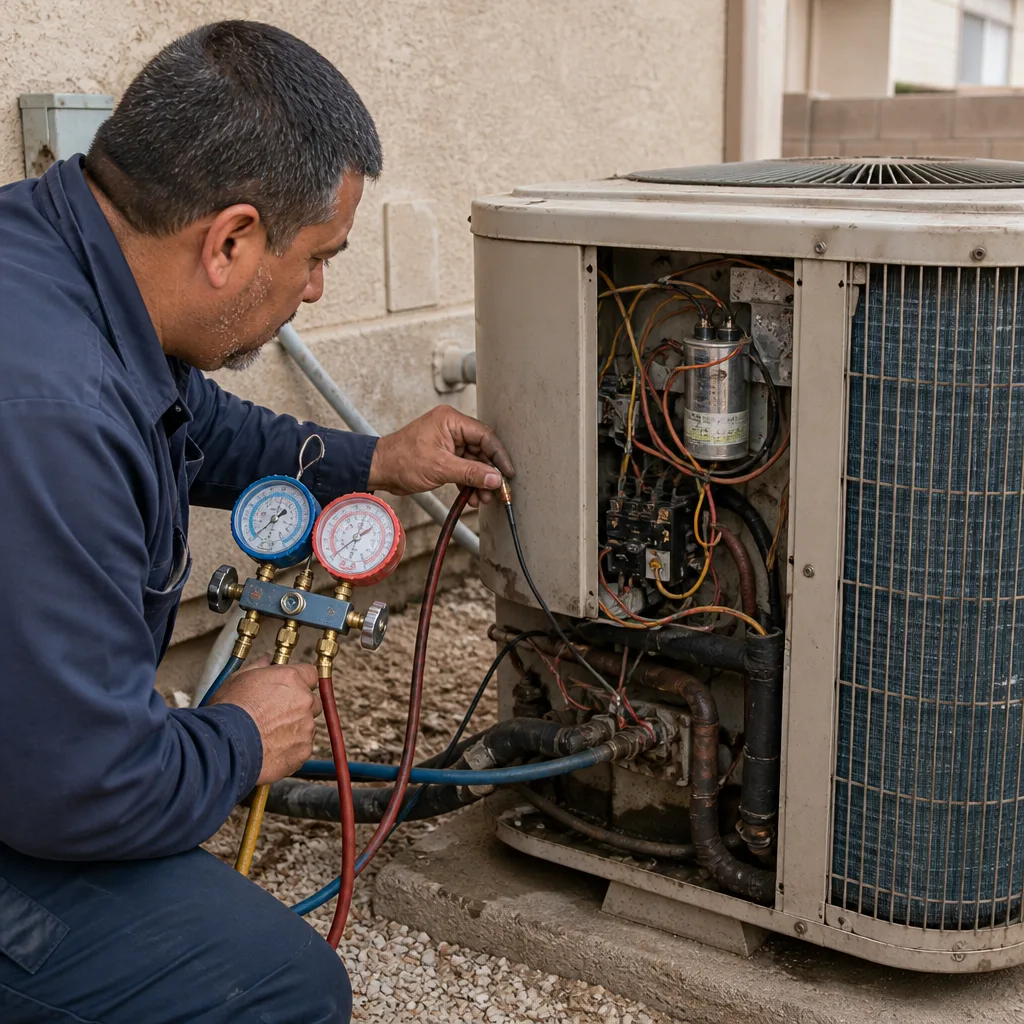
 After
 Before
 After
What to Document Before You Call Back
A home visit is far cheaper for everyone when it’s the second-strongest diagnostic tool a technician has, after their gauges. The homeowner can be the first. Here’s exactly what to gather before you call.
- Photos of the water, if there is any. Take them wide and close. Include a tape measure or a coin for scale.
- Photos of the thermostat display. Note the setpoint and the room temperature side by side.
- Thermostat readings with timestamps. Note the room temp and outdoor temp every two hours for a full day. That log tells a technician more than any single reading.
- Breaker events. Every trip, with the day and time, and what was running in the house. Three trips in 30 days is a clear pattern.
- The install paperwork. The job sheet, the start-up checklist, and the warranty card. If the job sheet has no superheat or subcooling numbers on it, photograph it exactly as it is. That becomes part of the conversation.
- Warm-room list. Which rooms, and how warm relative to the thermostat. A kitchen that stays warm is one thing; a bedroom 6 degrees warmer than the rest of the house is another.
A technician who arrives with that packet can often fix the issue in one visit instead of two or three. That saves the homeowner time and saves everyone a return trip.
Installation Warranty vs. Manufacturer Warranty
Two warranties live on every AC installation, and homeowners mix them up constantly. The manufacturer warranty covers parts – typically the compressor and coil for a defined period, the rest of the components for a shorter one. It does not cover labor, and it does not cover a mistake the installer made during commissioning. That’s why you want a workmanship guarantee on top of the manufacturer warranty, and why you want it in writing.
The 365-Day Done Right Promise is our workmanship guarantee. Every repair comes with a written guarantee valid for a full year. If the repair fails in that window, we come back and correct the work at no charge. The manufacturer warranty and the workmanship guarantee together are what protect you from the cost of a bad install.
For Henderson homeowners weighing a repair or a new install, the numbers matter. New residential AC installation in the Henderson market typically runs $6,500 to $12,500 depending on system size, efficiency tier, and whether the ductwork needs correction. If your existing system is 12 to 15 years old and facing a $1,400 compressor repair, the math usually lands on replacement, but ask for the written estimate both ways before deciding. A written price delivered before work begins is how we operate every job. If you’re early in the decision, our AC Installation in Henderson page lays out the full picture.
Common Mistakes to Avoid
- Waiting past 7 days to call. A post-install problem on day 3 is a commissioning issue and should get a callback. On day 60 it may be argued it’s a “new” problem. Call early and put the issue in writing.
- Accepting a verbal “we’ll come by.” Ask for the date and the arrival window in writing or in the scheduling app. No date, no guarantee of a return visit.
- Letting a technician skip the gauges. If nobody’s put a manifold gauge on the system or documented superheat and subcooling, the charge hasn’t been verified. Don’t accept “it feels cold” as a diagnosis.
- Confusing a duct issue with an equipment issue. On a Henderson afternoon, a home with a single attic return can be 8 degrees warmer than its thermostat setting no matter how good the new AC is. The fix isn’t a new unit; it’s the ductwork.
- Bypassing the float switch. A homeowner who pulls the safety switch out to stop the “nuisance” shutdown turns a $200 drain fix into a ceiling repair. Leave the switch alone and call.
- Paying the invoice before you have the guarantee in hand. The written guarantee belongs on the same sheet as the invoice. Ask for it before the technician leaves.
- Assuming the manufacturer warranty covers a bad install. It doesn’t cover labor or commissioning mistakes. The workmanship guarantee is what covers that, and it’s the piece you have to ask for.
If you’re reviewing the furnace side of the system too, a Henderson winter with a cold snap can expose the same commissioning issues on the heating side. Our Furnace Repair in Henderson team handles those calls, and the same 365-day guarantee applies.
When to Call a Professional
Call a professional today if any of these are true: your breaker has tripped more than once since the install; you have water on the ceiling or a wet air handler cabinet; the thermostat cannot see the indoor unit; your rooms are 4 or more degrees warmer than the setpoint on an average afternoon; or you smell burning at the air handler. Any of these can escalate quickly in Henderson heat, and the faster they’re caught the cheaper they are to fix. The refrigerant circuit, the high-voltage wiring, and the gas line on the furnace side are not homeowner-serviceable, period.
Coldharbour Heating & Air Henderson offers free estimates in Henderson. Call (844) 797-5122 and a live person answers, day or night, no voicemail tree. Our technicians have up to 23 years of experience, are trained on Lennox, Goodman, Rheem, and the rest of the nine major residential brands we service, and arrive with the right gauges and a written price before any work begins. You can always start at our Coldharbour Heating & Air Henderson home page to see how The Kingswell Way – price before the work, arrive in the window given, leave the place cleaner than found, guarantee in writing, come back if it fails – applies to your job.
Frequently Asked Questions
Two to four hours of continuous runtime during the hottest part of an afternoon is normal for a properly sized system in Henderson; running 100% of the day without holding the setpoint is not. Check whether the indoor temp actually reaches the setpoint by evening. If it does, long runtimes are the unit doing its job. If it doesn’t, that’s a commissioning issue and worth a call. Call (844) 797-5122 for a free estimate if the rooms never catch up.
No. A new install should not produce water around the air handler. The likely cause is a condensate drain that wasn’t trapped or pitched correctly, or a float switch that was installed without a proper drain pan. This is a commissioning issue, not a wear-and-tear issue, and it should be corrected under the workmanship guarantee at no charge. Call (844) 797-5122 and we’ll get a technician back out to fix the drain and check the coil.
Call the installer first, every time. The manufacturer’s warranty covers parts, not labor, and not installation mistakes. If the problem is a skipped step during commissioning, only the installing company can make it right, and it should be covered under their workmanship guarantee. Ask what the guarantee covers and for how long before you book the callback. If your installing company won’t come back, you can still hire a company to diagnose and correct it; call (844) 797-5122 and we’ll start with a written estimate.
A complete job sheet should show superheat and subcooling readings, the ambient and indoor wet-bulb temperatures at measurement, refrigerant line length and diameter, the total charge added, static pressure and airflow readings, and the thermostat settings. If those numbers aren’t there, the system wasn’t verified, it was installed and left. That’s the paper trail you want before you sign off. Our technicians document every one of those readings, and you get a copy. Call (844) 797-5122 to schedule.
It depends on what was missed. A refrigerant charge correction runs $200 to $450. A condensate drain correction runs $150 to $350. A duct connection repair often runs $250 to $600 depending on how many boots or plenum connections need attention. A thermostat reconfiguration or low-voltage wiring repair runs $150 to $300. If you’re looking at a full duct redesign, that’s a larger project; call (844) 797-5122 for a written estimate before any work begins.
Only for the first few days, and only for a narrow set of things: the initial pull-down of a warm house, a learning thermostat, and a slight burn-off odor. Anything that persists past day 7 is not settling in; it’s a defect or a setup issue. Put the question in writing to the installer: “What specifically will change if I wait another week?” A confident technician will answer and, if they’re wrong, the 365-Day Done Right Promise brings them back at no charge.
The Bottom Line
The problems that show up in the first 30 days after a new AC install are almost always setup issues: charge not verified, duct connections not sealed, drain not trapped, wiring not checked, thermostat not configured. Document what you’re seeing – photos, timestamps, thermostat readings, a photo of the job sheet if the numbers are missing – and call the installer early. A company that stands behind the work will put the price and the guarantee in writing. That’s the whole standard we work to at Coldharbour Heating & Air Henderson, and The Kingswell Way is just the name for holding to it on every job. If you’re not sure whether the symptoms you’re seeing are normal, call (844) 797-5122 for a free estimate – a live person answers, day or night, and the written price comes before any tools come out.
Written by the team at Coldharbour Heating & Air Henderson.